
皮肤自发荧光能否成为系统性红斑狼疮的有用生物标志物?一项系统评价。
Could Skin Autofluorescence Be a Useful Biomarker in Systemic Lupus Erythematosus? A Systematic Review.
作者信息
Salmen Teodor, Cobilinschi Claudia, Mihăilescu Andrei, Salmen Bianca-Margareta, Potcovaru Gabriela-Claudia, Opris-Belinski Daniela, Copcă Narcis, Caraiola Simona, Negoi Florentina, Pantea Stoian Anca, Săulescu Ioana
机构信息
Doctoral School, "Carol Davila" University of Medicine and Pharmacy, 050474 Bucharest, Romania.
Faculty of Medicine, "Carol Davila" University of Medicine and Pharmacy, 050474 Bucharest, Romania.
出版信息
Int J Mol Sci. 2025 Jul 19;26(14):6934. doi: 10.3390/ijms26146934.
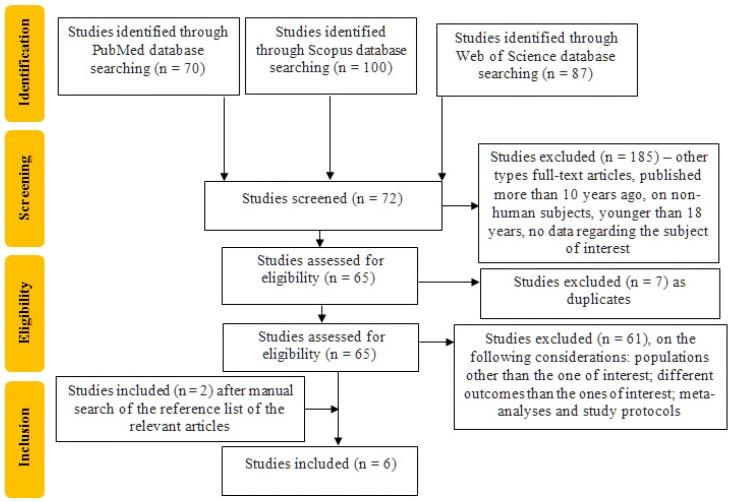
Systemic lupus erythematosus (SLE) is a multifaceted autoimmune disease with a heterogeneous organ involvement, for which reliable biomarkers are still being studied. The implication of advanced glycation end products (AGEs), resulting from oxidative stress, and their interaction with the receptor for AGEs (RAGE) has been studied in pathologies with chronic proinflammatory status, offering potential relevance in SLE. This systematic review aimed to evaluate the utility of skin autofluorescence (SAF)-a non-invasive proxy for AGE accumulation-as a biomarker for disease severity, activity, and impact in SLE patients. Following PRISMA guidelines, six studies assessing SAF and/or circulating AGEs and soluble RAGE (sRAGE) in SLE were analyzed. Findings consistently showed higher AGE levels in SLE patients compared to healthy controls, with several correlations between SAF/AGEs and disease features such as SLEDAI scores, organ involvement, inflammatory markers, and damage indices. Decreased sRAGE levels were also observed, possibly due to consumption by AGEs. Some studies further reported predictive associations between specific AGEs or their ratios with sRAGE and particular clinical phenotypes. Although heterogeneity among studies limits definitive conclusions, the AGEs-sRAGE axis-and especially SAF-emerges as a promising candidate for future biomarker development in SLE. Further large-scale longitudinal studies are needed to confirm its clinical utility.
系统性红斑狼疮(SLE)是一种多方面的自身免疫性疾病,器官受累情况各异,目前仍在研究可靠的生物标志物。晚期糖基化终产物(AGEs)由氧化应激产生,其与AGEs受体(RAGE)的相互作用已在慢性炎症状态的疾病中得到研究,这在SLE中具有潜在相关性。本系统评价旨在评估皮肤自发荧光(SAF)——一种用于评估AGEs积累的非侵入性指标——作为SLE患者疾病严重程度、活动度和影响的生物标志物的效用。按照PRISMA指南,分析了六项评估SLE患者SAF和/或循环AGEs及可溶性RAGE(sRAGE)的研究。研究结果一致表明,与健康对照相比,SLE患者的AGE水平更高,SAF/AGEs与疾病特征(如SLEDAI评分、器官受累情况、炎症标志物和损伤指数)之间存在多种相关性。还观察到sRAGE水平降低,可能是由于被AGEs消耗所致。一些研究进一步报道了特定AGEs或其比率与sRAGE和特定临床表型之间的预测关联。尽管研究之间的异质性限制了得出明确结论,但AGEs-sRAGE轴——尤其是SAF——有望成为未来SLE生物标志物开发的候选指标。需要进一步开展大规模纵向研究以证实其临床效用。
 Zotero 插件