
基于巨噬细胞的药物递送:关键挑战与策略
Macrophage based drug delivery: Key challenges and strategies.
作者信息
Guo Qian, Qian Zhong-Ming
机构信息
Laboratory of Drug Delivery, School of Medicine, Shanghai University, 99 Shangda Road, Shanghai, 200444, China.
Institute of Translational and Precision Medicine, Nantong University, 19 Qi Xiu Road, Nantong, Jiangsu, 226019, China.
出版信息
Bioact Mater. 2024 Apr 23;38:55-72. doi: 10.1016/j.bioactmat.2024.04.004. eCollection 2024 Aug.
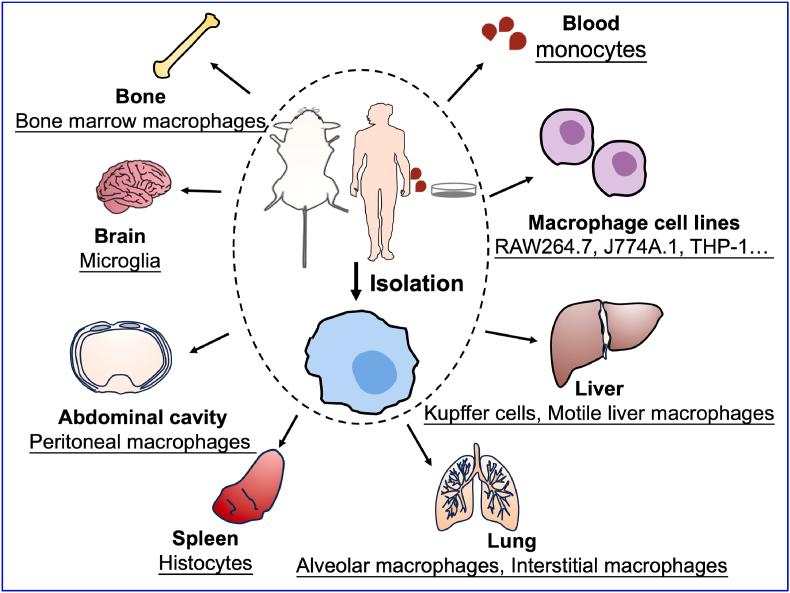
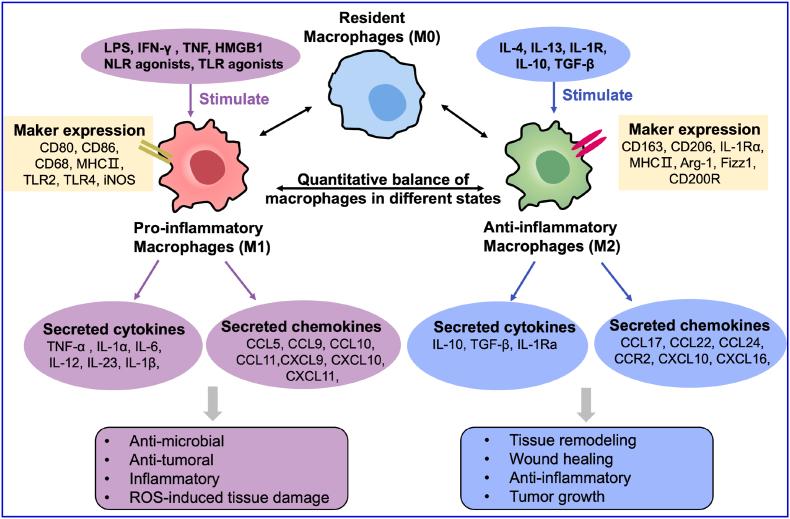
As a natural immune cell and antigen presenting cell, macrophages have been studied and engineered to treat human diseases. Macrophages are well-suited for use as drug carriers because of their biological characteristics, such as excellent biocompatibility, long circulation, intrinsic inflammatory homing and phagocytosis. Meanwhile, macrophages' uniquely high plasticity and easy re-education polarization facilitates their use as part of efficacious therapeutics for the treatment of inflammatory diseases or tumors. Although recent studies have demonstrated promising advances in macrophage-based drug delivery, several challenges currently hinder further improvement of therapeutic effect and clinical application. This article focuses on the main challenges of utilizing macrophage-based drug delivery, from the selection of macrophage sources, drug loading, and maintenance of macrophage phenotypes, to drug migration and release at target sites. In addition, corresponding strategies and insights related to these challenges are described. Finally, we also provide perspective on shortcomings on the road to clinical translation and production.
作为天然免疫细胞和抗原呈递细胞,巨噬细胞已被研究并改造用于治疗人类疾病。巨噬细胞由于其生物学特性,如优异的生物相容性、长循环时间、内在炎症归巢和吞噬作用,非常适合用作药物载体。同时,巨噬细胞独特的高可塑性和易于重新编程极化使其能够作为治疗炎症性疾病或肿瘤的有效疗法的一部分。尽管最近的研究在基于巨噬细胞的药物递送方面取得了有前景的进展,但目前仍有几个挑战阻碍了治疗效果的进一步提高和临床应用。本文重点关注基于巨噬细胞的药物递送的主要挑战,从巨噬细胞来源的选择、药物负载、巨噬细胞表型的维持,到药物在靶位点的迁移和释放。此外,还描述了与这些挑战相关的相应策略和见解。最后,我们还对临床转化和生产道路上的缺点提供了展望。



 Zotero 插件