
一种新兴策略:益生菌通过调节肠道微生物组来增强肿瘤免疫疗法的效果。
An emerging strategy: probiotics enhance the effectiveness of tumor immunotherapy via mediating the gut microbiome.
机构信息
School of Food Science and Engineering, Hainan University, Haikou, PR China.
Department of Human Cell Biology and Genetics, Southern University of Science and Technology, Shenzhen, PR China.
出版信息
Gut Microbes. 2024 Jan-Dec;16(1):2341717. doi: 10.1080/19490976.2024.2341717. Epub 2024 May 8.
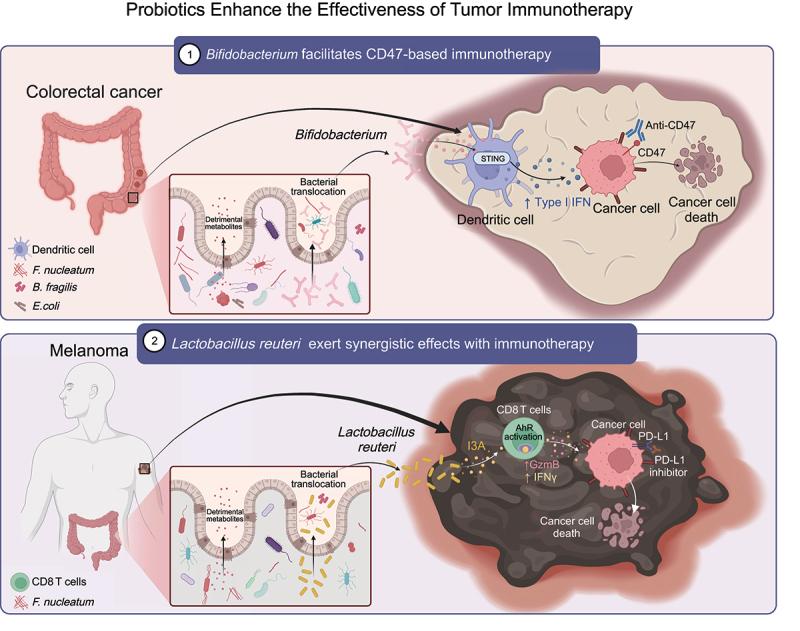
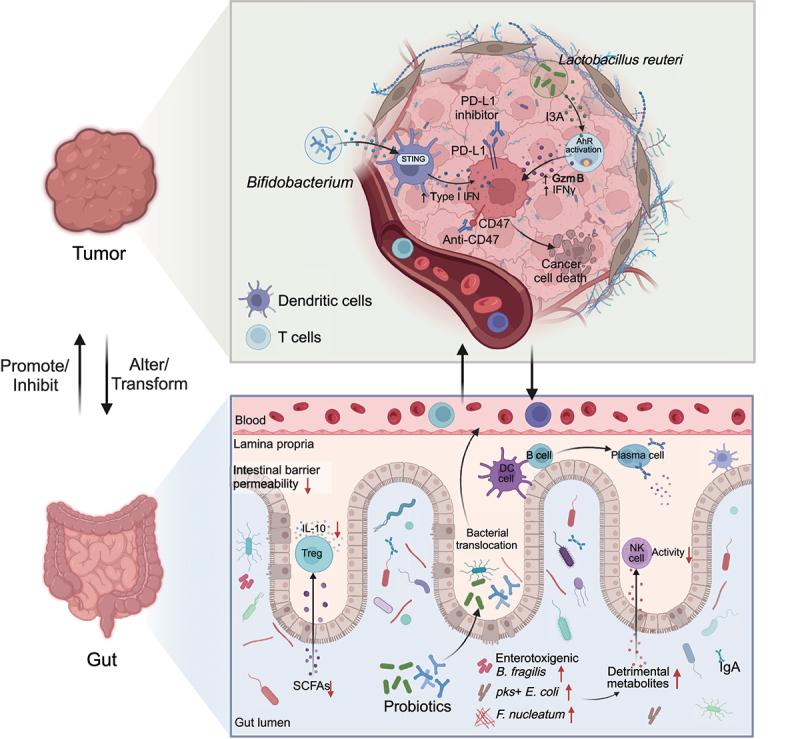
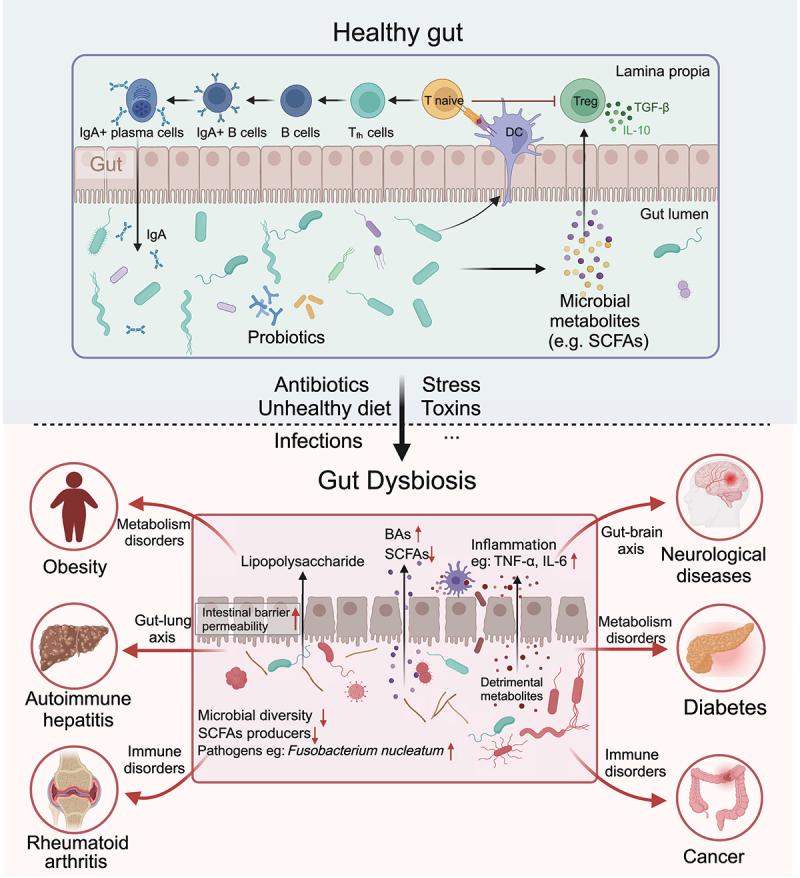
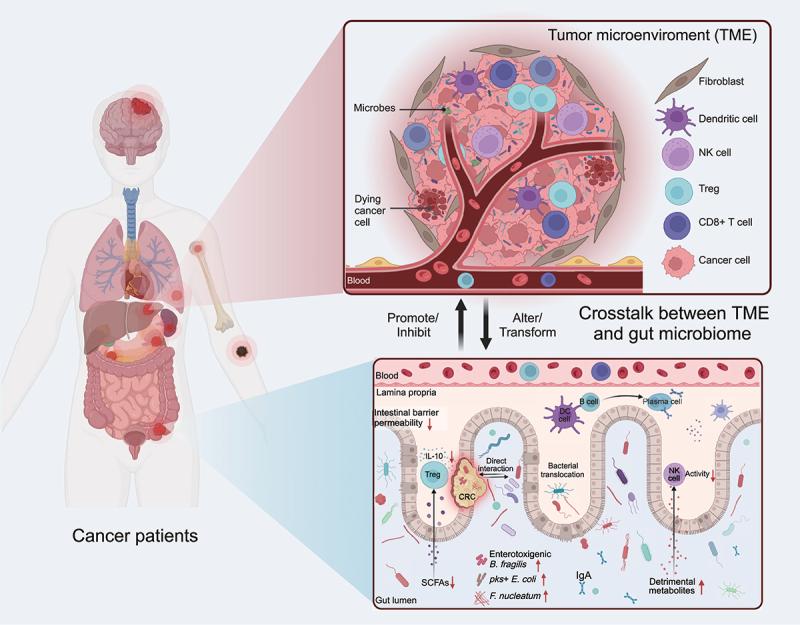
The occurrence and progression of tumors are often accompanied by disruptions in the gut microbiota. Inversely, the impact of the gut microbiota on the initiation and progression of cancer is becoming increasingly evident, influencing the tumor microenvironment (TME) for both local and distant tumors. Moreover, it is even suggested to play a significant role in the process of tumor immunotherapy, contributing to high specificity in therapeutic outcomes and long-term effectiveness across various cancer types. Probiotics, with their generally positive influence on the gut microbiota, may serve as effective agents in synergizing cancer immunotherapy. They play a crucial role in activating the immune system to inhibit tumor growth. In summary, this comprehensive review aims to provide valuable insights into the dynamic interactions between probiotics, gut microbiota, and cancer. Furthermore, we highlight recent advances and mechanisms in using probiotics to improve the effectiveness of cancer immunotherapy. By understanding these complex relationships, we may unlock innovative approaches for cancer diagnosis and treatment while optimizing the effects of immunotherapy.
肿瘤的发生和发展通常伴随着肠道微生物群的紊乱。相反,肠道微生物群对癌症的发生和发展的影响越来越明显,影响局部和远处肿瘤的肿瘤微环境(TME)。此外,它甚至被认为在肿瘤免疫治疗过程中发挥重要作用,为各种癌症类型的治疗结果提供高度特异性和长期有效性。益生菌对肠道微生物群通常有积极的影响,可能是协同癌症免疫治疗的有效药物。它们在激活免疫系统以抑制肿瘤生长方面发挥着关键作用。总之,本综述旨在提供关于益生菌、肠道微生物群和癌症之间动态相互作用的有价值的见解。此外,我们强调了使用益生菌来提高癌症免疫治疗效果的最新进展和机制。通过了解这些复杂的关系,我们可能会为癌症的诊断和治疗开辟创新方法,同时优化免疫治疗的效果。

 Zotero 插件