
Pin1 催化的构象变化调节蛋白质泛素化和降解。
Pin1-Catalyzed Conformation Changes Regulate Protein Ubiquitination and Degradation.
机构信息
Departments of Biochemistry and Oncology, Schulich School of Medicine & Dentistry, Western University, London, ON N6A 5C1, Canada.
Robarts Research Institute, Western University, London, ON N6A 5B7, Canada.
出版信息
Cells. 2024 Apr 23;13(9):731. doi: 10.3390/cells13090731.
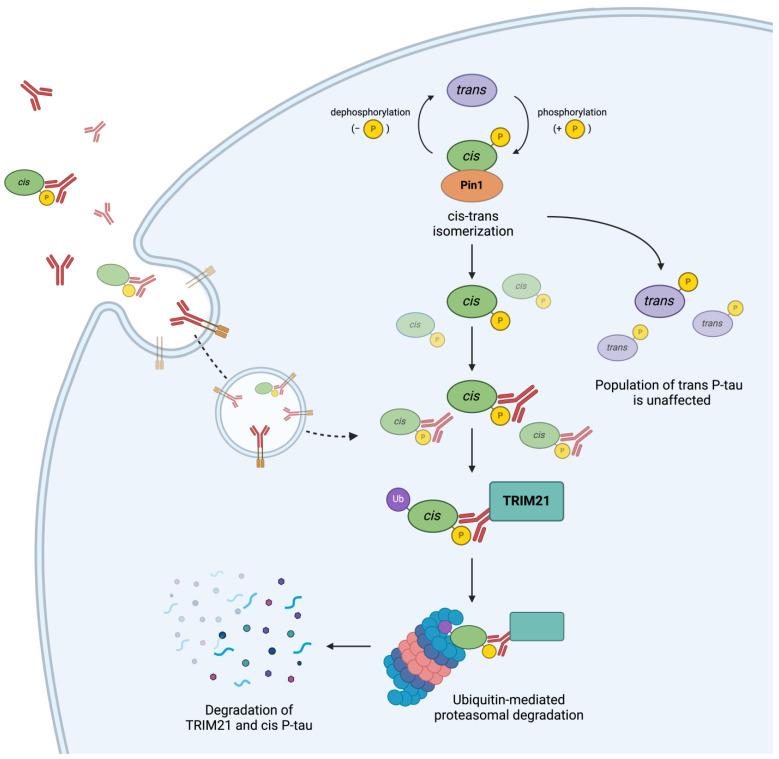
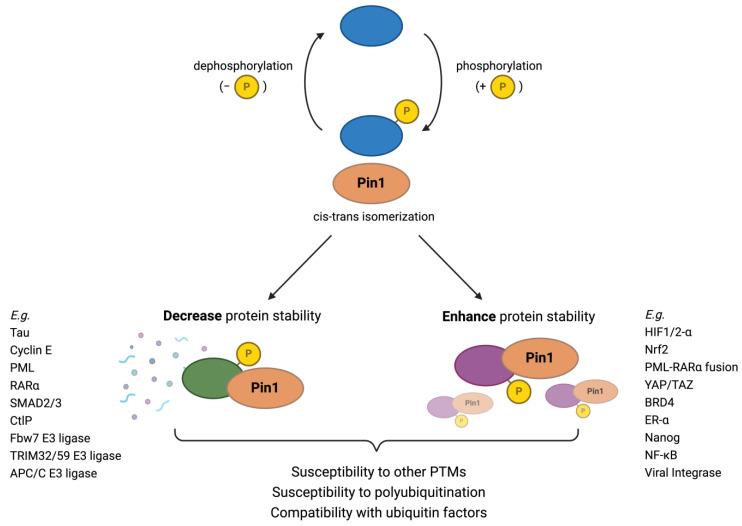
The unique prolyl isomerase Pin1 binds to and catalyzes cis-trans conformational changes of specific Ser/Thr-Pro motifs after phosphorylation, thereby playing a pivotal role in regulating the structure and function of its protein substrates. In particular, Pin1 activity regulates the affinity of a substrate for E3 ubiquitin ligases, thereby modulating the turnover of a subset of proteins and coordinating their activities after phosphorylation in both physiological and disease states. In this review, we highlight recent advancements in Pin1-regulated ubiquitination in the context of cancer and neurodegenerative disease. Specifically, Pin1 promotes cancer progression by increasing the stabilities of numerous oncoproteins and decreasing the stabilities of many tumor suppressors. Meanwhile, Pin1 plays a critical role in different neurodegenerative disorders via the regulation of protein turnover. Finally, we propose a novel therapeutic approach wherein the ubiquitin-proteasome system can be leveraged for therapy by targeting pathogenic intracellular targets for TRIM21-dependent degradation using stereospecific antibodies.
Pin1 是一种独特的脯氨酰异构酶,可结合并催化磷酸化后特定 Ser/Thr-Pro 基序的顺式-反式构象变化,从而在调节其蛋白质底物的结构和功能方面发挥关键作用。特别是,Pin1 活性调节底物与 E3 泛素连接酶的亲和力,从而调节一组特定蛋白质的周转率,并在生理和疾病状态下协调其磷酸化后的活性。在这篇综述中,我们强调了 Pin1 调节的泛素化在癌症和神经退行性疾病中的最新进展。具体来说,Pin1 通过增加许多癌蛋白的稳定性和降低许多肿瘤抑制因子的稳定性来促进癌症进展。同时,Pin1 通过调节蛋白质周转在不同的神经退行性疾病中发挥关键作用。最后,我们提出了一种新的治疗方法,即通过使用针对致病性细胞内靶标的立体特异性抗体,利用泛素-蛋白酶体系统靶向 TRIM21 依赖性降解,从而针对该系统进行治疗。
 Zotero 插件