
在移植物抗宿主病期间,AMPK驱动小鼠和人类T细胞中的糖酵解代谢和氧化代谢。
AMPK drives both glycolytic and oxidative metabolism in murine and human T cells during graft-versus-host disease.
作者信息
Ramgopal Archana, Braverman Erica L, Sun Lee-Kai, Monlish Darlene, Wittmann Christopher, Kemp Felicia, Qin Mengtao, Ramsey Manda J, Cattley Richard, Hawse William, Byersdorfer Craig A
机构信息
Division of Blood and Marrow Transplant and Cellular Therapies, Department of Pediatrics, University of Pittsburgh School of Medicine, Pittsburgh PA.
School of Medicine, Tsinghua University, Beijing, China.
出版信息
Blood Adv. 2024 Aug 13;8(15):4149-4162. doi: 10.1182/bloodadvances.2023010740.
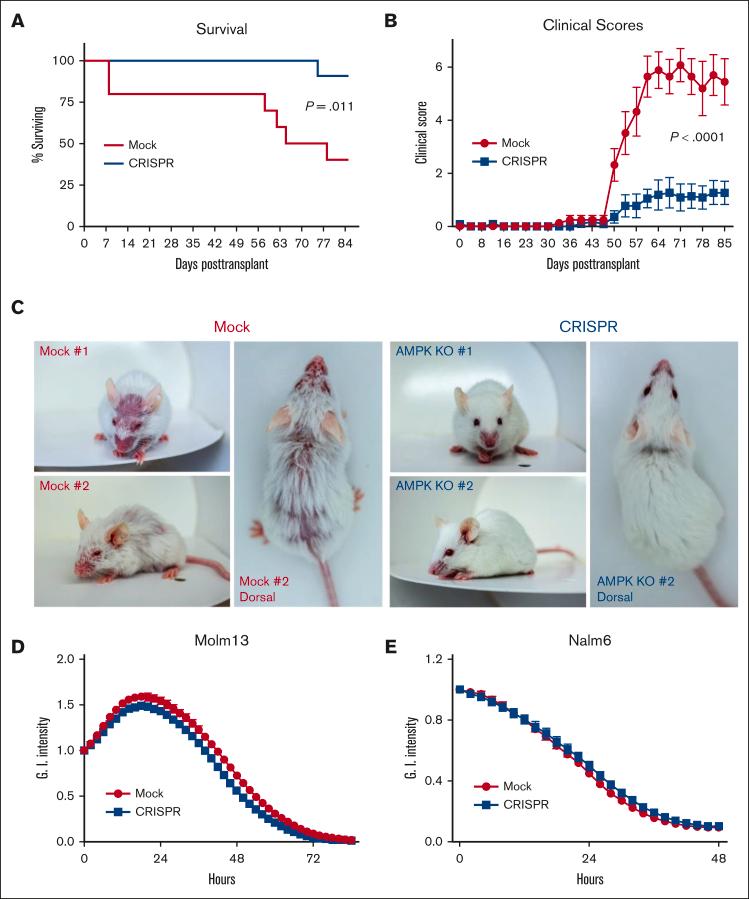
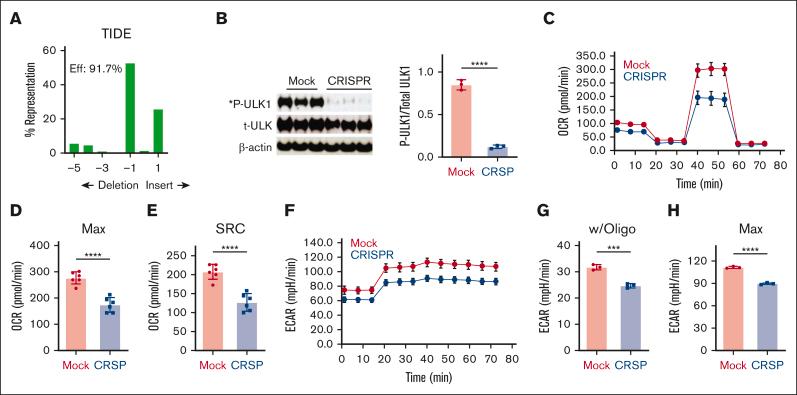
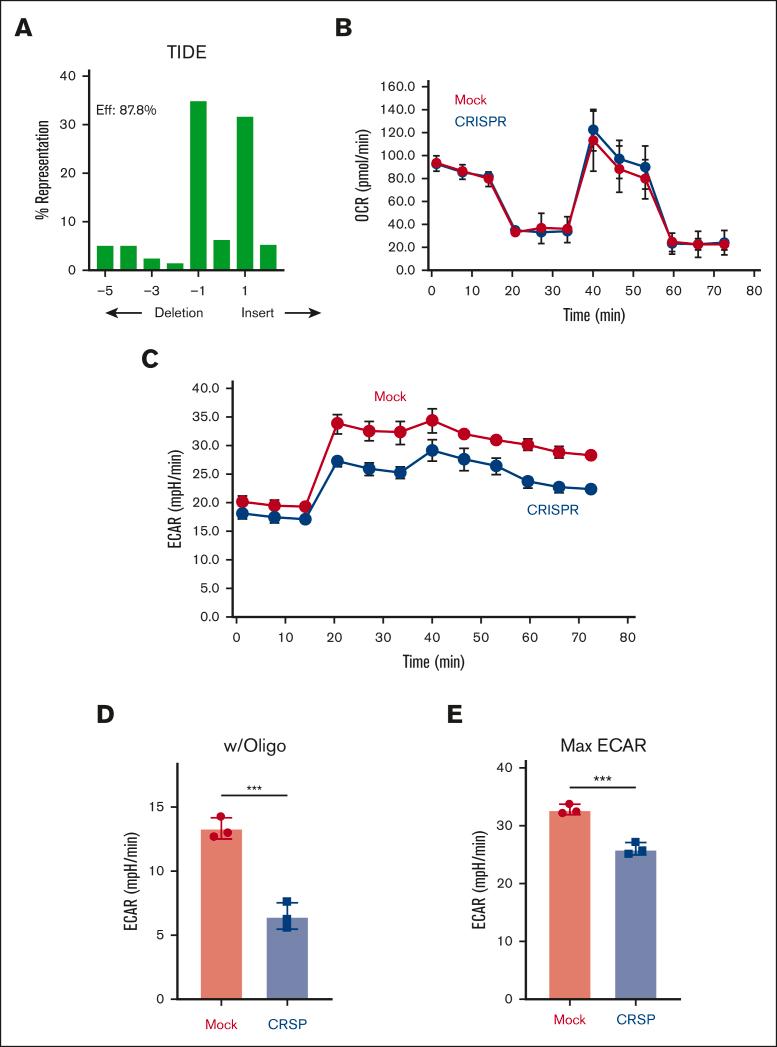
Allogeneic T cells reprogram their metabolism during acute graft-versus-host disease (GVHD) in a process involving the cellular energy sensor adenosine monophosphate (AMP)-activated protein kinase (AMPK). Deletion of AMPK in donor T cells limits GVHD but still preserves homeostatic reconstitution and graft-versus-leukemia effects. In the current studies, murine AMPK knock-out (KO) T cells decreased oxidative metabolism at early time points posttransplant and lacked a compensatory increase in glycolysis after inhibition of the electron transport chain. Immunoprecipitation using an antibody specific to phosphorylated targets of AMPK determined that AMPK modified interactions of several glycolytic enzymes including aldolase, enolase, pyruvate kinase M, and glyceraldehyde 3-phosphate dehydrogenase (GAPDH), with enzyme assays confirming impaired aldolase and GAPDH activity in AMPK KO T cells. Importantly, these changes in glycolysis correlated with both an impaired ability of AMPK KO T cells to produce significant amounts of interferon gamma upon antigenic restimulation and a decrease in the total number of donor CD4 T cells recovered at later times posttransplant. Human T cells lacking AMPK gave similar results, with glycolytic compensation impaired both in vitro and after expansion in vivo. Xenogeneic GVHD results also mirrored those of the murine model, with reduced CD4/CD8 ratios and a significant improvement in disease severity. Together these data highlight a significant role for AMPK in controlling oxidative and glycolytic metabolism in both murine and human T cells and endorse further study of AMPK inhibition as a potential clinical target for future GVHD therapies.
在急性移植物抗宿主病(GVHD)期间,同种异体T细胞会重新编程其代谢,这一过程涉及细胞能量传感器单磷酸腺苷(AMP)激活的蛋白激酶(AMPK)。供体T细胞中AMPK的缺失会限制GVHD,但仍能维持稳态重建和移植物抗白血病效应。在当前研究中,小鼠AMPK基因敲除(KO)T细胞在移植后的早期时间点氧化代谢降低,并且在电子传递链受到抑制后缺乏糖酵解的代偿性增加。使用针对AMPK磷酸化靶点的特异性抗体进行免疫沉淀,确定AMPK改变了几种糖酵解酶的相互作用,包括醛缩酶、烯醇化酶、丙酮酸激酶M和甘油醛-3-磷酸脱氢酶(GAPDH),酶活性测定证实AMPK KO T细胞中醛缩酶和GAPDH活性受损。重要的是,糖酵解的这些变化与AMPK KO T细胞在抗原再刺激时产生大量干扰素γ的能力受损以及移植后较晚时间回收的供体CD4 T细胞总数减少相关。缺乏AMPK的人T细胞也得到了类似的结果,在体外和体内扩增后糖酵解代偿均受损。异种GVHD结果也与小鼠模型相似,CD4/CD8比值降低,疾病严重程度显著改善。这些数据共同突出了AMPK在控制小鼠和人T细胞的氧化和糖酵解代谢中的重要作用,并支持进一步研究将AMPK抑制作为未来GVHD治疗的潜在临床靶点。


 Zotero 插件