
非药物干预措施对韩国其他法定传染病的 COVID-19 临床效果。
Clinical effects of non-pharmaceutical interventions for COVID-19 on other nationally notifiable infectious diseases in South Korea.
机构信息
Department of Otorhinolaryngology-Head and Neck Surgery, Chung-Ang University College of Medicine, Seoul, Korea.
Department of Otorhinolaryngology-Head and Neck Surgery, Chung-Ang University Gwangmyeong Hospital, Gwangmyeong, Korea.
出版信息
Korean J Intern Med. 2024 Sep;39(5):823-832. doi: 10.3904/kjim.2023.501. Epub 2024 Aug 13.
BACKGROUND/AIMS: This study aimed to assess the impact of non-pharmaceutical interventions (NPIs) implemented during the COVID-19 pandemic on nationally notifiable infectious diseases (NNIDs) in South Korea.
METHODS
Long-term data on seven NNIDs from 2018 to 2021 were analyzed to identify trends and change points using a change point detection technique. The timings of the NPI implementations were compared to the identified change points to determine their association.
RESULTS
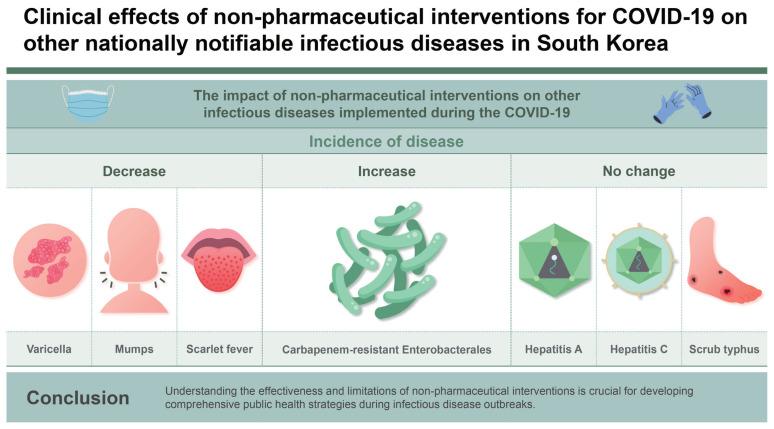
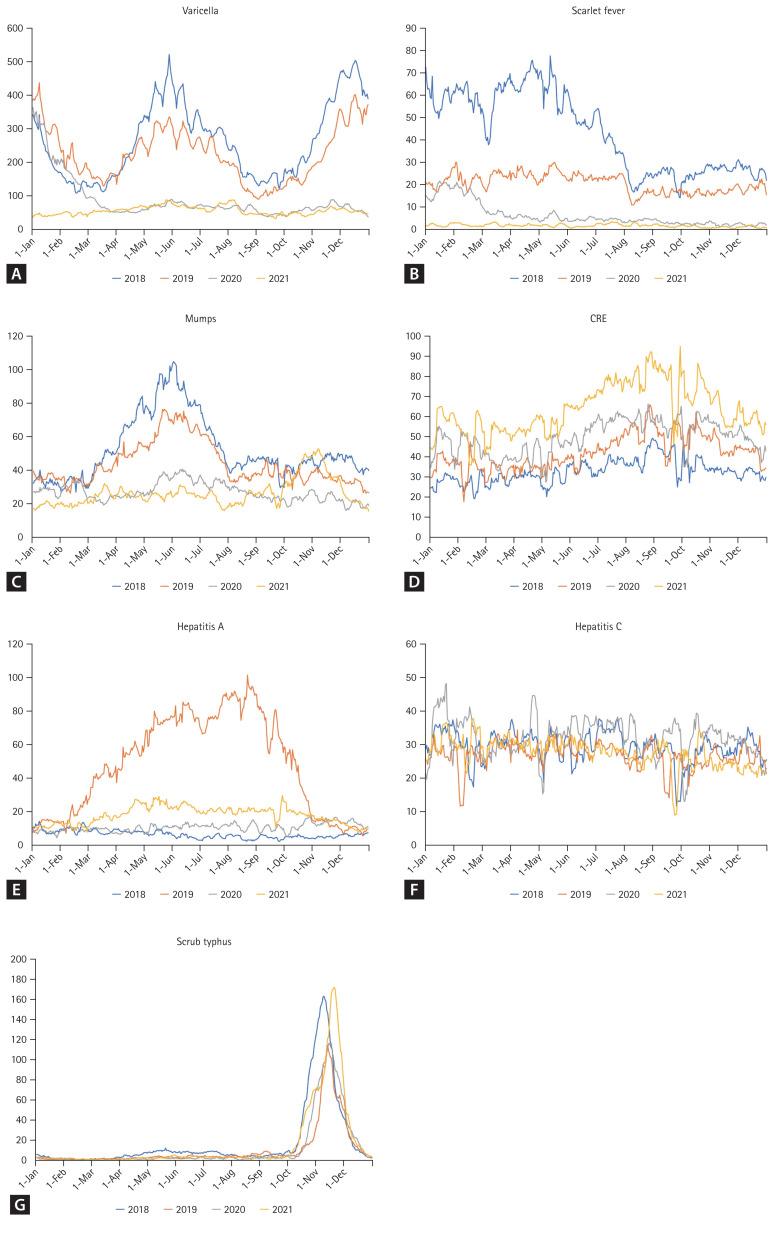
Varicella, mumps, and scarlet fever showed a significant decrease in incidence following the implementation of NPIs during the COVID-19 pandemic. These diseases, which are primarily transmitted through respiratory droplets, demonstrated a clear response to NPIs. However, carbapenem-resistant Enterobacterales (CRE) showed an increasing trend unrelated to the timing of NPI implementation, suggesting the complex nature of controlling healthcare-associated infections. Hepatitis A, hepatitis C, and scrub typhus did not show significant changes associated with NPIs, likely due to their non-respiratory route of transmission.
CONCLUSION
NPIs effectively controlled NNIDs, particularly those transmitted through respiratory infections. However, the impact varied depending on the disease. Understanding the effectiveness and limitations of NPIs is crucial for developing comprehensive public health strategies during infectious disease outbreaks.
背景/目的:本研究旨在评估 COVID-19 大流行期间实施的非药物干预(NPIs)对韩国法定传染病(NNIDs)的影响。
方法
分析了 2018 年至 2021 年七种 NNIDs 的长期数据,使用变点检测技术来识别趋势和变点。将 NPI 的实施时间与确定的变点进行比较,以确定它们之间的关联。
结果
水痘、腮腺炎和猩红热在 COVID-19 大流行期间实施 NPIs 后,发病率显著下降。这些主要通过呼吸道飞沫传播的疾病对 NPIs 有明显的反应。然而,碳青霉烯类耐药肠杆菌科(CRE)表现出与 NPI 实施时间无关的上升趋势,表明控制医源性感染的复杂性。甲型肝炎、丙型肝炎和恙虫病与 NPIs 无显著变化相关,可能是由于它们的非呼吸道传播途径。
结论
NPIs 有效地控制了 NNIDs,特别是通过呼吸道感染传播的疾病。然而,疾病的影响因疾病而异。了解 NPIs 的有效性和局限性对于在传染病爆发期间制定全面的公共卫生策略至关重要。

 Zotero 插件