
免疫学新视角:评估接触 SARS-CoV-2 的医务工作者的免疫参数。
Immunological insights: assessing immune parameters in medical professionals exposed to SARS-CoV-2.
机构信息
Department of Pneumonology, Oncology and Allergology Medical University of Lublin, Jaczewskiego 8, Lublin, 20-954, Poland.
Department of Clinical Immunology Medical University of Lublin, Lublin, Poland.
出版信息
BMC Infect Dis. 2024 Aug 26;24(1):865. doi: 10.1186/s12879-024-09772-5.
BACKGROUND
The immunological background responsible for the severe course of COVID-19 and the immune factors that protect against SARS-CoV-2 infection are still unclear. The aim of this study was to investigate immune system status in persons with high exposure to SARS-CoV-2 infection.
METHODS
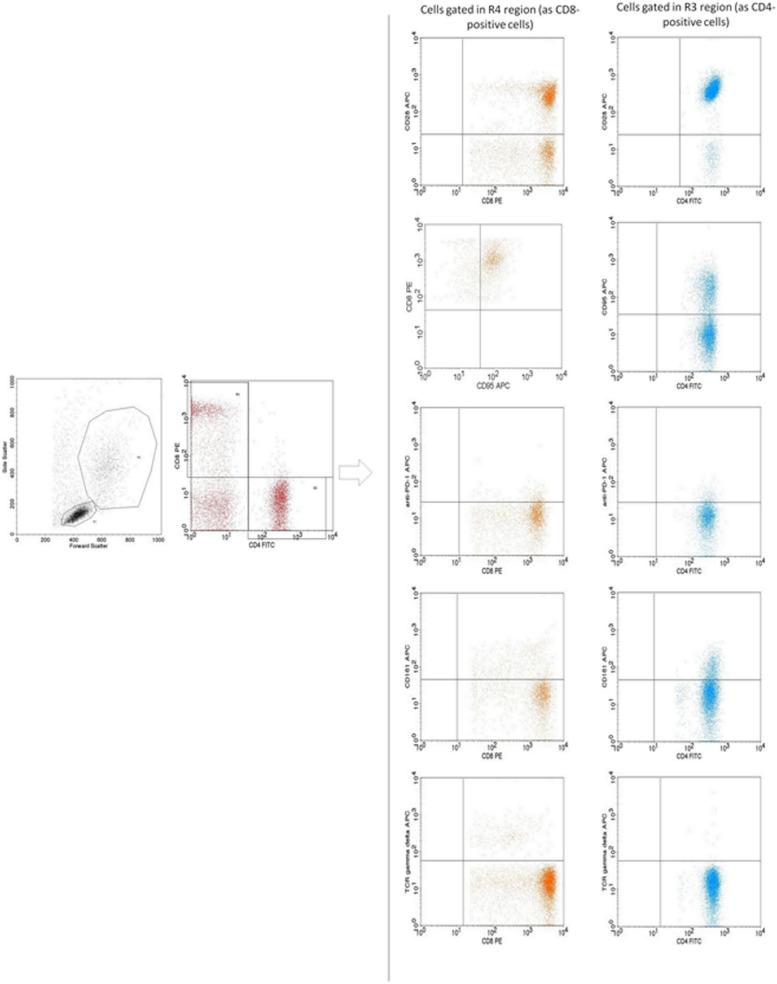
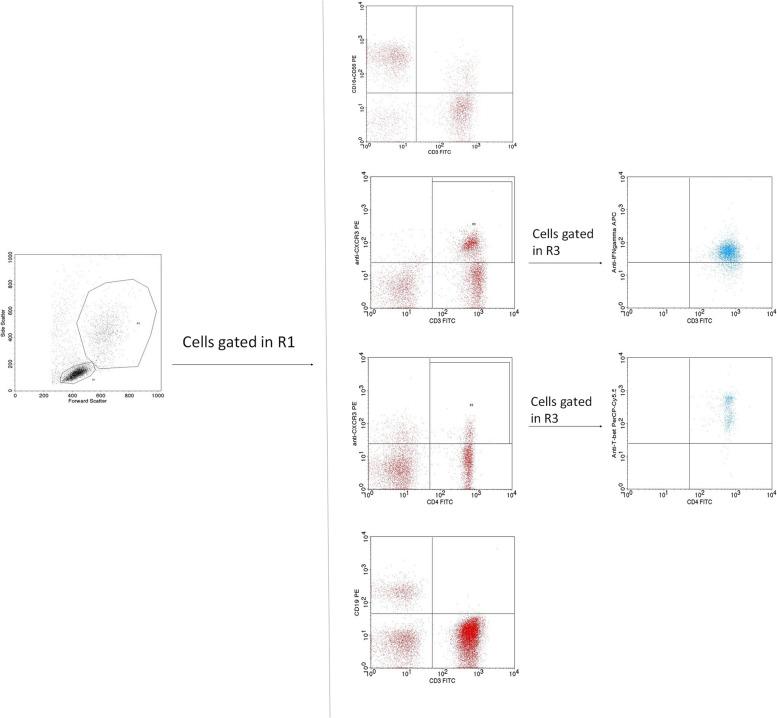
Seventy-one persons employed in the observation and infectious diseases unit were qualified for the study between November 2020 and October 2021. Symptomatic COVID-19 was diagnosed in 35 persons. Anti-SARS-CoV-2 antibodies were also found in 8 persons. Peripheral blood mononuclear cells subpopulations were analyzed by flow cytometry, and the concentrations of cytokines and anti-SARS-CoV-2 antibodies were determined by ELISA.
RESULTS
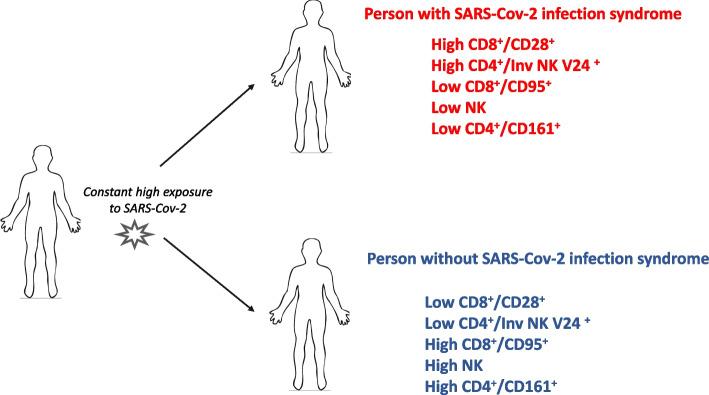
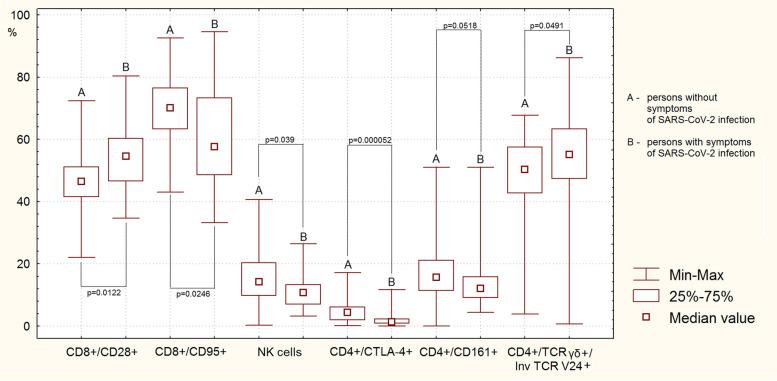
The percentages of cytotoxic T lymphocytes (CTLs), CD28 and T helper (Th) cells with invariant T-cell receptors were significantly higher in persons with symptomatic COVID-19 than in those who did not develop COVID-19' symptoms. Conversely, symptomatic COVID-19 persons had significantly lower percentages of: a) CTLs in the late stage of activation (CD8/CD95), b) NK cells, c) regulatory-like Th cells (CD4/CTLA-4), and d) Th17-like cells (CD4/CD161) compared to asymptomatic COVID-19' persons. Additionally, persons with anti-SARS-CoV-2 antibodies had a significantly higher lymphocyte count and IL-6 concentration than persons without these antibodies.
CONCLUSION
Numerous lymphocyte populations are permanently altered by SARS-CoV-2 infection. High percentages of both populations: NK cells-as a part of the non-specific response, and T helper cells' as those regulating the immune response, could protect against the acute COVID-19 symptoms development. Understanding the immune background of COVID-19 may improve the prevention of this disease by identifying people at risk of a severe course of infection.
TRIAL REGISTRATION
This is a retrospective observational study without a trial registration number.
背景
导致 COVID-19 严重病程的免疫学背景以及预防 SARS-CoV-2 感染的免疫因素仍不清楚。本研究旨在研究高暴露于 SARS-CoV-2 感染人群的免疫系统状态。
方法
2020 年 11 月至 2021 年 10 月,共有 71 名在观察和传染病科工作的人员符合研究条件。35 人被诊断为有症状的 COVID-19,8 人检测到抗 SARS-CoV-2 抗体。通过流式细胞术分析外周血单个核细胞亚群,并通过 ELISA 测定细胞因子和抗 SARS-CoV-2 抗体的浓度。
结果
与未出现 COVID-19 症状的人相比,有症状 COVID-19 患者的细胞毒性 T 淋巴细胞(CTLs)、CD28 和辅助性 T(Th)细胞的不变 T 细胞受体的百分比显著更高。相反,有症状 COVID-19 患者的:a)晚期激活的 CTLs(CD8/CD95)、b)NK 细胞、c)调节性 Th 细胞(CD4/CTLA-4)和 d)Th17 样细胞(CD4/CD161)的百分比显著更低。此外,与没有这些抗体的人相比,有抗 SARS-CoV-2 抗体的人具有更高的淋巴细胞计数和 IL-6 浓度。
结论
SARS-CoV-2 感染会永久改变许多淋巴细胞群。NK 细胞(作为非特异性反应的一部分)和 Th 辅助细胞(作为调节免疫反应的细胞)的高百分比可能有助于预防急性 COVID-19 症状的发展。了解 COVID-19 的免疫学背景可以通过识别感染严重病程的高危人群来改善该疾病的预防。
本文为回顾性观察研究,无试验注册编号。
 Zotero 插件