
钩吻素子的性别特异性药代动力学和生物利用度评估:一项体外和体内研究。
An Evaluation of Sex-Specific Pharmacokinetics and Bioavailability of Kokusaginine: An In Vitro and In Vivo Investigation.
作者信息
Shang Kaiqi, Ge Chengyu, Zhang Yindi, Xiao Jing, Liu Shao, Jiang Yueping
机构信息
Department of Pharmacy, Xiangya Hospital, Central South University, Changsha 410008, China.
National Clinical Research Center for Geriatric Disorders, Xiangya Hospital, Central South University, Changsha 410008, China.
出版信息
Pharmaceuticals (Basel). 2024 Aug 9;17(8):1053. doi: 10.3390/ph17081053.
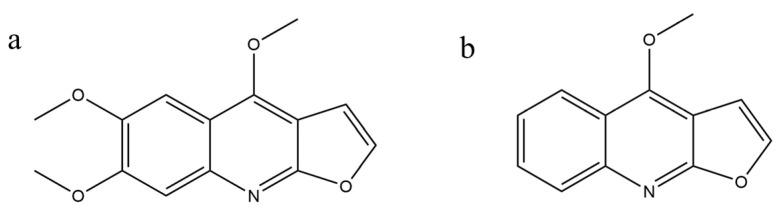
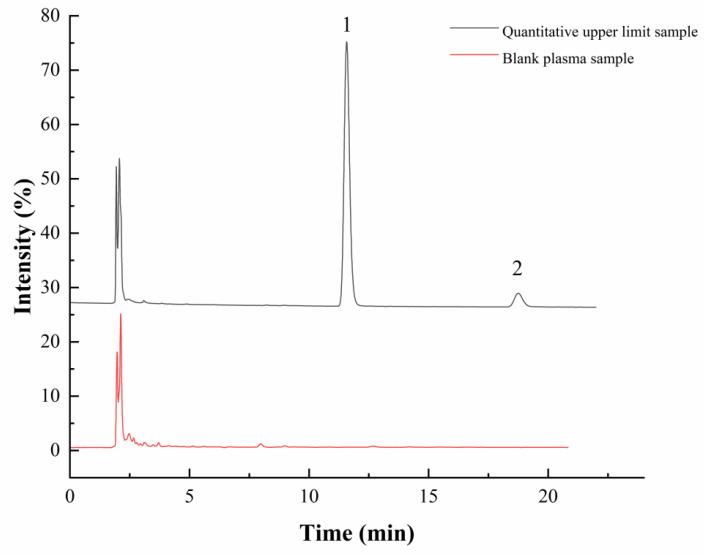
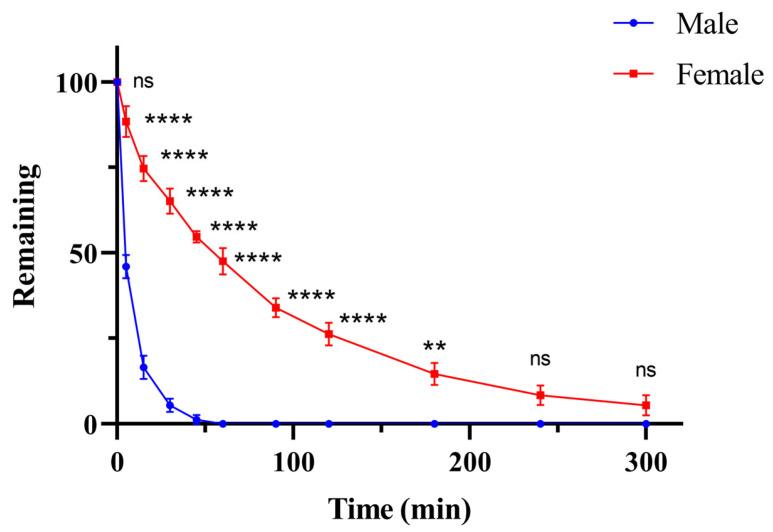
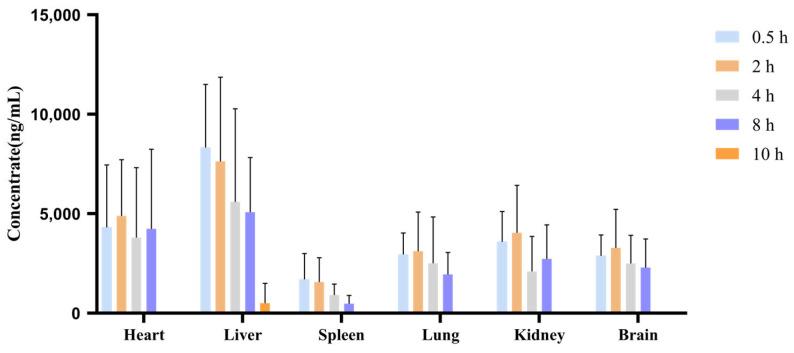
Kokusaginine is a bioactive ingredient extracted from L., which has a range of biological activities. Its pharmacokinetic (PK) properties are particularly important for clinical applications; however, they have not been fully elucidated. In addition, the effect of sex differences on drug metabolism is increasingly being recognized, but most studies have ignored this important factor. This study aims to fill this knowledge gap by taking an in-depth look at the PK properties of kokusaginine and how gender affects its metabolism and distribution in the body. It also lays the foundation for clinical drug development. In this study, a sensitive ultra-high-performance liquid chromatography (UPLC) method was developed and validated for quantifying kokusaginine in Sprague Dawley (SD) rat plasma and tissue homogenates. Metabolic stability was evaluated in vitro using gender-specific liver microsomes. Innovatively, we incorporated sex as a variable into both in vitro and in vivo PK studies in SD rats, analyzing key parameters with Phoenix 8.3.5 software. The developed UPLC method demonstrated high sensitivity and precision, essential for PK analysis. Notably, in vitro studies revealed a pronounced sex-dependent metabolic variability ( < 0.05). In vivo, gender significantly affected the Area Under the Moment Curve (AUMC) of the plasma PK parameter ( < 0.05) and the AUMC of brain tissue ( < 0.0001), underscoring the necessity of sex-specific PK assessments. The calculated absolute bioavailability of 71.13 ± 12.75% confirmed the favorable oral absorption of kokusaginine. Additionally, our innovative tissue-plasma partition coefficient (K) analysis highlighted a rapid and uniform tissue distribution pattern. This study presents a sex-inclusive PK evaluation of kokusaginine, offering novel insights into its metabolic profile and distribution. These findings are instrumental for informing clinical medication practices, dosage optimization, and a nuanced understanding of drug efficacy and safety in a sex-specific context.
钩吻素子是从[植物名称]中提取的一种生物活性成分,具有一系列生物活性。其药代动力学(PK)特性对于临床应用尤为重要;然而,这些特性尚未得到充分阐明。此外,性别差异对药物代谢的影响越来越受到认可,但大多数研究都忽略了这一重要因素。本研究旨在通过深入研究钩吻素子的PK特性以及性别如何影响其在体内的代谢和分布来填补这一知识空白。它还为临床药物开发奠定了基础。在本研究中,开发并验证了一种灵敏的超高效液相色谱(UPLC)方法,用于定量测定斯普拉格-道利(SD)大鼠血浆和组织匀浆中的钩吻素子。使用性别特异性肝微粒体在体外评估代谢稳定性。创新的是,我们将性别作为一个变量纳入SD大鼠的体外和体内PK研究中,使用Phoenix 8.3.5软件分析关键参数。所开发的UPLC方法显示出高灵敏度和精密度,这对PK分析至关重要。值得注意的是,体外研究显示出明显的性别依赖性代谢变异性(P<0.05)。在体内,性别显著影响血浆PK参数的矩曲线下面积(AUMC)(P<0.05)和脑组织的AUMC(P<0.0001),强调了性别特异性PK评估的必要性。计算得出的71.13±12.75%的绝对生物利用度证实了钩吻素子良好的口服吸收。此外,我们创新的组织-血浆分配系数(K)分析突出了快速且均匀的组织分布模式。本研究提出了一项包含性别的钩吻素子PK评估,为其代谢谱和分布提供了新的见解。这些发现有助于指导临床用药实践、剂量优化以及在性别特异性背景下对药物疗效和安全性的细致理解。




 Zotero 插件