
生物塑料综合分析:生命周期评估、废物管理、生物多样性影响及可持续缓解策略。
Comprehensive analysis of bioplastics: life cycle assessment, waste management, biodiversity impact, and sustainable mitigation strategies.
作者信息
Yadav Kushi, Nikalje Ganesh Chandrakant
机构信息
Amity Institute of Biotechnology, Amity University, Noida, Uttar Pradesh, India.
Department of Botany, Seva Sadan's R. K. Talreja College of Arts, Science and Commerce, University of Mumbai, Ulhasnagar, India.
出版信息
PeerJ. 2024 Sep 11;12:e18013. doi: 10.7717/peerj.18013. eCollection 2024.
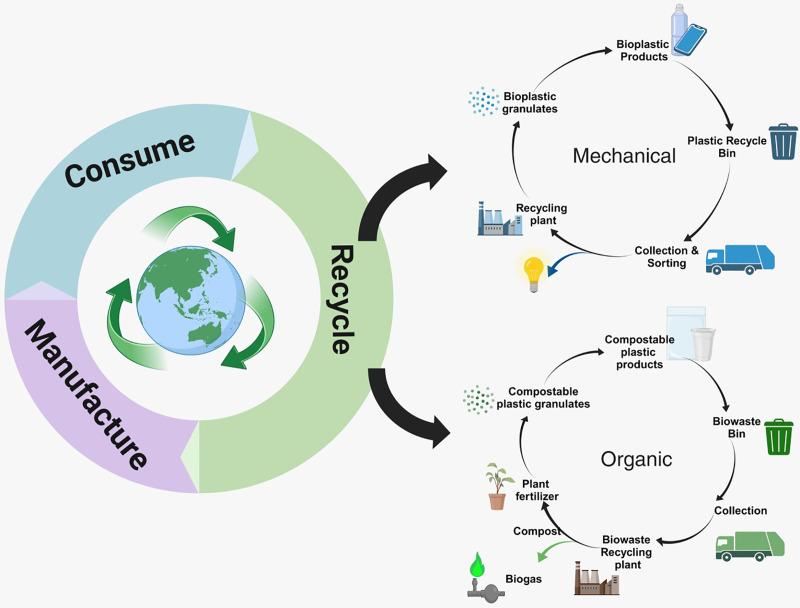
Bioplastics are emerging as a promising alternative to traditional plastics, driven by the need for more sustainable options. This review article offers an in-depth analysis of the entire life cycle of bioplastics, from raw material cultivation to manufacturing and disposal, with a focus on environmental impacts at each stage. It emphasizes the significance of adopting sustainable agricultural practices and selecting appropriate feedstock to improve environmental outcomes. The review highlights the detrimental effects of unsustainable farming methods, such as pesticide use and deforestation, which can lead to soil erosion, water pollution, habitat destruction, and increased greenhouse gas emissions. To address these challenges, the article advocates for the use of efficient extraction techniques and renewable energy sources, prioritizing environmental considerations throughout the production process. Furthermore, the methods for reducing energy consumption, water usage, and chemical inputs during manufacturing by implementing eco-friendly technologies. It stresses the importance of developing robust disposal systems for biodegradable materials and supports recycling initiatives to minimize the need for new resources. The holistic approach to sustainability, including responsible feedstock cultivation, efficient production practices, and effective end-of-life management. It underscores the need to evaluate the potential of bioplastics to reduce plastic pollution, considering technological advancements, infrastructure development, and increased consumer awareness. Future research should focus on enhancing production sustainability, understanding long-term ecological impacts, and advancing bioplastics technology for better performance and environmental compatibility. This comprehensive analysis of bioplastics' ecological footprint highlights the urgent need for sustainable solutions in plastic production.
由于对更可持续选择的需求,生物塑料正成为传统塑料的一种有前景的替代品。这篇综述文章对生物塑料的整个生命周期进行了深入分析,从原材料种植到制造和处置,重点关注每个阶段的环境影响。它强调采用可持续农业实践和选择合适原料以改善环境成果的重要性。该综述突出了不可持续耕作方法的有害影响,如农药使用和森林砍伐,这可能导致土壤侵蚀、水污染、栖息地破坏以及温室气体排放增加。为应对这些挑战,文章提倡使用高效提取技术和可再生能源,在整个生产过程中优先考虑环境因素。此外,通过实施环保技术来减少制造过程中的能源消耗、水使用和化学投入的方法。它强调为可生物降解材料开发强大处置系统的重要性,并支持回收倡议以尽量减少对新资源的需求。对可持续性的整体方法,包括负责任的原料种植、高效的生产实践和有效的生命周期末端管理。它强调需要评估生物塑料减少塑料污染的潜力,同时考虑技术进步、基础设施发展和消费者意识的提高。未来的研究应专注于提高生产可持续性、理解长期生态影响以及推进生物塑料技术以实现更好的性能和环境兼容性。对生物塑料生态足迹的这种全面分析凸显了塑料生产中对可持续解决方案的迫切需求。
 Zotero 插件