
用于癌症免疫治疗的STING激活聚合物-药物偶联物
STING-Activating Polymer-Drug Conjugates for Cancer Immunotherapy.
作者信息
Sheehy Taylor L, Kwiatkowski Alexander J, Arora Karan, Kimmel Blaise R, Schulman Jacob A, Gibson-Corley Katherine N, Wilson John T
机构信息
Department of Biomedical Engineering, Vanderbilt University, Nashville, Tennessee 37232, United States.
Department of Chemical and Biomolecular Engineering, Vanderbilt University, Nashville, Tennessee 37232, United States.
出版信息
ACS Cent Sci. 2024 Aug 20;10(9):1765-1781. doi: 10.1021/acscentsci.4c00579. eCollection 2024 Sep 25.
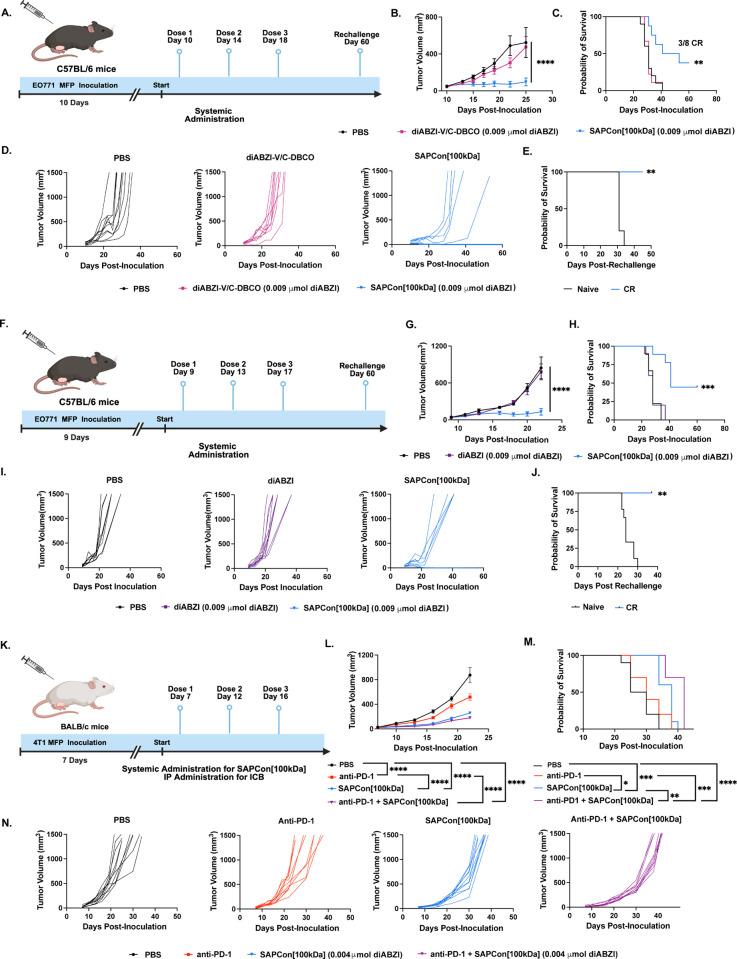
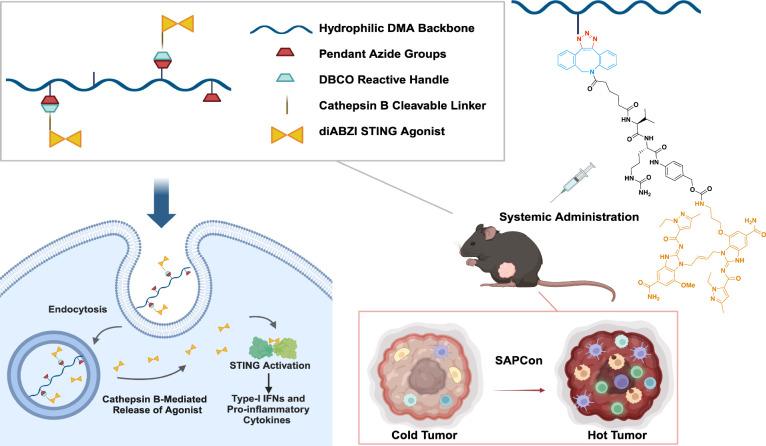
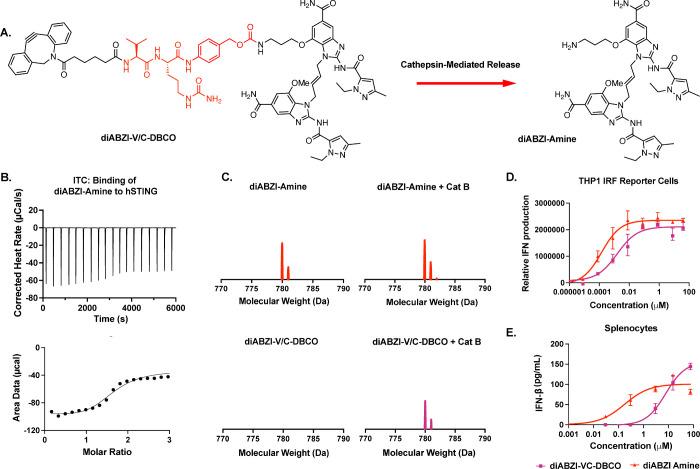
The stimulator of interferon genes (STING) pathway links innate and adaptive antitumor immunity and therefore plays an important role in cancer immune surveillance. This has prompted widespread development of STING agonists for cancer immunotherapy, but pharmacological barriers continue to limit the clinical impact of STING agonists and motivate the development of drug delivery systems to improve their efficacy and/or safety. We developed SAPCon, a STING-activating polymer-drug conjugate platform based on strain-promoted azide-alkyne cycloaddition of a novel dimeric amidobenzimidazole (diABZI) STING prodrug to hydrophilic poly(dimethylacrylamide--azido-ethylmethacrylate) polymer chains through a cathepsin B-responsive linker to increase circulation time and enable passive tumor accumulation. We found that intravenously administered SAPCon accumulated at tumor sites, where it was endocytosed by tumor-associated myeloid cells, resulting in increased STING activation in the tumor tissue. Consequently, SAPCon promoted an immunogenic tumor microenvironment characterized by increased frequency of activated macrophages and dendritic cells and improved infiltration of CD8 T cells, resulting in inhibition of tumor growth, prolonged survival, and enhanced response to anti-PD-1 immune checkpoint blockade in orthotopic breast cancer models. Collectively, these studies position SAPCon as a modular and programmable platform for improving the efficacy of systemically administered STING agonists for cancer immunotherapy.
干扰素基因刺激物(STING)通路连接先天性和适应性抗肿瘤免疫,因此在癌症免疫监视中发挥重要作用。这促使人们广泛开发用于癌症免疫治疗的STING激动剂,但药理学障碍继续限制着STING激动剂的临床影响,并推动了药物递送系统的开发,以提高其疗效和/或安全性。我们开发了SAPCon,这是一种基于新型二聚体酰胺苯并咪唑(diABZI)STING前药通过组织蛋白酶B响应接头与亲水性聚(二甲基丙烯酰胺-叠氮基甲基丙烯酸乙酯)聚合物链进行应变促进的叠氮化物-炔烃环加成反应的STING激活聚合物-药物偶联平台,以延长循环时间并实现被动肿瘤蓄积。我们发现静脉注射的SAPCon在肿瘤部位蓄积,在那里它被肿瘤相关髓样细胞内吞,导致肿瘤组织中STING激活增加。因此,SAPCon促进了一种免疫原性肿瘤微环境,其特征是活化巨噬细胞和树突状细胞的频率增加以及CD8 T细胞浸润改善,从而导致肿瘤生长受到抑制、生存期延长以及在原位乳腺癌模型中对抗程序性死亡蛋白1(PD-1)免疫检查点阻断的反应增强。总的来说,这些研究将SAPCon定位为一个模块化且可编程的平台,用于提高全身给药的STING激动剂在癌症免疫治疗中的疗效。



 Zotero 插件