
解析 ADAMs 在肝细胞癌临床异质性和免疫微环境中的作用:单细胞、空间转录组学和批量 RNA 测序的见解。
Unraveling the role of ADAMs in clinical heterogeneity and the immune microenvironment of hepatocellular carcinoma: insights from single-cell, spatial transcriptomics, and bulk RNA sequencing.
机构信息
Department of Hepatobiliary and Pancreatic Surgery, General Surgery Center, The First Hospital of Jilin University, Changchun, China.
Department of Oncology, The First Affiliated Hospital of Dalian Medical University, Dalian, China.
出版信息
Front Immunol. 2024 Sep 13;15:1461424. doi: 10.3389/fimmu.2024.1461424. eCollection 2024.
BACKGROUND
Hepatocellular carcinoma (HCC) is a prevalent and heterogeneous tumor with limited treatment options and unfavorable prognosis. The crucial role of a disintegrin and metalloprotease (ADAM) gene family in the tumor microenvironment of HCC remains unclear.
METHODS
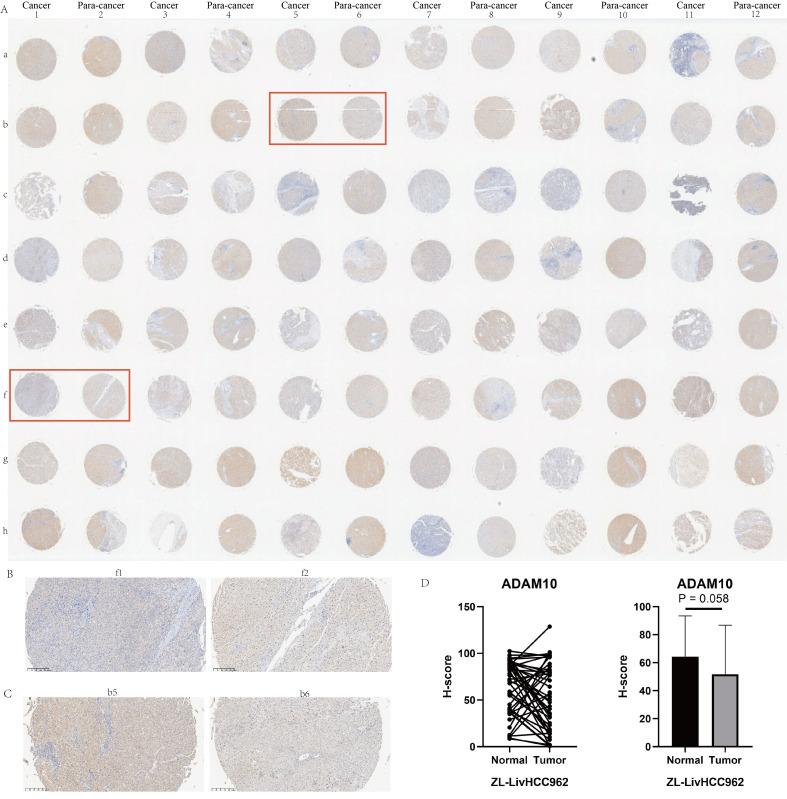
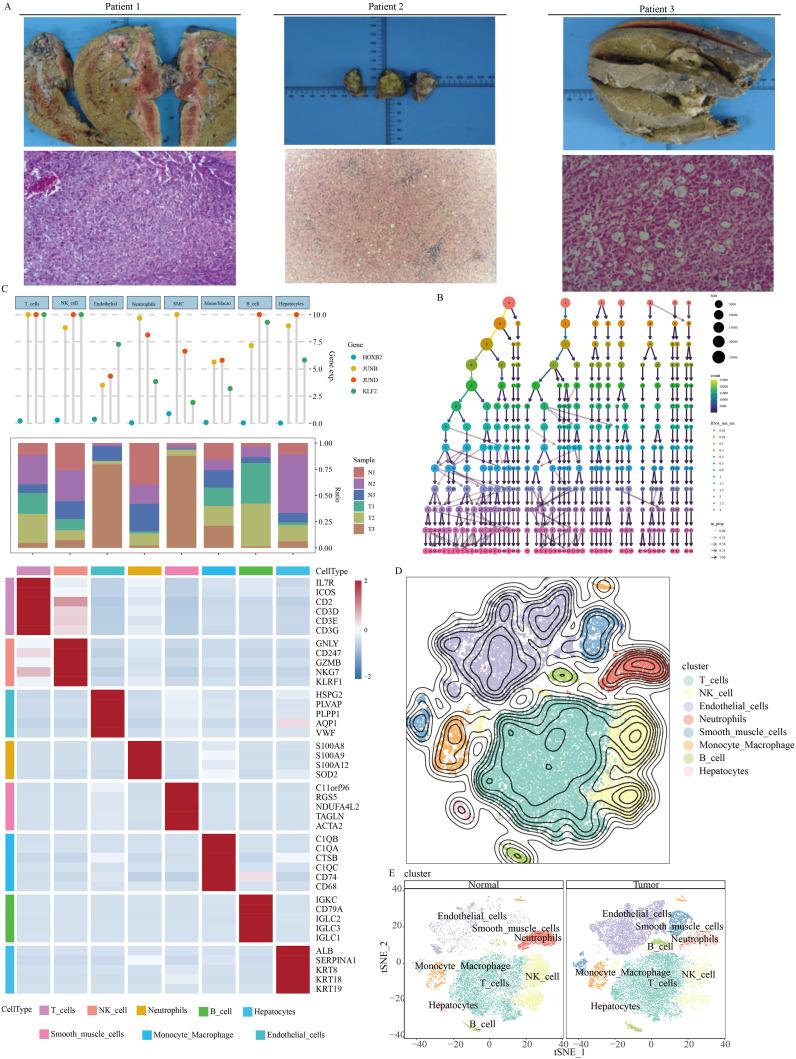
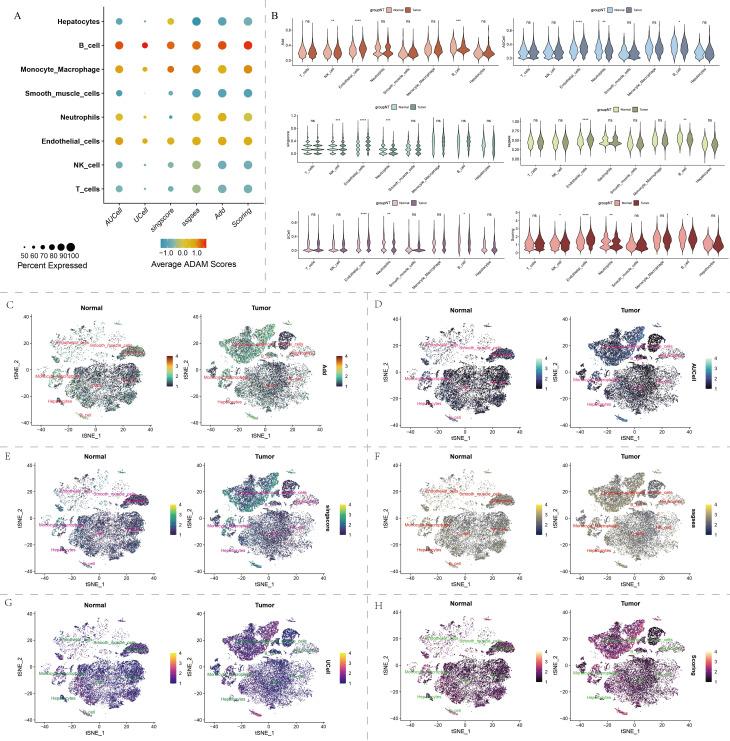
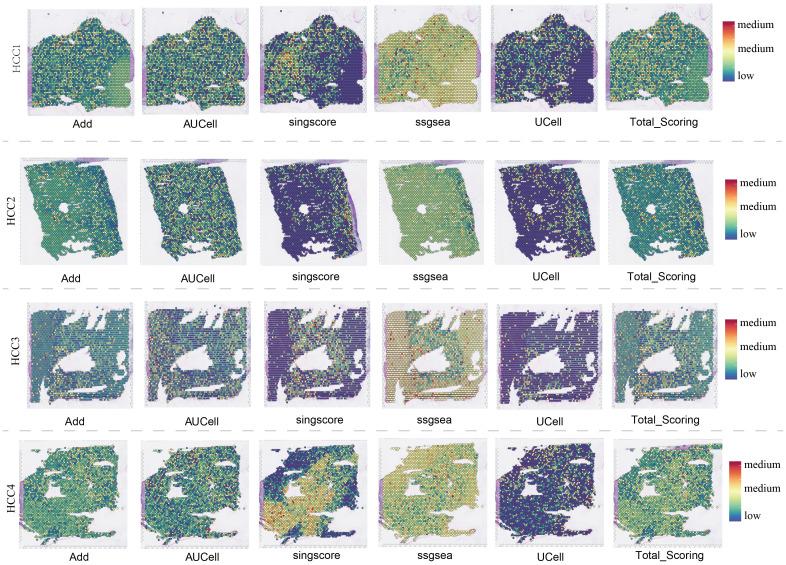
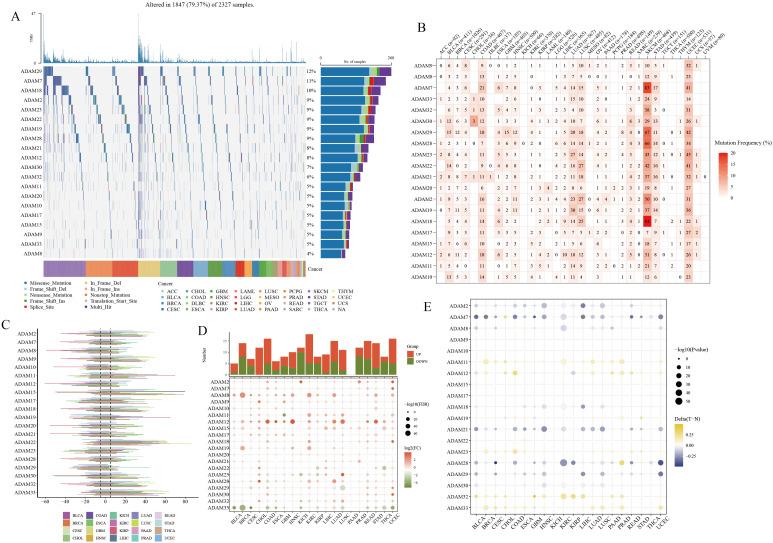
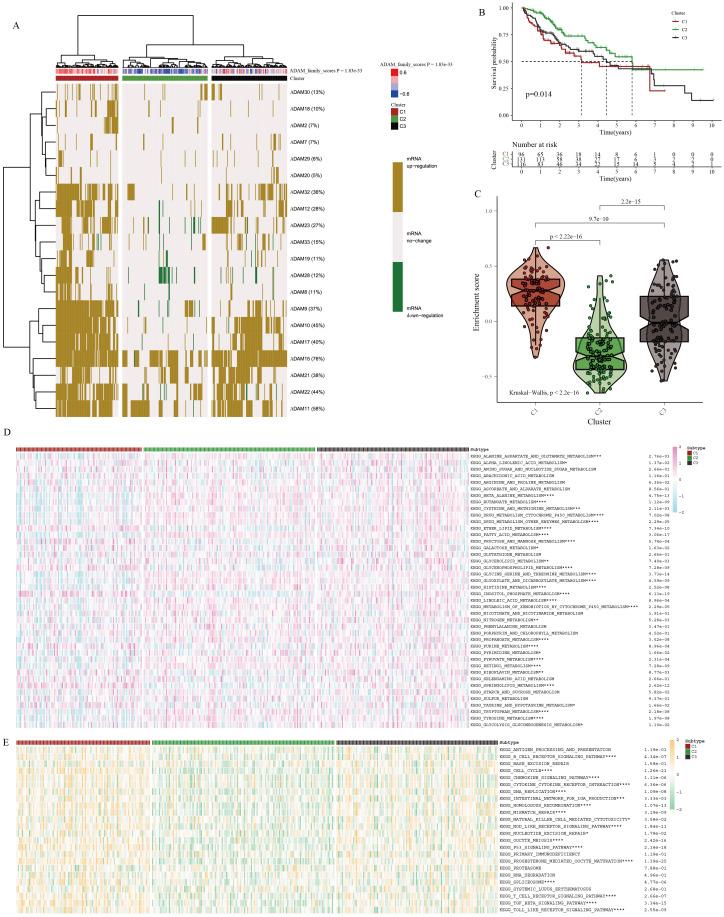
This study employed a novel multi-omics integration strategy to investigate the potential roles of ADAM family signals in HCC. A series of single-cell and spatial omics algorithms were utilized to uncover the molecular characteristics of ADAM family genes within HCC. The GSVA package was utilized to compute the scores for ADAM family signals, subsequently stratified into three categories: high, medium, and low ADAM signal levels through unsupervised clustering. Furthermore, we developed and rigorously validated an innovative and robust clinical prognosis assessment model by employing 99 mainstream machine learning algorithms in conjunction with co-expression feature spectra of ADAM family genes. To validate our findings, we conducted PCR and IHC experiments to confirm differential expression patterns within the ADAM family genes.
RESULTS
Gene signals from the ADAM family were notably abundant in endothelial cells, liver cells, and monocyte macrophages. Single-cell sequencing and spatial transcriptomics analyses have both revealed the molecular heterogeneity of the ADAM gene family, further emphasizing its significant impact on the development and progression of HCC. In HCC tissues, the expression levels of ADAM9, ADAM10, ADAM15, and ADAM17 were markedly elevated. Elevated ADAM family signal scores were linked to adverse clinical outcomes and disruptions in the immune microenvironment and metabolic reprogramming. An ADAM prognosis signal, developed through the utilization of 99 machine learning algorithms, could accurately forecast the survival duration of HCC, achieving an AUC value of approximately 0.9.
CONCLUSIONS
This study represented the inaugural report on the deleterious impact and prognostic significance of ADAM family signals within the tumor microenvironment of HCC.
背景
肝细胞癌(HCC)是一种普遍存在且异质性的肿瘤,其治疗选择有限,预后不佳。解整合素金属蛋白酶(ADAM)基因家族在 HCC 肿瘤微环境中的关键作用尚不清楚。
方法
本研究采用一种新的多组学整合策略来研究 ADAM 家族信号在 HCC 中的潜在作用。利用一系列单细胞和空间组学算法,揭示 HCC 中 ADAM 家族基因的分子特征。使用 GSVA 包计算 ADAM 家族信号的评分,然后通过无监督聚类将其分为高、中、低 ADAM 信号水平三个类别。此外,我们开发了一种创新且稳健的临床预后评估模型,并利用 99 种主流机器学习算法和 ADAM 家族基因的共表达特征谱进行了严格验证。为了验证我们的发现,我们进行了 PCR 和 IHC 实验,以确认 ADAM 家族基因的差异表达模式。
结果
ADAM 家族的基因信号在血管内皮细胞、肝细胞和单核巨噬细胞中显著丰富。单细胞测序和空间转录组学分析都揭示了 ADAM 基因家族的分子异质性,进一步强调了其对 HCC 发生和发展的重要影响。在 HCC 组织中,ADAM9、ADAM10、ADAM15 和 ADAM17 的表达水平显著升高。ADAM 家族信号评分升高与不良临床结局以及免疫微环境和代谢重编程的破坏有关。利用 99 种机器学习算法开发的 ADAM 预后信号可以准确预测 HCC 的生存时间,AUC 值约为 0.9。
结论
本研究首次报道了 ADAM 家族信号在 HCC 肿瘤微环境中的有害影响和预后意义。


 Zotero 插件