
染色体外环状DNA及其在癌症进展中的作用。
Extrachromosomal circular DNA and their roles in cancer progression.
作者信息
Zheng Siqi, Li Yunong, Wang Lin, Wei Qian, Wei Minjie, Yu Tao, Zhao Lin
机构信息
Department of Pharmacology, School of Pharmacy, China Liaoning Key Laboratory of Molecular Targeted Anti-Tumor Drug Development and Evaluation, Liaoning Cancer Immune Peptide Drug Engineering Technology Research Center, Key Laboratory of Precision Diagnosis and Treatment of Gastrointestinal Tumors, Ministry of Education, China Medical University, Shenyang, Liaoning 110122, China.
Department of Medical Imaging, Cancer Hospital of China Medical University, Liaoning Cancer Hospital & Institute, Shenyang, Liaoning 110042, China.
出版信息
Genes Dis. 2023 Dec 22;12(1):101202. doi: 10.1016/j.gendis.2023.101202. eCollection 2025 Jan.
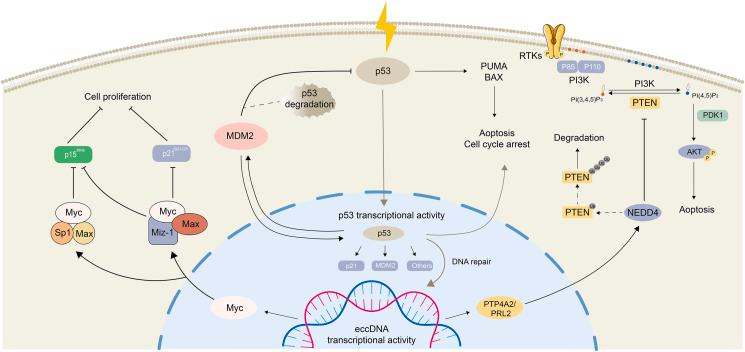
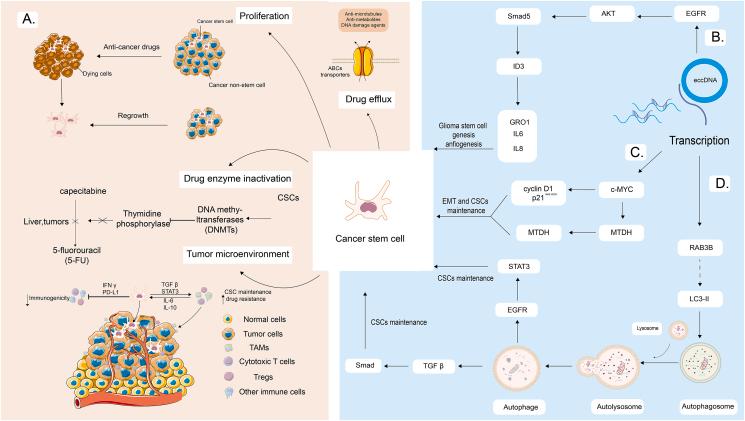
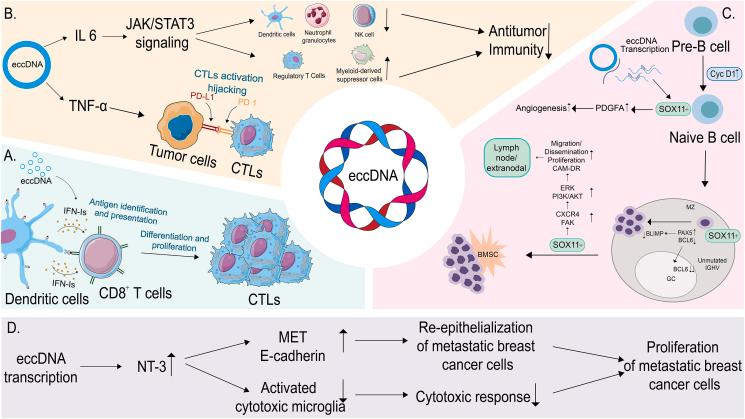
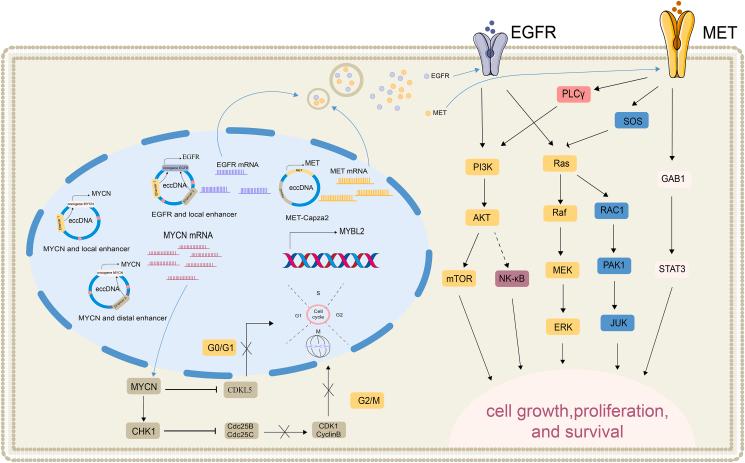
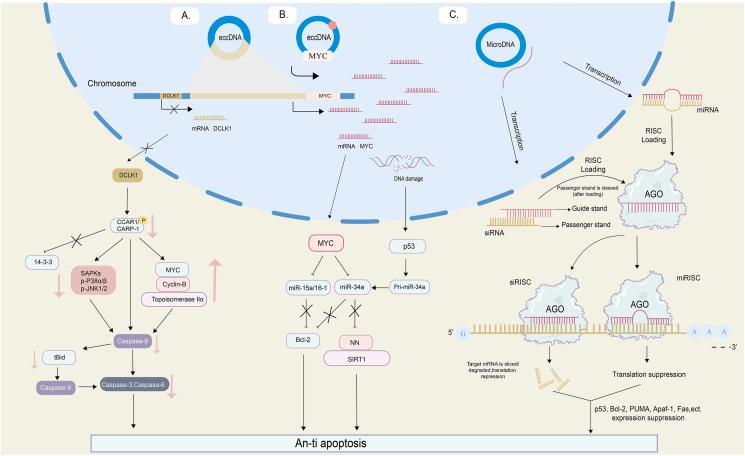
Extrachromosomal circular DNA (eccDNA), a chromosome-independent circular DNA, has garnered significant attention due to its widespread distribution and intricate biogenesis in carcinoma. Existing research findings propose that multiple eccDNAs contribute to drug resistance in cancer treatments through complex and interrelated regulatory mechanisms. The unique structure and genetic properties of eccDNA increase tumor heterogeneity. This increased diversity is a result of eccDNA's ability to stimulate oncogene remodeling and participate in anomalous splicing processes through chimeric cyclization and the reintegration of loop DNA back into the linear genome. Such actions promote oncogene amplification and silencing. eccDNA orchestrates protein interactions and modulates protein degradation by acting as a regulatory messenger. Moreover, it plays a pivotal role in modeling the tumor microenvironment and intensifying the stemness characteristics of tumor cells. This review presented detailed information about the biogenesis, distinguishing features, and functions of eccDNA, emphasized the role and mechanisms of eccDNA during cancer treatment, and further proposed the great potential of eccDNA in inspiring novel strategies for precision cancer therapy and facilitating the discovery of prognostic biomarkers for cancer.
染色体外环状DNA(eccDNA)是一种不依赖染色体的环状DNA,因其在癌症中广泛分布和复杂的生物发生过程而备受关注。现有研究结果表明,多种eccDNA通过复杂且相互关联的调控机制导致癌症治疗中的耐药性。eccDNA独特的结构和遗传特性增加了肿瘤异质性。这种多样性的增加是由于eccDNA能够通过嵌合环化和环DNA重新整合到线性基因组中刺激癌基因重塑并参与异常剪接过程。这些作用促进了癌基因的扩增和沉默。eccDNA作为一种调节信使来协调蛋白质相互作用并调节蛋白质降解。此外,它在塑造肿瘤微环境和增强肿瘤细胞的干性特征方面发挥着关键作用。本综述介绍了eccDNA的生物发生、显著特征和功能的详细信息,强调了eccDNA在癌症治疗过程中的作用和机制,并进一步提出了eccDNA在启发精准癌症治疗新策略和促进癌症预后生物标志物发现方面的巨大潜力。
 Zotero 插件