
从意外发现到精准医疗:整合人工智能、多组学和人类特异性模型以实现个性化神经精神疾病护理。
From Serendipity to Precision: Integrating AI, Multi-Omics, and Human-Specific Models for Personalized Neuropsychiatric Care.
作者信息
Tanaka Masaru
机构信息
HUN-REN-SZTE Neuroscience Research Group, Hungarian Research Network, University of Szeged (HUN-REN-SZTE), Danube Neuroscience Research Laboratory, Tisza Lajos krt. 113, H-6725 Szeged, Hungary.
出版信息
Biomedicines. 2025 Jan 12;13(1):167. doi: 10.3390/biomedicines13010167.
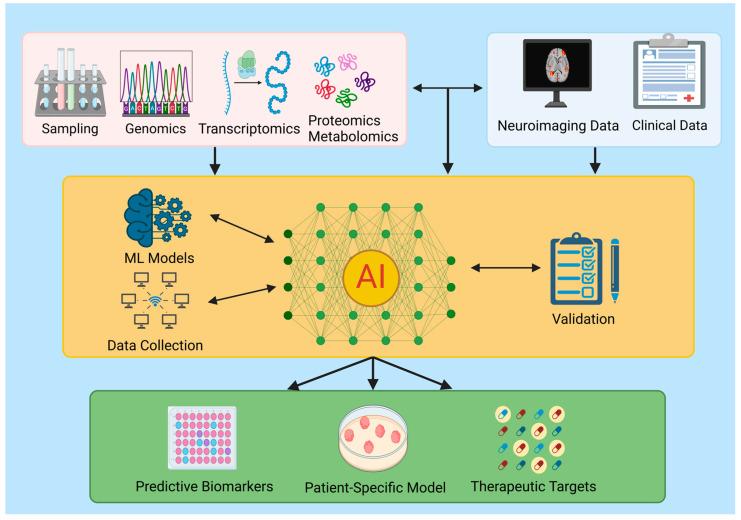
: The dual forces of structured inquiry and serendipitous discovery have long shaped neuropsychiatric research, with groundbreaking treatments such as lithium and ketamine resulting from unexpected discoveries. However, relying on chance is becoming increasingly insufficient to address the rising prevalence of mental health disorders like depression and schizophrenia, which necessitate precise, innovative approaches. Emerging technologies like artificial intelligence, induced pluripotent stem cells, and multi-omics have the potential to transform this field by allowing for predictive, patient-specific interventions. Despite these advancements, traditional methodologies such as animal models and single-variable analyses continue to be used, frequently failing to capture the complexities of human neuropsychiatric conditions. This review critically evaluates the transition from serendipity to precision-based methodologies in neuropsychiatric research. It focuses on key innovations such as dynamic systems modeling and network-based approaches that use genetic, molecular, and environmental data to identify new therapeutic targets. Furthermore, it emphasizes the importance of interdisciplinary collaboration and human-specific models in overcoming the limitations of traditional approaches. We highlight precision psychiatry's transformative potential for revolutionizing mental health care. This paradigm shift, which combines cutting-edge technologies with systematic frameworks, promises increased diagnostic accuracy, reproducibility, and efficiency, paving the way for tailored treatments and better patient outcomes in neuropsychiatric care.
长期以来,结构化探究和偶然发现这两种力量塑造着神经精神医学研究,诸如锂盐和氯胺酮等突破性治疗方法都源于意外发现。然而,仅靠偶然发现已越来越不足以应对抑郁症和精神分裂症等心理健康障碍日益上升的患病率,这需要精确、创新的方法。人工智能、诱导多能干细胞和多组学等新兴技术有潜力通过实现预测性、针对患者的干预措施来改变这一领域。尽管有这些进展,动物模型和单变量分析等传统方法仍在继续使用,常常无法捕捉人类神经精神疾病的复杂性。 本综述批判性地评估了神经精神医学研究从偶然发现向基于精确性的方法的转变。它聚焦于动态系统建模和基于网络的方法等关键创新,这些方法利用基因、分子和环境数据来确定新的治疗靶点。此外,它强调跨学科合作和针对人类的模型在克服传统方法局限性方面的重要性。 我们强调精准精神病学在彻底改变精神卫生保健方面的变革潜力。这种将前沿技术与系统框架相结合的范式转变有望提高诊断准确性、可重复性和效率,为神经精神医学护理中的个性化治疗和更好的患者结局铺平道路。
 Zotero 插件