
组蛋白修饰生物标志物的免疫组织化学分析鉴定了乳腺癌中的亚型特异性表观遗传特征和潜在药物靶点。
Immunohistochemical Profiling of Histone Modification Biomarkers Identifies Subtype-Specific Epigenetic Signatures and Potential Drug Targets in Breast Cancer.
作者信息
Huo Zirong, Zhang Sitong, Su Guodong, Cai Yu, Chen Rui, Jiang Mengju, Yang Dongyan, Zhang Shengchao, Xiong Yuyan, Zhang Xi
机构信息
School of Life Science, Northwest University, Xi'an 710069, China.
School of Professional Studies, Northwestern University, Evanston, IL 60201, USA.
出版信息
Int J Mol Sci. 2025 Jan 17;26(2):770. doi: 10.3390/ijms26020770.
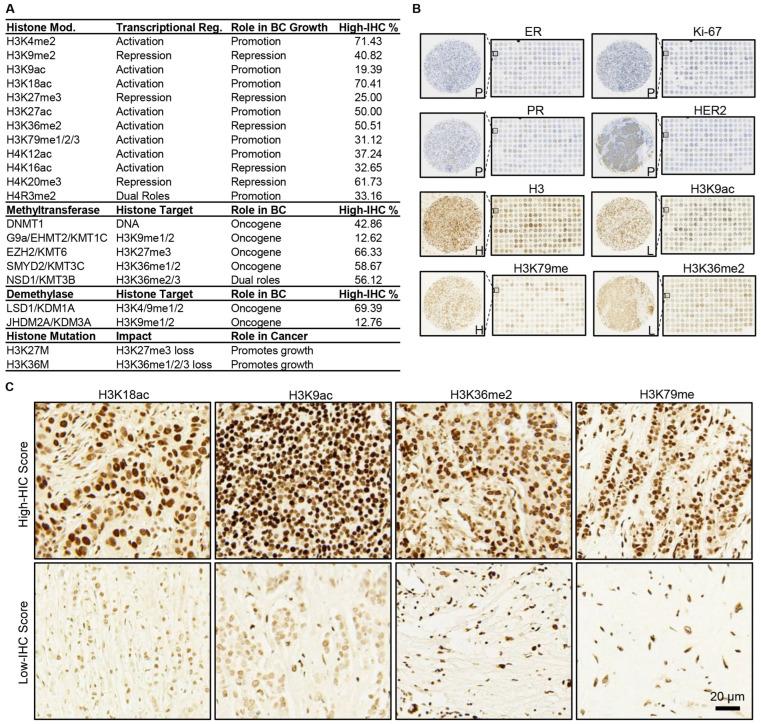
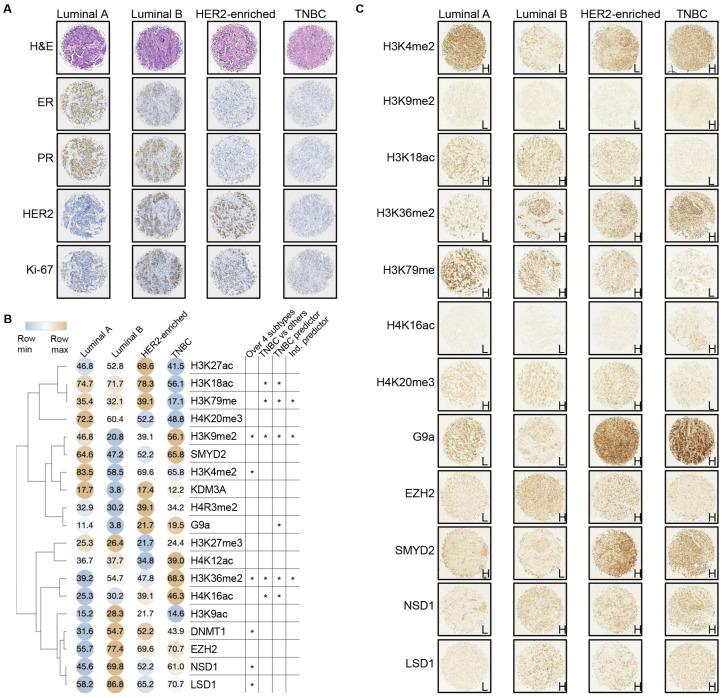
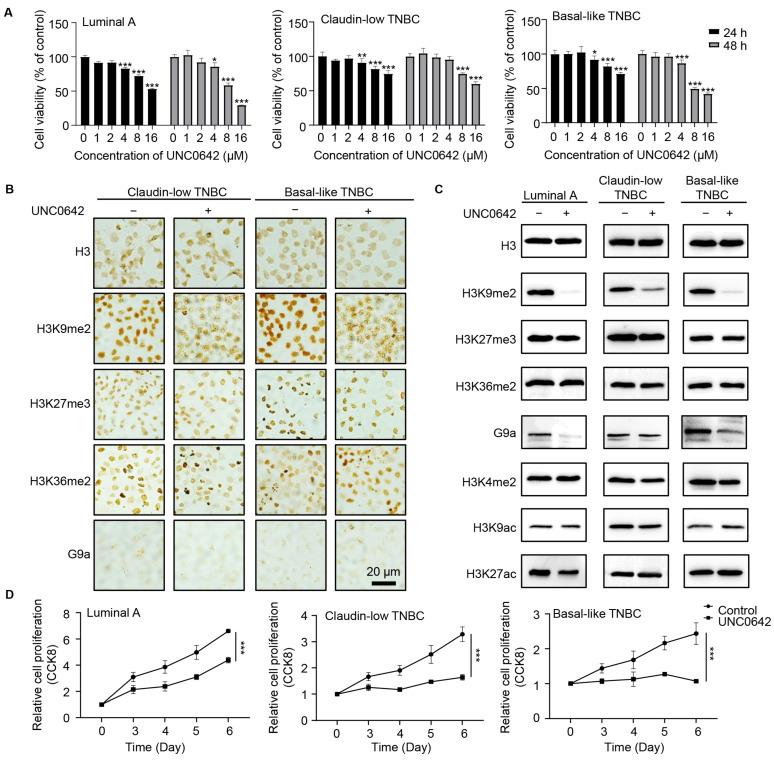
Breast cancer (BC) subtypes exhibit distinct epigenetic landscapes, with triple-negative breast cancer (TNBC) lacking effective targeted therapies. This study investigates histone biomarkers and therapeutic vulnerabilities across BC subtypes. The immunohistochemical profiling of >20 histone biomarkers, including histone modifications, modifiers, and oncohistone mutations, was conducted on a discovery cohort and a validation cohort of BC tissues, healthy controls, and cell line models. Transcriptomic and cell growth analyses were conducted to evaluate the effects of the small-molecule G9a inhibitor in diverse BC models. Key histone biomarkers, including H3K9me2, H3K36me2, and H3K79me, were differentially expressed across BC subtypes. H3K9me2 emerged as an independent predictor for distinguishing TNBC from other less-aggressive BC subtypes, with elevated expression correlating with higher tumor grade and stage. G9a inhibition impaired cell proliferation and modulated epithelial-mesenchymal transition pathways, with the strongest impact in basal-like TNBC. The disruption of the oncogene and tumor suppressor regulation (e.g., TP53, SATB1) was observed in TNBC. This study highlights G9a's context-dependent roles in BC, supporting its potential as a therapeutic target. The findings provide a foundation for subtype-specific epigenetic therapies to improve outcomes in aggressive BC subtypes.
乳腺癌(BC)亚型呈现出不同的表观遗传格局,三阴性乳腺癌(TNBC)缺乏有效的靶向治疗方法。本研究调查了BC各亚型中的组蛋白生物标志物和治疗易损性。对包括组蛋白修饰、修饰酶和癌组蛋白突变在内的20多种组蛋白生物标志物进行免疫组织化学分析,分析对象包括BC组织、健康对照和细胞系模型的发现队列和验证队列。进行转录组学和细胞生长分析以评估小分子G9a抑制剂在不同BC模型中的作用。关键组蛋白生物标志物,包括H3K9me2、H3K36me2和H3K79me,在BC各亚型中差异表达。H3K9me2成为区分TNBC与其他侵袭性较低的BC亚型的独立预测因子,其表达升高与更高的肿瘤分级和分期相关。G9a抑制损害细胞增殖并调节上皮-间质转化途径,对基底样TNBC影响最强。在TNBC中观察到癌基因和肿瘤抑制因子调控(如TP53、SATB1)的破坏。本研究突出了G9a在BC中的背景依赖性作用,支持其作为治疗靶点的潜力。这些发现为亚型特异性表观遗传治疗奠定了基础,以改善侵袭性BC亚型的治疗结果。




 Zotero 插件