
癌症中的AXL信号传导:从分子洞察到靶向治疗。
AXL signaling in cancer: from molecular insights to targeted therapies.
作者信息
Yadav Monika, Sharma Akansha, Patne Ketki, Tabasum Saba, Suryavanshi Jyoti, Rawat Laxminarayan, Machaalani Marc, Eid Marc, Singh Rana P, Choueiri Toni K, Pal Soumitro, Sabarwal Akash
机构信息
Cancer Biology Laboratory, School of Life Sciences, Jawaharlal Nehru University, New Delhi, Delhi, India.
Laboratory of Nanotechnology and Chemical Biology, Regional Center for Biotechnology, Faridabad, Haryana, India.
出版信息
Signal Transduct Target Ther. 2025 Feb 10;10(1):37. doi: 10.1038/s41392-024-02121-7.
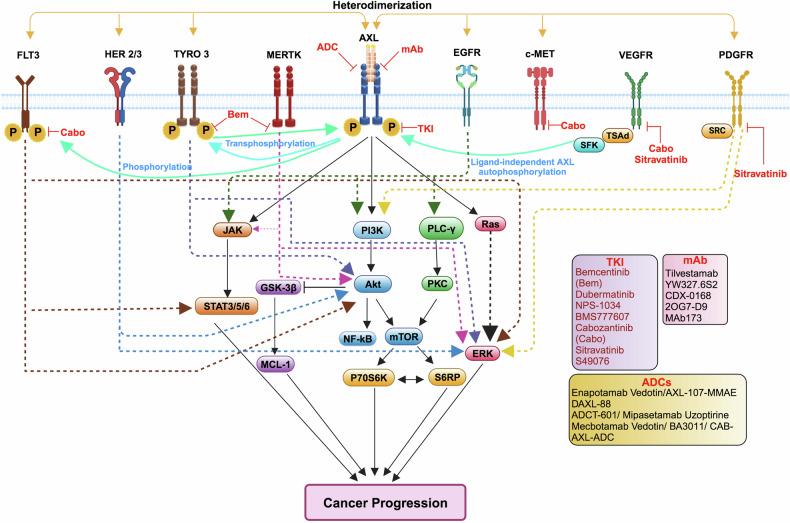
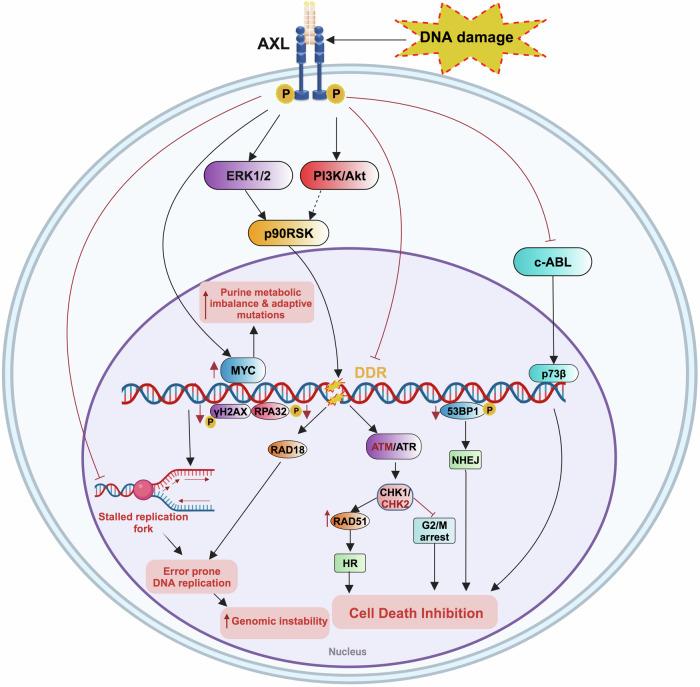
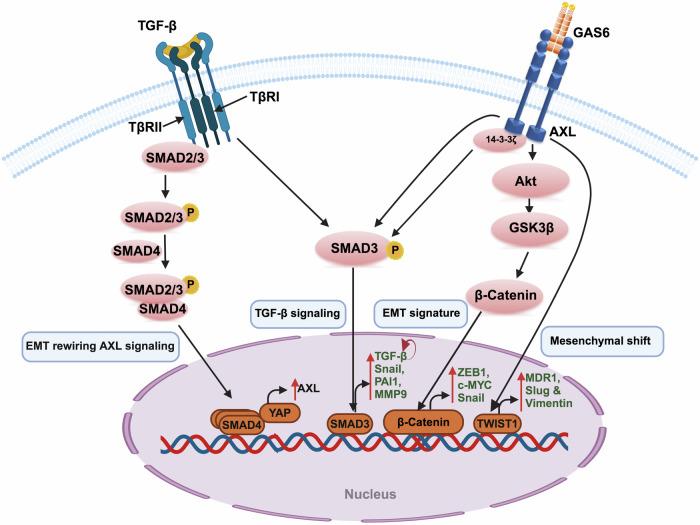
AXL, a member of the TAM receptor family, has emerged as a potential target for advanced-stage human malignancies. It is frequently overexpressed in different cancers and plays a significant role in various tumor-promoting pathways, including cancer cell proliferation, invasion, metastasis, epithelial-mesenchymal transition (EMT), angiogenesis, stemness, DNA damage response, acquired therapeutic resistance, immunosuppression, and inflammatory responses. Beyond oncology, AXL also facilitates viral infections, including SARS-CoV-2 and Zika highlighting its importance in both cancer and virology. In preclinical models, small-molecule kinase inhibitors targeting AXL have shown promising anti-tumorigenic potential. This review primarily focuses on the induction, regulation and biological functions of AXL in mediating these tumor-promoting pathways. We discuss a range of therapeutic strategies, including recently developed small-molecule tyrosine kinase inhibitors (TKIs), monoclonal antibodies, and antibody-drug conjugates (ADCs), anti-AXL-CAR, and combination therapies. These interventions are being examined in both preclinical and clinical studies, offering the potential for improved drug sensitivity and therapeutic efficacy. We further discuss the mechanisms of acquired therapeutic resistance, particularly the crosstalk between AXL and other critical receptor tyrosine kinases (RTKs) such as c-MET, EGFR, HER2/HER3, VEGFR, PDGFR, and FLT3. Finally, we highlight key research areas that require further exploration to enhance AXL-mediated therapeutic approaches for improved clinical outcomes.
AXL是TAM受体家族的成员,已成为晚期人类恶性肿瘤的潜在靶点。它在不同癌症中经常过度表达,并在多种肿瘤促进途径中发挥重要作用,包括癌细胞增殖、侵袭、转移、上皮-间质转化(EMT)、血管生成、干性、DNA损伤反应、获得性治疗耐药、免疫抑制和炎症反应。除肿瘤学外,AXL还促进病毒感染,包括严重急性呼吸综合征冠状病毒2(SARS-CoV-2)和寨卡病毒,凸显了其在癌症和病毒学中的重要性。在临床前模型中,靶向AXL的小分子激酶抑制剂已显示出有前景的抗肿瘤潜力。本综述主要关注AXL在介导这些肿瘤促进途径中的诱导、调节和生物学功能。我们讨论了一系列治疗策略,包括最近开发的小分子酪氨酸激酶抑制剂(TKIs)、单克隆抗体和抗体药物偶联物(ADCs)、抗AXL嵌合抗原受体(CAR)以及联合疗法。这些干预措施正在临床前和临床研究中进行检验,有望提高药物敏感性和治疗效果。我们进一步讨论了获得性治疗耐药的机制,特别是AXL与其他关键受体酪氨酸激酶(RTKs)如c-MET、表皮生长因子受体(EGFR)、人表皮生长因子受体2/3(HER2/HER3)、血管内皮生长因子受体(VEGFR)、血小板衍生生长因子受体(PDGFR)和FMS样酪氨酸激酶3(FLT3)之间的相互作用。最后,我们强调了需要进一步探索的关键研究领域,以加强AXL介导的治疗方法,改善临床结果。




 Zotero 插件