
自然杀伤T细胞和γδT细胞在间皮素靶向胰腺癌免疫治疗中的疗效。
Efficacy of natural killer T and gammadelta T cells in mesothelin-targeted immunotherapy of pancreatic cancer.
作者信息
Zhu Yuankui, Yang Yaxi, Yue Linghe, Wan Lei, Ma Xuqian, Yang Qing, Tian Xuan, Li Yuguan, Wang Ke, Wei Shaozhong, Zuo Dianbao, Feng Mingqian
机构信息
College of Biomedicine and Health, Huazhong Agricultural University, Wuhan, Hubei, China.
Department of Gastrointestinal Oncology Surgery, Hubei Cancer Hospital, Tongji Medical College, Huazhong University of Science and Technology, Wuhan, Hubei, China.
出版信息
Front Immunol. 2025 Feb 10;16:1524899. doi: 10.3389/fimmu.2025.1524899. eCollection 2025.
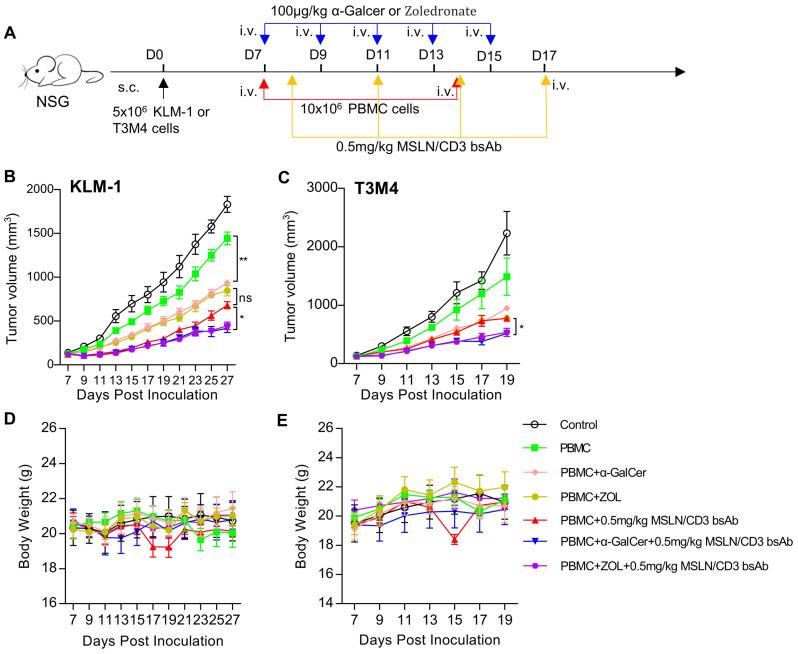
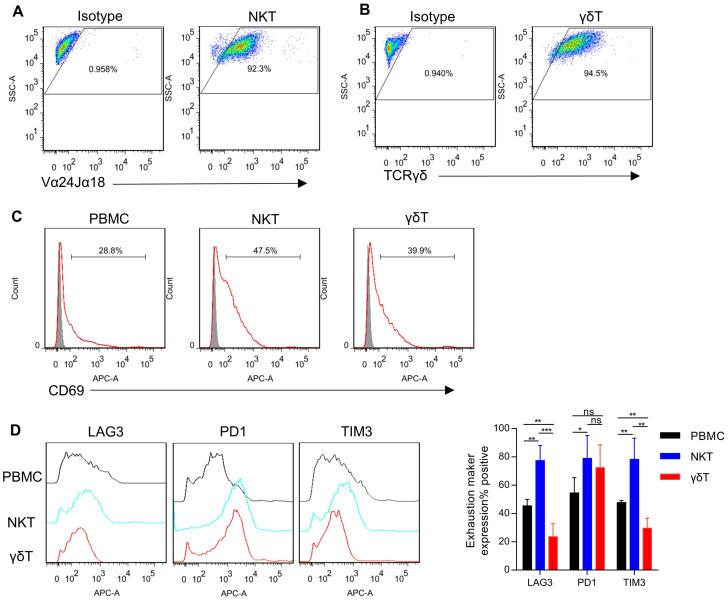
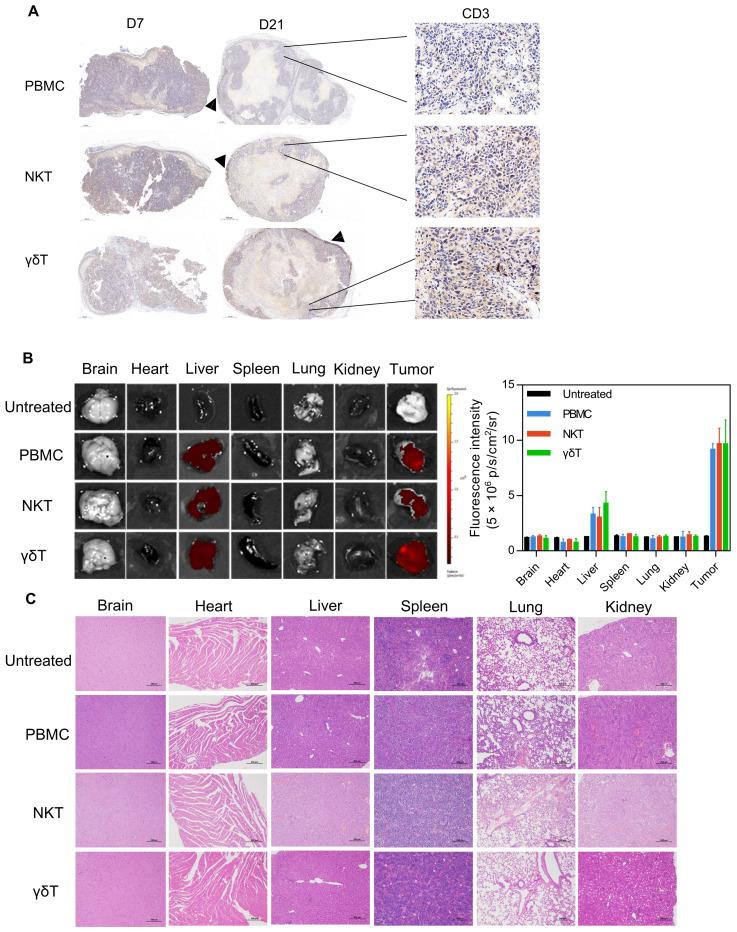
Current pancreatic cancer immunotherapy focused on alphabeta (αβ) T cells, either through CD3-engaged bispecific antibodies or CAR-T. Despite their promise, dose-limited toxicity (DLT) remains a challenge in clinical practice. In light of these concerns, there is a growing interest in exploring alternative T cell types, natural killer T (NKT) cells and gammadelta (γδ) T cells, that possess the capacity to lyse tumors while potentially offering a safer therapeutic profile with fewer side effects. These cells present a compelling alternative that warrants a comprehensive evaluation of their therapeutic potential and safety profile. This study employed a MSLN/CD3 bispecific antibody to compare the anti-tumor activity of NKT and γδT cells with peripheral blood mononuclear cells (PBMCs) as controls, both and . This study demonstrated that MSLN/CD3 BsAb effectively activated and recruited PBMCs, NKT and γδT. Furthermore, under the influence of MSLN/CD3 BsAb, γδT and NKT cells exhibited notably superior anti-tumor activity compared to PBMCs, both and , while demonstrating low cytokine release. γδT cells showed almost negligible toxic side effects. In addition, the systemic administration of NKT and γδT cells activators, α-galactosylceramide (α-GalCer) and Zoledronate, could enhance the anti-tumor effect of MSLN/CD3 bsAb, with no apparent toxicity. NKT and γδT cells are promising synergistic therapeutic cell types that may overcome the limitations of CD3 bispecific antibodies in pancreatic tumor treatments, offering a new perspective for clinical applications in immunotherapy.
目前胰腺癌免疫疗法主要聚焦于αβ(αβ)T细胞,通过CD3结合双特异性抗体或嵌合抗原受体T细胞(CAR-T)来实现。尽管它们前景广阔,但剂量限制性毒性(DLT)在临床实践中仍是一项挑战。鉴于这些担忧,人们越来越有兴趣探索替代的T细胞类型,即自然杀伤T(NKT)细胞和γδ(γδ)T细胞,它们有能力裂解肿瘤,同时可能提供更安全的治疗方案,副作用更少。这些细胞是一种引人注目的替代方案,值得对其治疗潜力和安全性进行全面评估。本研究采用一种间皮素(MSLN)/CD3双特异性抗体,以外周血单个核细胞(PBMCs)作为对照,比较NKT和γδT细胞的抗肿瘤活性。本研究表明,MSLN/CD3双特异性抗体(BsAb)能有效激活并募集PBMCs、NKT和γδT细胞。此外,在MSLN/CD3 BsAb的作用下,γδT和NKT细胞在体内和体外均表现出明显优于PBMCs的抗肿瘤活性,同时细胞因子释放水平较低。γδT细胞的毒副作用几乎可以忽略不计。此外,全身给予NKT和γδT细胞激活剂,α-半乳糖神经酰胺(α-GalCer)和唑来膦酸,可增强MSLN/CD3 bsAb的抗肿瘤作用,且无明显毒性。NKT和γδT细胞是很有前景的协同治疗细胞类型,可能克服CD3双特异性抗体在胰腺肿瘤治疗中的局限性,为免疫治疗的临床应用提供新的视角。


 Zotero 插件