
多酚、生物碱和萜类化合物对神经退行性疾病的作用:通过全面回顾现有证据评估植物化合物的神经保护作用。
Polyphenols, Alkaloids, and Terpenoids Against Neurodegeneration: Evaluating the Neuroprotective Effects of Phytocompounds Through a Comprehensive Review of the Current Evidence.
作者信息
de Lima Enzo Pereira, Laurindo Lucas Fornari, Catharin Vitor Cavallari Strozze, Direito Rosa, Tanaka Masaru, Jasmin Santos German Iris, Lamas Caroline Barbalho, Guiguer Elen Landgraf, Araújo Adriano Cressoni, Fiorini Adriana Maria Ragassi, Barbalho Sandra Maria
机构信息
Department of Biochemistry and Pharmacology, School of Medicine, Universidade de Marília (UNIMAR), Marília 17525-902, São Paulo, Brazil.
Laboratory of Systems Integration Pharmacology, Clinical and Regulatory Science, Research Institute for Medicines, Universidade de Lisboa (iMed.ULisboa), Av. Prof. Gama Pinto, 1649-003 Lisbon, Portugal.
出版信息
Metabolites. 2025 Feb 13;15(2):124. doi: 10.3390/metabo15020124.
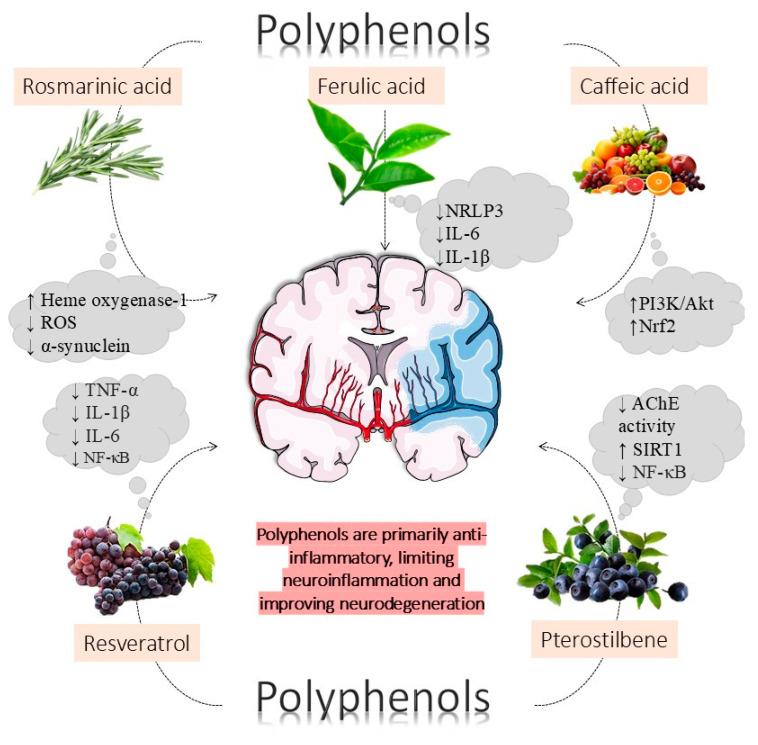
Neurodegenerative diseases comprise a group of chronic, usually age-related, disorders characterized by progressive neuronal loss, deformation of neuronal structure, or loss of neuronal function, leading to a substantially reduced quality of life. They remain a significant focus of scientific and clinical interest due to their increasing medical and social importance. Most neurodegenerative diseases present intracellular protein aggregation or their extracellular deposition (plaques), such as α-synuclein in Parkinson's disease and amyloid beta (Aβ)/tau aggregates in Alzheimer's. Conventional treatments for neurodegenerative conditions incur high costs and are related to the development of several adverse effects. In addition, many patients are irresponsive to them. For these reasons, there is a growing tendency to find new therapeutic approaches to help patients. This review intends to investigate some phytocompounds' effects on neurodegenerative diseases. These conditions are generally related to increased oxidative stress and inflammation, so phytocompounds can help prevent or treat neurodegenerative diseases. To achieve our aim to provide a critical assessment of the current literature about phytochemicals targeting neurodegeneration, we reviewed reputable databases, including PubMed, EMBASE, and COCHRANE, seeking clinical trials that utilized phytochemicals against neurodegenerative conditions. A few clinical trials investigated the effects of phytocompounds in humans, and after screening, 13 clinical trials were ultimately included following PRISMA guidelines. These compounds include polyphenols (flavonoids such as luteolin and quercetin, phenolic acids such as rosmarinic acid, ferulic acid, and caffeic acid, and other polyphenols like resveratrol), alkaloids (such as berberine, huperzine A, and caffeine), and terpenoids (such as ginkgolides and limonene). The gathered evidence underscores that quercetin, caffeine, ginkgolides, and other phytochemicals are primarily anti-inflammatory, antioxidant, and neuroprotective, counteracting neuroinflammation, neuronal oxidation, and synaptic dysfunctions, which are crucial aspects of neurodegenerative disease intervention in various included conditions, such as Alzheimer's and other dementias, depression, and neuropsychiatric disorders. In summary, they show that the use of these compounds is related to significant improvements in cognition, memory, disinhibition, irritability/lability, aberrant behavior, hallucinations, and mood disorders.
神经退行性疾病是一组慢性疾病,通常与年龄相关,其特征是神经元进行性丧失、神经元结构变形或神经元功能丧失,导致生活质量大幅下降。由于其在医学和社会方面的重要性日益增加,它们仍然是科学和临床关注的重点。大多数神经退行性疾病存在细胞内蛋白质聚集或细胞外沉积(斑块),如帕金森病中的α-突触核蛋白以及阿尔茨海默病中的β-淀粉样蛋白(Aβ)/tau聚集体。神经退行性疾病的传统治疗成本高昂,且会产生多种不良反应。此外,许多患者对这些治疗无反应。基于这些原因,寻找新的治疗方法来帮助患者的趋势日益增强。本综述旨在研究某些植物化合物对神经退行性疾病的影响。这些疾病通常与氧化应激和炎症增加有关,因此植物化合物有助于预防或治疗神经退行性疾病。为了对当前关于针对神经退行性变的植物化学物质的文献进行批判性评估,我们检索了包括PubMed、EMBASE和COCHRANE在内的知名数据库,寻找使用植物化学物质治疗神经退行性疾病的临床试验。有少数临床试验研究了植物化合物对人类的影响,经过筛选,最终按照PRISMA指南纳入了13项临床试验。这些化合物包括多酚类(如木犀草素和槲皮素等黄酮类、迷迭香酸、阿魏酸和咖啡酸等酚酸类以及白藜芦醇等其他多酚类)、生物碱(如黄连素、石杉碱甲和咖啡因)以及萜类化合物(如银杏内酯和柠檬烯)。收集到的证据强调,槲皮素、咖啡因、银杏内酯和其他植物化学物质主要具有抗炎、抗氧化和神经保护作用,可对抗神经炎症、神经元氧化和突触功能障碍,这些是在包括阿尔茨海默病和其他痴呆症、抑郁症以及神经精神疾病等各种纳入病症中进行神经退行性疾病干预的关键方面。总之,研究表明使用这些化合物与认知、记忆、去抑制、易怒/情绪不稳定、异常行为、幻觉和情绪障碍的显著改善有关。


 Zotero 插件