
感染铜绿假单胞菌的类phiKZ巨型噬菌体fMGyn-Pae01的分离与鉴定
Isolation and characterization of fMGyn-Pae01, a phiKZ-like jumbo phage infecting Pseudomonas aeruginosa.
作者信息
Ranta Kira, Skurnik Mikael, Kiljunen Saija
机构信息
HUS Diagnostic Center, Clinical Microbiology, University of Helsinki and Helsinki University Hospital, Helsinki, Finland.
Human Microbiome Research Program, Research Program Unit, Faculty of Medicine, University of Helsinki, Helsinki, Finland.
出版信息
Virol J. 2025 Mar 4;22(1):55. doi: 10.1186/s12985-025-02679-w.
BACKGROUND
Pseudomonas aeruginosa is an opportunistic pathogen that causes a wide variety of infections, and belongs to the group of ESKAPE pathogens that are the leading cause of healthcare-associated infections and have high level of antibiotic resistance. The treatment of infections caused by antibiotic-resistant P. aeruginosa is challenging, which makes it a common target for phage therapy. The successful utilization of phage therapy requires a collection of well characterized phages.
METHODS
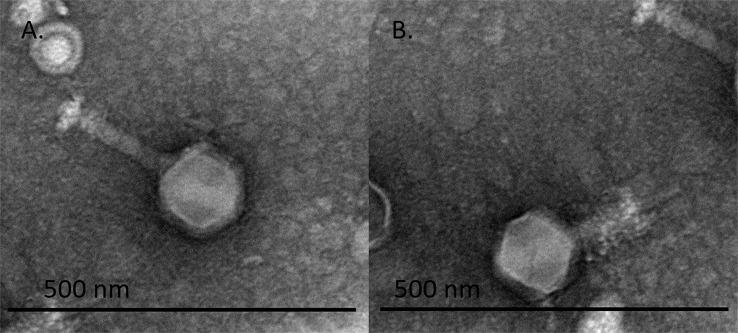
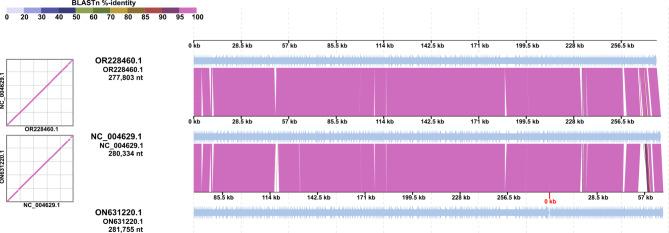
Phage fMGyn-Pae01 was isolated from a commercial phage therapy cocktail. The phage morphology was studied by transmission electron microscopy and the host range was analyzed with a liquid culture method. The phage genome was sequenced and characterized, and the genome was compared to closest phage genomes. Phage resistant bacterial mutants were isolated and whole genome sequencing and motility, phage adsorption and biofilm formation assays were performed to the mutants and host bacterium.
RESULTS
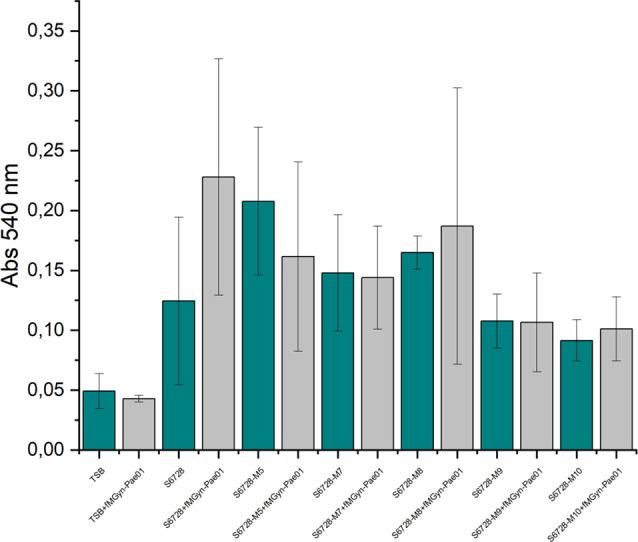
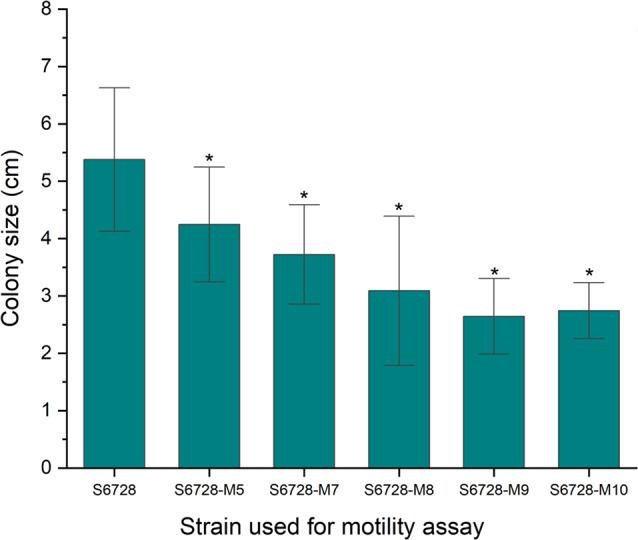
The genomic analysis revealed that fMGyn-Pae01 is a lytic, phiKZ-like jumbo phage with genome size of 277.8 kb. No genes associated with lysogeny, bacterial virulence, or antibiotic resistance were identified. Phage fMGyn-Pae01 did not reduce biofilm formation of P. aeruginosa, suggesting that it may not be an optimal phage to be used in monophage therapy in conditions where biofilm formation is expected. Host range screening revealed that fMGyn-Pae01 has a wide host range among P. aeruginosa strains and its infection was not dependent on O-serotype. Whole genome sequencing of the host bacterium and phage resistant mutants revealed that the mutations had inactivated either a flagellar or rpoN gene, thereby preventing the biosynthesis of a functional flagellum. The lack of functional flagella was confirmed in motility assays. Additionally, fMGyn-Pae01 failed to adsorb on non-motile mutants indicating that the bacterial flagellum is the phage-binding receptor.
CONCLUSION
fMGyn-Pae01 is a phiKZ-like jumbo phage infecting P. aeruginosa. fMGyn-Pae01 uses the flagellum as its phage-binding receptor, supporting earlier suggestions that flagellum might be utilized by phiKZ but differs from some other previous findings showing that phiKZ-like phages use the type-IV pili as the phage-binding receptor.
背景
铜绿假单胞菌是一种机会致病菌,可引起多种感染,属于ESKAPE病原体组,是医疗保健相关感染的主要原因,且具有高度抗生素耐药性。治疗由耐抗生素铜绿假单胞菌引起的感染具有挑战性,这使其成为噬菌体疗法的常见靶点。成功利用噬菌体疗法需要收集特征明确的噬菌体。
方法
噬菌体fMGyn-Pae01从一种商业噬菌体治疗鸡尾酒中分离出来。通过透射电子显微镜研究噬菌体形态,并用液体培养方法分析宿主范围。对噬菌体基因组进行测序和表征,并将该基因组与最相近的噬菌体基因组进行比较。分离出噬菌体抗性细菌突变体,并对突变体和宿主细菌进行全基因组测序以及运动性、噬菌体吸附和生物膜形成测定。
结果
基因组分析表明,fMGyn-Pae01是一种裂解性的、类似phiKZ的巨型噬菌体,基因组大小为277.8 kb。未鉴定出与溶原性、细菌毒力或抗生素抗性相关的基因。噬菌体fMGyn-Pae01并未减少铜绿假单胞菌的生物膜形成,这表明在预期有生物膜形成的情况下,它可能不是用于单一噬菌体疗法的最佳噬菌体。宿主范围筛选显示,fMGyn-Pae01在铜绿假单胞菌菌株中具有广泛的宿主范围,其感染不依赖于O血清型。宿主细菌和噬菌体抗性突变体的全基因组测序表明,突变使鞭毛或rpoN基因失活,从而阻止了功能性鞭毛的生物合成。运动性测定证实了缺乏功能性鞭毛。此外,fMGyn-Pae01无法吸附在不运动的突变体上,表明细菌鞭毛是噬菌体结合受体。
结论
fMGyn-Pae01是一种感染铜绿假单胞菌的类似phiKZ的巨型噬菌体。fMGyn-Pae01将鞭毛用作其噬菌体结合受体,支持了早期关于phiKZ可能利用鞭毛的观点,但与一些先前的其他发现不同,那些发现表明类似phiKZ的噬菌体将IV型菌毛用作噬菌体结合受体。


 Zotero 插件