
将新冠病毒(SARS-CoV-2)感染的动物模型转化为新冠肺炎的血管、神经和胃肠道表现。
Translating animal models of SARS-CoV-2 infection to vascular, neurological and gastrointestinal manifestations of COVID-19.
作者信息
Chung James, Pierce Julia, Franklin Craig, Olson Rachel M, Morrison Alan R, Amos-Landgraf James
机构信息
Department of Veterinary Pathobiology, University of Missouri, Columbia, MO 65211, USA.
Vascular Research Laboratory, Providence VA Medical Center, Providence, RI 02908, USA.
出版信息
Dis Model Mech. 2025 Sep 1;18(9). doi: 10.1242/dmm.052086. Epub 2025 Apr 8.
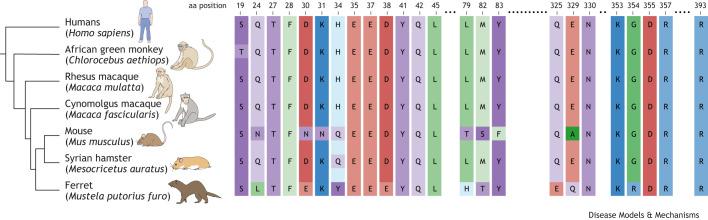
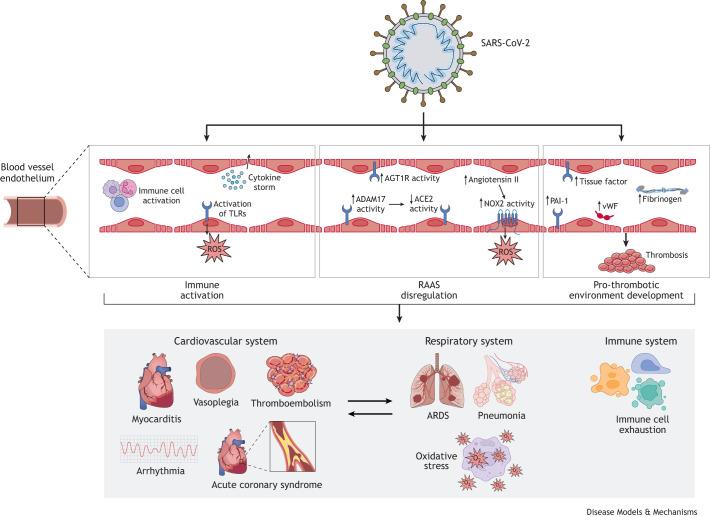
Since the emergence of severe acute respiratory syndrome coronavirus 2 (SARS-CoV-2) initiated a global pandemic resulting in an estimated 775 million infections with over 7 million deaths, it has become evident that COVID-19 is not solely a pulmonary disease. Emerging evidence has shown that, in a subset of patients, certain symptoms - including chest pain, stroke, anosmia, dysgeusia, diarrhea and abdominal pain - all indicate a role of vascular, neurological and gastrointestinal (GI) pathology in the disease process. Many of these disease processes persist long after the acute disease has been resolved, resulting in 'long COVID' or post-acute sequelae of COVID-19 (PASC). The molecular mechanisms underlying the acute and systemic conditions associated with COVID-19 remain incompletely defined. Appropriate animal models provide a method of understanding underlying disease mechanisms at the system level through the study of disease progression, tissue pathology, immune system response to the pathogen and behavioral responses. However, very few studies have addressed PASC and whether existing models hold promise for studying this challenging problem. Here, we review the current literature on cardiovascular, neurological and GI pathobiology caused by COVID-19 in patients, along with established animal models of the acute disease manifestations and their prospects for use in PASC studies. Our aim is to provide guidance for the selection of appropriate models in order to recapitulate certain aspects of the disease to enhance the translatability of mechanistic studies.
自严重急性呼吸综合征冠状病毒2(SARS-CoV-2)出现引发全球大流行,导致估计7.75亿人感染、超700万人死亡以来,很明显,新冠肺炎并非单纯的肺部疾病。新出现的证据表明,在一部分患者中,某些症状——包括胸痛、中风、嗅觉丧失、味觉障碍、腹泻和腹痛——都表明血管、神经和胃肠道(GI)病理在疾病过程中起作用。许多这些疾病过程在急性疾病解决后仍会持续很长时间,导致“长期新冠”或新冠后急性后遗症(PASC)。与新冠肺炎相关的急性和全身性病症的分子机制仍未完全明确。合适的动物模型提供了一种通过研究疾病进展、组织病理学、免疫系统对病原体的反应和行为反应,在系统层面理解潜在疾病机制的方法。然而,很少有研究涉及PASC以及现有模型是否有望用于研究这个具有挑战性的问题。在这里,我们综述了关于新冠肺炎患者心血管、神经和胃肠道病理生物学的当前文献,以及已建立的急性疾病表现动物模型及其在PASC研究中的应用前景。我们的目的是为选择合适的模型提供指导,以便重现疾病的某些方面,增强机制研究的可转化性。

 Zotero 插件