
认知中的口腔-肠道微生物群-脑轴
The Oral-Gut Microbiome-Brain Axis in Cognition.
作者信息
Adil Noorul Ain, Omo-Erigbe Christabel, Yadav Hariom, Jain Shalini
机构信息
USF Center for Microbiome Research, Microbiomes Institute, Tampa, FL 33612, USA.
Department of Neurosurgery and Brain Repair, University of South Florida, Tampa, FL 33612, USA.
出版信息
Microorganisms. 2025 Apr 3;13(4):814. doi: 10.3390/microorganisms13040814.
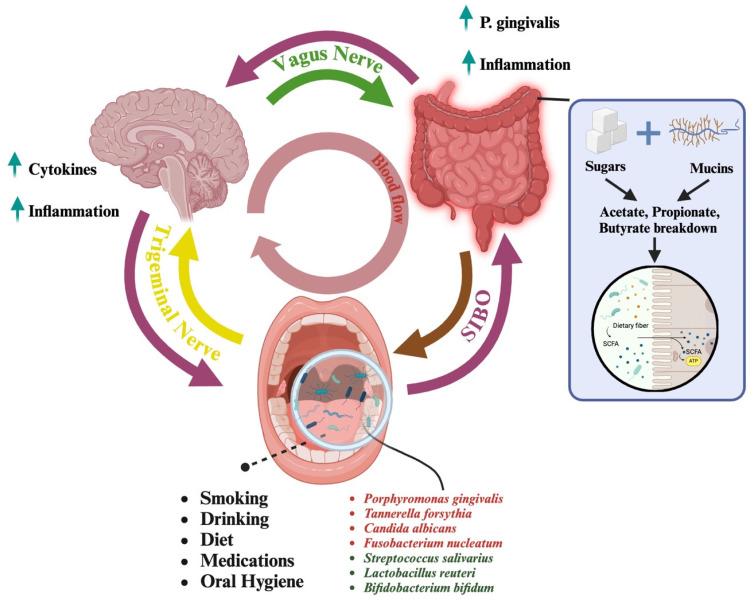
Alzheimer's disease (AD) is a progressive neurodegenerative disorder characterized by cognitive decline and neuronal loss, affecting millions worldwide. Emerging evidence highlights the oral microbiome-a complex ecosystem of bacteria, fungi, viruses, and protozoa as a significant factor in cognitive health. Dysbiosis of the oral microbiome contributes to systemic inflammation, disrupts the blood-brain barrier, and promotes neuroinflammation, processes increasingly implicated in the pathogenesis of AD. This review examines the mechanisms linking oral microbiome dysbiosis to cognitive decline through the oral-brain and oral-gut-brain axis. These interconnected pathways enable bidirectional communication between the oral cavity, gut, and brain via neural, immune, and endocrine signaling. Oral pathogens, such as , along with virulence factors, including lipopolysaccharides (LPS) and gingipains, contribute to neuroinflammation, while metabolic byproducts, such as short-chain fatty acids (SCFAs) and peptidoglycans, further exacerbate systemic immune activation. Additionally, this review explores the influence of external factors, including diet, pH balance, medication use, smoking, alcohol consumption, and oral hygiene, on oral microbial diversity and stability, highlighting their role in shaping cognitive outcomes. The dynamic interplay between the oral and gut microbiomes reinforces the importance of microbial homeostasis in preserving systemic and neurological health. The interventions, including probiotics, prebiotics, and dietary modifications, offer promising strategies to support cognitive function and reduce the risk of neurodegenerative diseases, such as AD, by maintaining a diverse microbiome. Future longitudinal research is needed to identify the long-term impact of oral microbiome dysbiosis on cognition.
阿尔茨海默病(AD)是一种进行性神经退行性疾病,其特征为认知能力下降和神经元丧失,影响着全球数百万人。新出现的证据表明,口腔微生物群——一个由细菌、真菌、病毒和原生动物组成的复杂生态系统——是认知健康的一个重要因素。口腔微生物群的失调会导致全身炎症,破坏血脑屏障,并促进神经炎症,这些过程越来越多地与AD的发病机制相关。本综述探讨了通过口腔-脑和口腔-肠道-脑轴将口腔微生物群失调与认知能力下降联系起来的机制。这些相互连接的途径通过神经、免疫和内分泌信号在口腔、肠道和大脑之间实现双向通信。口腔病原体,如 ,以及包括脂多糖(LPS)和牙龈蛋白酶在内的毒力因子,会导致神经炎症,而代谢副产物,如短链脂肪酸(SCFAs)和肽聚糖,则会进一步加剧全身免疫激活。此外,本综述还探讨了外部因素,包括饮食、pH平衡、药物使用、吸烟、饮酒和口腔卫生,对口腔微生物多样性和稳定性的影响,强调了它们在塑造认知结果中的作用。口腔和肠道微生物群之间的动态相互作用强化了微生物稳态在维持全身和神经健康方面的重要性。包括益生菌、益生元和饮食调整在内的干预措施,通过维持多样化的微生物群,为支持认知功能和降低神经退行性疾病(如AD)的风险提供了有前景的策略。未来需要进行纵向研究,以确定口腔微生物群失调对认知的长期影响。
 Zotero 插件