
病毒学中的类器官
Organoids in virology.
作者信息
Chu Julie T S, Lamers Mart M
机构信息
Programme in Emerging Infectious Diseases, Duke-NUS Medical School, Singapore, Singapore.
出版信息
Npj Viruses. 2024 Feb 7;2(1):5. doi: 10.1038/s44298-024-00017-5.
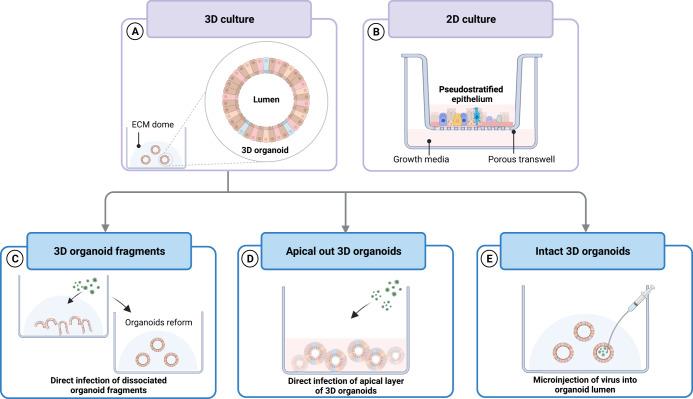
To adequately prepare against imminent disease outbreaks from diverse and ever-changing viral pathogens, improved experimental models that can accurately recapitulate host-virus responses and disease pathogenesis in human are essential. Organoid platforms have emerged in recent years as amenable in vitro tools that can bridge the limitations of traditional 2D cell lines and animal models for viral disease research. We highlight in this review the key insights that have contributed by organoid models to virus research, the limitations that exist in current platforms, and outline novel approaches that are being applied to address these shortcomings.
为了充分防范来自多样且不断变化的病毒病原体的疾病爆发,改进能够准确模拟人类宿主-病毒反应和疾病发病机制的实验模型至关重要。近年来,类器官平台已成为适用的体外工具,可弥补传统二维细胞系和动物模型在病毒疾病研究方面的局限性。在本综述中,我们重点介绍了类器官模型对病毒研究的关键贡献、当前平台存在的局限性,并概述了为解决这些不足而正在应用的新方法。


 Zotero 插件