
啮齿动物对严重急性呼吸综合征冠状病毒2(SARS-CoV-2)的敏感性:沙鼠易感染SARS-CoV-2,但豚鼠不易感染。
Sensitivity of rodents to SARS-CoV-2: Gerbils are susceptible to SARS-CoV-2, but guinea pigs are not.
作者信息
Iwatsuki-Horimoto Kiyoko, Kiso Maki, Ito Mutsumi, Yamayoshi Seiya, Kawaoka Yoshihiro
机构信息
Division of Virology, Institute of Medical Science, University of Tokyo, Minato-ku, Tokyo, Japan.
The University of Tokyo Pandemic Preparedness, Infection and Advanced Research Center (UTOPIA), University of Tokyo, Minato-ku, Tokyo, Japan.
出版信息
Npj Viruses. 2024 Nov 21;2(1):59. doi: 10.1038/s44298-024-00068-8.
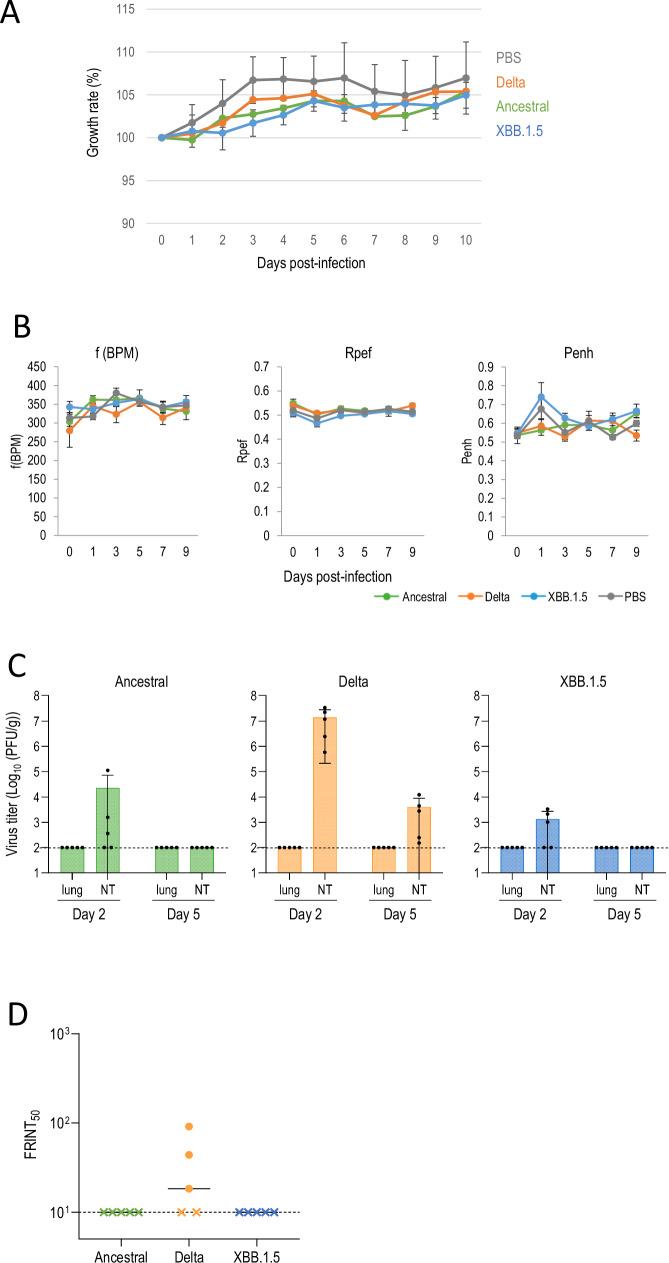
Syrian hamster are sensitive to SARS-CoV-2 and widely used as an animal model of COVID-19. In contrast, mice are not readily infected by the ancestral strains of SARS-CoV-2 because of differences in their angiotensin-converting enzyme 2 (ACE2) receptors. Thus, even among rodents, susceptibility to SARS-CoV-2 varies. Knowledge of virus transmissibility from humans to pet rodents is important for public health to assess the potential for transmission in the home and pet breeding and selling facilities. In this study, we assessed the sensitivity of guinea pigs and gerbils to SARS-CoV-2 isolated from humans, and found that gerbils are susceptible to SARS-CoV-2, but guinea pigs are not. Pet sellers often display hamsters with high susceptibility to SARS-CoV-2 in the same area as gerbils, so caution should be exercised during COVID-19 outbreaks.
叙利亚仓鼠对严重急性呼吸综合征冠状病毒2(SARS-CoV-2)敏感,被广泛用作2019冠状病毒病(COVID-19)的动物模型。相比之下,由于小鼠的血管紧张素转换酶2(ACE2)受体存在差异,它们不容易被SARS-CoV-2的原始毒株感染。因此,即使在啮齿动物中,对SARS-CoV-2的易感性也有所不同。了解病毒从人类传播到宠物啮齿动物的情况对于公共卫生评估在家中以及宠物繁育和销售场所的传播潜力非常重要。在本研究中,我们评估了豚鼠和沙鼠对从人类分离出的SARS-CoV-2的敏感性,发现沙鼠对SARS-CoV-2易感,但豚鼠不易感。宠物卖家经常在与沙鼠相同的区域展示对SARS-CoV-2高度易感的仓鼠,因此在COVID-19疫情爆发期间应谨慎行事。

 Zotero 插件