
鹅细小病毒在不同流行谱系间对雏鸭和雏鹅的致病性比较
Comparative pathogenicity of goose parvovirus across different epidemic lineages in ducklings and goslings.
作者信息
Lu Xiaolong, Xu Qianqian, Cai Miao, Li Meiqi, Wang Xiaoquan, Wang Yanhong, Yang Wenhao, Liu Kaituo, Gao Ruyi, Chen Yu, Hu Jiao, Gu Min, Hu Shunlin, Liu Xiufan, Liu Xiaowen
机构信息
Key Laboratory of Avian Bioproducts Development, Ministry of Agriculture and Rural Affairs, Yangzhou University, Yangzhou, China.
Jiangsu Co-Innovation Center for Prevention and Control of Important Animal Infectious Diseases and Zoonosis, Yangzhou University, Yangzhou, China.
出版信息
Virulence. 2025 Dec;16(1):2497904. doi: 10.1080/21505594.2025.2497904. Epub 2025 May 12.
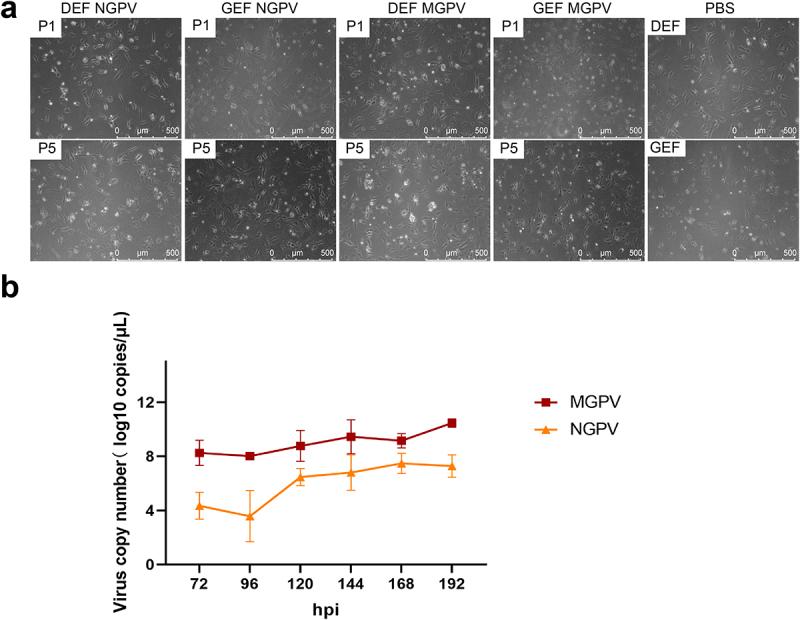
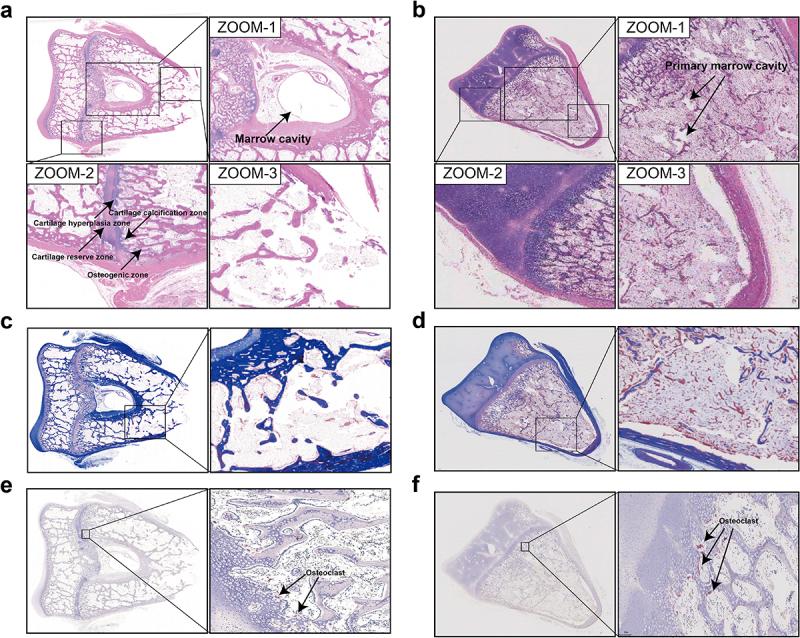
The endemic status of goose parvovirus (GPV) continues to devastate the poultry industry in China. Novel GPV (NGPV) and Mutated GPV (MGPV) represent the predominant lineages. However, the comparative pathogenicity between these viruses remains poorly understood. Herein, we selected representative NGPV and MGPV strains as model viruses to assess their pathogenic potential both and . cellular and embryo assays demonstrated that both NGPV and MGPV were capable of replicating in DEF and GEF cells, leading to pronounced cytopathic effects. However, these viruses exhibited distinct levels of intra-embryonic replication capabilities. Furthermore, we conducted infection experiments and systematically evaluated the pathogenic differences between NGPV and MGPV by examining various indicators, including growth, clinical signs, gross pathology, skeletal development, viral load, and humoral response in the infected animals. The results showed that both NGPV and MGPV inhibited weight gain in goslings and ducklings, with NGPV exerting a more significant suppressive impact. MGPV induced classical gosling plague pathology in goslings, while NGPV led to short beak and dwarfism syndrome in ducklings, notably disrupting skeletal development. Moreover, MGPV and NGPV exhibited diverse host tropisms, with MGPV being more pathogenic to goslings and NGPV to ducklings. Both viruses elicited specific antibody responses, with MGPV being more effective in goslings and NGPV in ducklings. Additionally, MGPV exhibited stronger humoral response compared to NGPV. These findings enhance our understanding of the pathogenicity of prevalent GPV strains in waterfowl, offering a critical theoretical foundation for devising strategies to prevent GPV infections.
鹅细小病毒(GPV)的地方流行状况持续对中国的家禽业造成严重破坏。新型GPV(NGPV)和变异型GPV(MGPV)是主要的谱系。然而,这些病毒之间的比较致病性仍知之甚少。在此,我们选择具有代表性的NGPV和MGPV毒株作为模型病毒,通过细胞和胚胎试验评估它们的致病潜力。细胞和胚胎试验表明,NGPV和MGPV都能够在鸭胚成纤维细胞(DEF)和鹅胚成纤维细胞(GEF)中复制,导致明显的细胞病变效应。然而,这些病毒在胚胎内的复制能力水平不同。此外,我们进行了感染实验,并通过检查包括生长、临床症状、大体病理学、骨骼发育、病毒载量和感染动物的体液反应等各种指标,系统地评估了NGPV和MGPV之间的致病差异。结果表明,NGPV和MGPV都抑制雏鹅和雏鸭的体重增加,其中NGPV的抑制作用更显著。MGPV在雏鹅中诱发典型的小鹅瘟病理学变化,而NGPV在雏鸭中导致短喙和侏儒综合征,尤其破坏骨骼发育。此外,MGPV和NGPV表现出不同的宿主嗜性,MGPV对雏鹅的致病性更强,而NGPV对雏鸭的致病性更强。两种病毒都引发了特异性抗体反应,MGPV在雏鹅中更有效,而NGPV在雏鸭中更有效。此外,与NGPV相比,MGPV表现出更强的体液反应。这些发现增进了我们对水禽中流行的GPV毒株致病性的理解,为制定预防GPV感染的策略提供了关键的理论基础。





 Zotero 插件