
硫化氢(H2S)协调氧化还原平衡、碳代谢和线粒体生物能量学以抑制新型冠状病毒2(SARS-CoV-2)感染。
Hydrogen sulfide (H2S) coordinates redox balance, carbon metabolism, and mitochondrial bioenergetics to suppress SARS-CoV-2 infection.
作者信息
Agrawal Ragini, Pal Virender Kumar, K S Suhas, Menon Gopika Jayan, Singh Inder Raj, Malhotra Nitish, C S Naren, Ganesh Kailash, Rajmani Raju S, Narain Seshasayee Aswin Sai, Chandra Nagasuma, Joshi Manjunath B, Singh Amit
机构信息
Department of Microbiology and Cell Biology, Indian Institute of Science, Bengaluru, Karnataka, India.
Centre for Infectious Disease Research, Indian Institute of Science, Bengaluru, Karnataka, India.
出版信息
PLoS Pathog. 2025 May 19;21(5):e1013164. doi: 10.1371/journal.ppat.1013164. eCollection 2025 May.
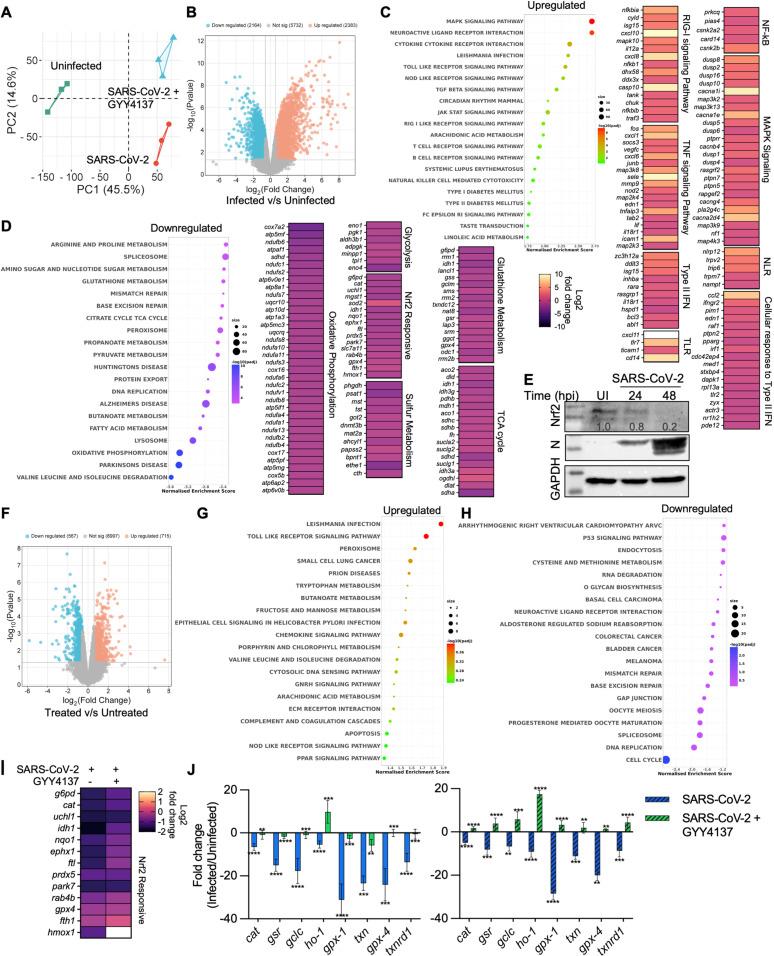
Viruses modulate various aspects of host physiology, including carbon metabolism, redox balance, and mitochondrial bioenergetics to acquire the building blocks for replication and regulation of the immune response. Understanding how SARS-CoV-2 alters the host metabolism may lead to treatments for COVID-19. We report that a ubiquitous gaseous molecule, hydrogen sulfide (H2S), regulates redox, metabolism, and mitochondrial bioenergetics to control SARS-CoV-2. Virus replication is associated with down-regulation of the H2S-producing enzymes cystathionine-β-synthase (CBS), cystathionine-γ-lyase (CTH), and 3-mercaptopyruvate sulfurtransferase (3-MST) in multiple cell lines and nasopharyngeal swabs of symptomatic COVID-19 patients. Consequently, SARS-CoV-2-infected cells showed diminished endogenous H2S levels and a protein modification (S-sulfhydration) caused by H2S. Genetic silencing or chemical inhibition of CTH resulted in SARS-CoV-2 proliferation. Chemical supplementation of H2S using a slow-releasing H2S donor, GYY4137, diminished virus replication. Using a redox biosensor, metabolomics, transcriptomics, and XF-flux analyzer, we showed that GYY4137 blocked SARS-CoV-2 replication by inducing the Nrf2/Keap1 pathway, restoring redox balance and carbon metabolites and potentiating mitochondrial oxidative phosphorylation. Treatment of SARS-CoV-2-infected mice or hamsters with GYY4137 suppressed viral replication and ameliorated lung pathology. GYY4137 treatment reduced the expression of inflammatory cytokines and re-established the expression of Nrf2-dependent antioxidant genes in the lungs of SARS-CoV-2-infected mice. Notably, non-invasive measurement of respiratory functions using unrestrained whole-body plethysmography (uWBP) of SARS-CoV-2-infected mice showed improved pulmonary function variables, including pulmonary obstruction (Penh), end-expiratory pause (EEP), and relaxation time (RT) upon GYY4137 treatment. Together, our findings significantly extend our understanding of H2S-mediated regulation of viral infections and open new avenues for investigating the pathogenic mechanisms and therapeutic opportunities for coronavirus-associated disorders.
病毒可调节宿主生理的各个方面,包括碳代谢、氧化还原平衡和线粒体生物能量学,以获取复制所需的构件并调节免疫反应。了解严重急性呼吸综合征冠状病毒2(SARS-CoV-2)如何改变宿主代谢可能会带来治疗冠状病毒病(COVID-19)的方法。我们报告称,一种普遍存在的气态分子硫化氢(H2S)可调节氧化还原、代谢和线粒体生物能量学,从而控制SARS-CoV-2。在多种细胞系以及有症状的COVID-19患者的鼻咽拭子中,病毒复制与产生H2S的酶胱硫醚-β-合酶(CBS)、胱硫醚-γ-裂解酶(CTH)和3-巯基丙酮酸硫转移酶(3-MST)的下调有关。因此,感染SARS-CoV-2的细胞内源性H2S水平降低,且由H2S引起的蛋白质修饰(S-硫氢化)减少。对CTH进行基因沉默或化学抑制会导致SARS-CoV-2增殖。使用缓释H2S供体GYY4137进行H2S化学补充可减少病毒复制。通过氧化还原生物传感器、代谢组学、转录组学和XF通量分析仪,我们发现GYY4137通过诱导核因子E2相关因子2(Nrf2)/ Kelch样环氧氯丙烷相关蛋白1(Keap1)途径、恢复氧化还原平衡和碳代谢物以及增强线粒体氧化磷酸化来阻断SARS-CoV-2复制。用GYY4137治疗感染SARS-CoV-2的小鼠或仓鼠可抑制病毒复制并改善肺部病理状况。GYY4137治疗可降低感染SARS-CoV-2的小鼠肺部炎症细胞因子的表达,并重新建立Nrf2依赖性抗氧化基因的表达。值得注意的是,对感染SARS-CoV-2的小鼠使用无限制全身体积描记法(uWBP)进行呼吸功能的非侵入性测量显示,经GYY4137治疗后,肺功能参数得到改善,包括肺阻塞(Penh)、呼气末暂停(EEP)和舒张时间(RT)。总之,我们的研究结果显著扩展了我们对H2S介导的病毒感染调节的理解,并为研究冠状病毒相关疾病的致病机制和治疗机会开辟了新途径。




 Zotero 插件