
犬自然杀伤细胞的单细胞图谱确定了不同的循环和组织驻留基因谱。
Single cell atlas of canine natural killer cells identifies distinct circulating and tissue resident gene profiles.
作者信息
Razmara Aryana M, Lammers Marshall, Judge Sean J, Murphy William J, Gaskill Cameron E, Culp William T N, Gingrich Alicia A, Morris Zachary S, Rebhun Robert B, Brown C Titus, Vail David M, Kent Michael S, Canter Robert J
机构信息
Division of Surgical Oncology, Department of Surgery, University of California Davis School of Medicine, Sacramento, CA, United States.
Department of Dermatology, University of California Davis School of Medicine, Sacramento, CA, United States.
出版信息
Front Immunol. 2025 May 15;16:1571085. doi: 10.3389/fimmu.2025.1571085. eCollection 2025.
INTRODUCTION
Natural killer (NK) cells in mice and humans are key effectors of the innate immune system with complex immunoregulatory functions, and diverse subsets have been identified with distinct characteristics and roles. Companion dogs with spontaneous cancer have been validated as models of human disease, including cancer immunology and immunotherapy, and greater understanding of NK cell heterogeneity in dogs can inform NK biology across species and optimize NK immunotherapy for both dogs and people.
METHODS
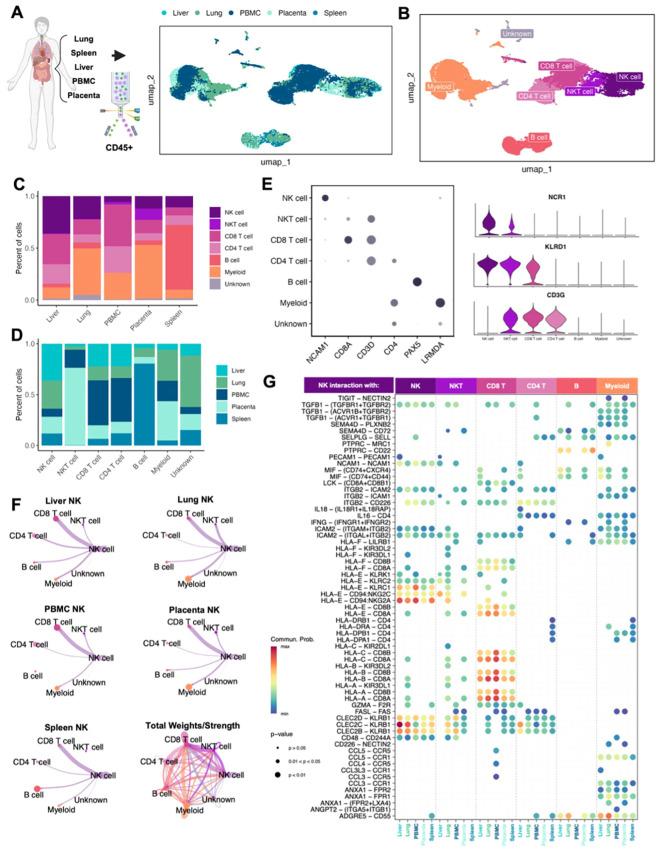
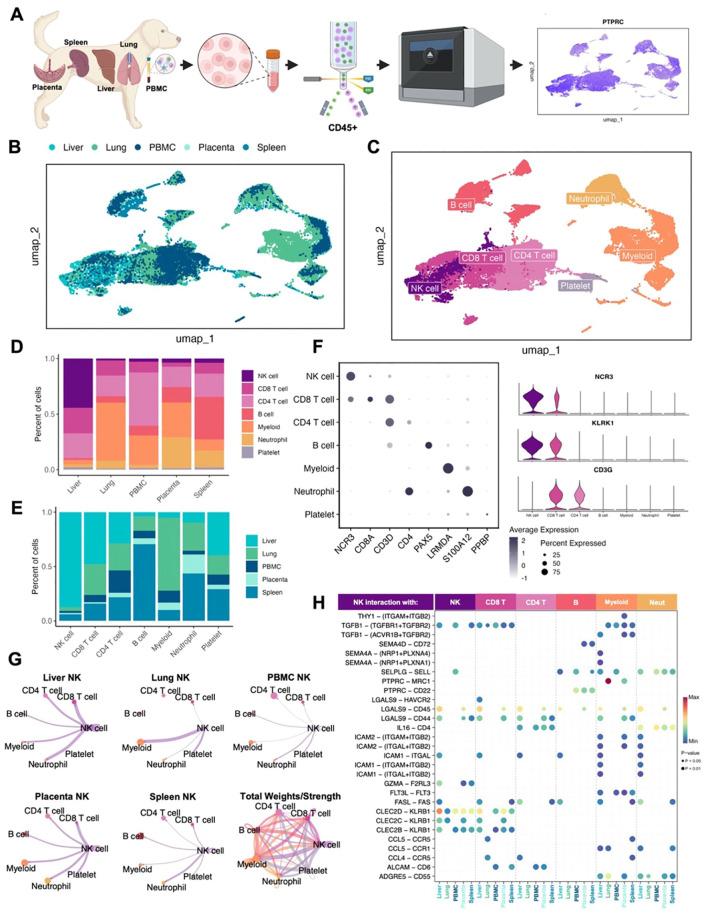
Here, we assessed canine NK cell populations by single-cell RNA sequencing (scRNAseq) across blood, lung, liver, spleen, and placenta with comparison to human NK cells from blood and the same tissues to better characterize the differential gene expression of canine and human NK cells regarding ontogeny, heterogeneity, patterns of activation, inhibition, and tissue residence.
RESULTS
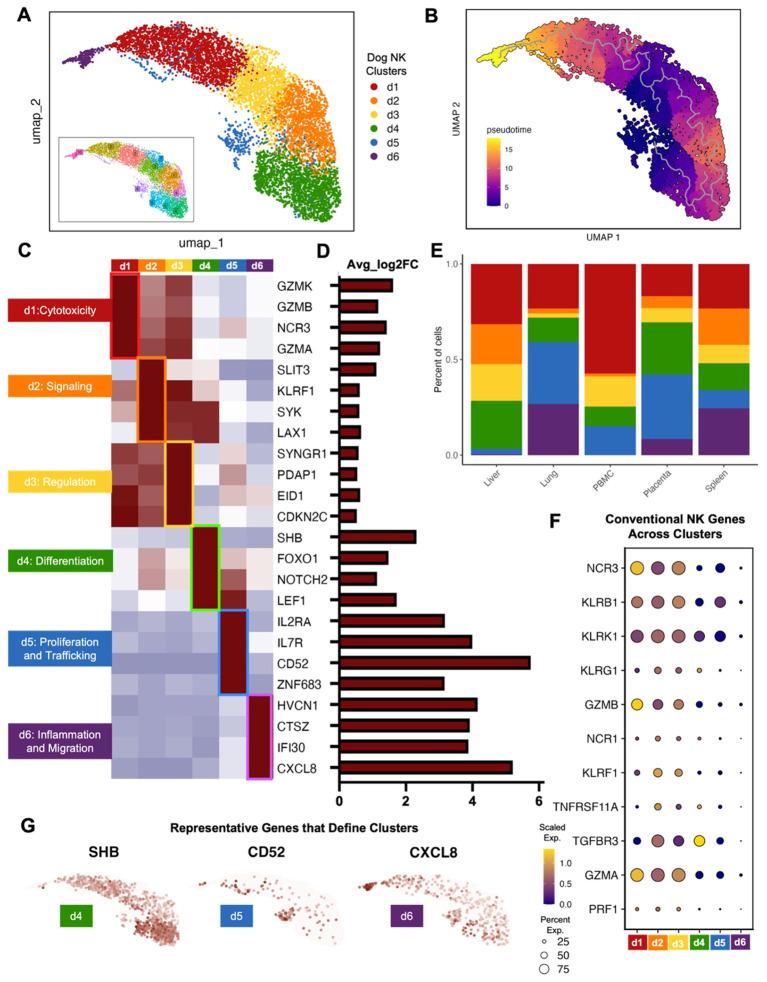
Overall, we observed tissue-specific NK cell signatures consistent with immature NK cells in the placenta, mature and activated NK cells in the lung, and NK cells with a mixed activated and inhibited signature in the liver with significant cross-species homology.
DISCUSSION
Together, our results point to heterogeneous canine NK populations highly comparable to human NK cells, and we provide a comprehensive atlas of canine NK cells across organs which will inform future cross-species NK studies and further substantiate the spontaneous canine model to optimize NK immunotherapy across species.
引言
小鼠和人类中的自然杀伤(NK)细胞是具有复杂免疫调节功能的先天性免疫系统的关键效应细胞,并且已鉴定出具有不同特征和作用的多种亚群。患有自发性癌症的伴侣犬已被确认为人类疾病的模型,包括癌症免疫学和免疫疗法,对犬类NK细胞异质性的更深入了解可以为跨物种的NK生物学提供信息,并优化犬类和人类的NK免疫疗法。
方法
在这里,我们通过单细胞RNA测序(scRNAseq)评估了血液、肺、肝、脾和胎盘中的犬类NK细胞群体,并与来自血液和相同组织的人类NK细胞进行比较,以更好地表征犬类和人类NK细胞在个体发育、异质性、激活模式、抑制模式和组织驻留方面的差异基因表达。
结果
总体而言,我们观察到组织特异性NK细胞特征,胎盘中有与未成熟NK细胞一致的特征,肺中有成熟和活化的NK细胞,肝脏中有具有混合激活和抑制特征的NK细胞,且具有显著的跨物种同源性。
讨论
总之,我们的结果表明犬类NK细胞群体具有高度异质性,与人类NK细胞高度可比,并且我们提供了一个跨器官的犬类NK细胞综合图谱,这将为未来的跨物种NK研究提供信息,并进一步证实自发性犬类模型,以优化跨物种的NK免疫疗法。

 Zotero 插件