
骨肉瘤犬经姑息性放疗和瘤内自体自然杀伤细胞转移治疗后的血液和组织生物标志物分析。
Blood and tissue biomarker analysis in dogs with osteosarcoma treated with palliative radiation and intra-tumoral autologous natural killer cell transfer.
机构信息
Department of Surgery, University of California Davis Medical Center, Sacramento, California, United States of America.
Nationwide Children's Hospital, Center for Childhood Cancer & Blood Diseases, Columbus, Ohio, United States of America.
出版信息
PLoS One. 2020 Feb 21;15(2):e0224775. doi: 10.1371/journal.pone.0224775. eCollection 2020.
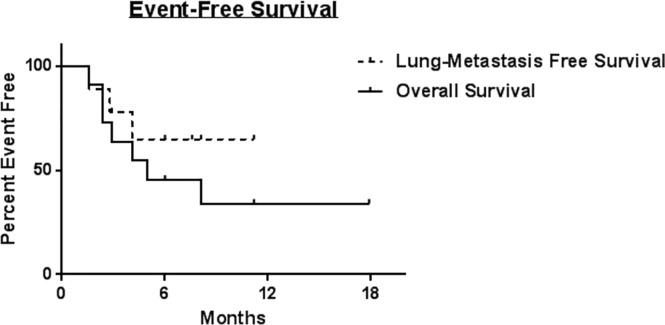
We have previously reported radiation-induced sensitization of canine osteosarcoma (OSA) to natural killer (NK) therapy, including results from a first-in-dog clinical trial. Here, we report correlative analyses of blood and tissue specimens for signals of immune activation in trial subjects. Among 10 dogs treated with palliative radiotherapy (RT) and intra-tumoral adoptive NK transfer, we performed ELISA on serum cytokines, flow cytometry for immune phenotype of PBMCs, and PCR on tumor tissue for immune-related gene expression. We then queried The Cancer Genome Atlas (TCGA) to evaluate the association of cytotoxic/immune-related gene expression with human sarcoma survival. Updated survival analysis revealed five 6-month survivors, including one dog who lived 17.9 months. Using feeder line co-culture for NK expansion, we observed maximal activation of dog NK cells on day 17-19 post isolation with near 100% expression of granzyme B and NKp46 and high cytotoxic function in the injected NK product. Among dogs on trial, we observed a trend for higher baseline serum IL-6 to predict worse lung metastasis-free and overall survival (P = 0.08). PCR analysis revealed low absolute gene expression of CD3, CD8, and NKG2D in untreated OSA. Among treated dogs, there was marked heterogeneity in the expression of immune-related genes pre- and post-treatment, but increases in CD3 and CD8 gene expression were higher among dogs that lived > 6 months compared to those who did not. Analysis of the TCGA confirmed significant differences in survival among human sarcoma patients with high and low expression of genes associated with greater immune activation and cytotoxicity (CD3e, CD8a, IFN-γ, perforin, and CD122/IL-2 receptor beta). Updated results from a first-in-dog clinical trial of palliative RT and autologous NK cell immunotherapy for OSA illustrate the translational relevance of companion dogs for novel cancer therapies. Similar to human studies, analyses of immune markers from canine serum, PBMCs, and tumor tissue are feasible and provide insight into potential biomarkers of response and resistance.
我们之前曾报道过放射治疗可增强犬骨肉瘤(OSA)对自然杀伤(NK)治疗的敏感性,包括一项首次在犬中进行的临床试验的结果。在这里,我们报告了对试验对象的血液和组织标本进行免疫激活信号的相关分析。在接受姑息性放疗(RT)和肿瘤内过继性 NK 转移治疗的 10 只犬中,我们对血清细胞因子进行 ELISA 检测、外周血单个核细胞(PBMC)的免疫表型进行流式细胞术检测、以及对肿瘤组织进行免疫相关基因表达的 PCR 检测。然后,我们查询了癌症基因组图谱(TCGA),以评估细胞毒性/免疫相关基因表达与人类肉瘤患者生存的相关性。更新的生存分析显示有 5 只 6 个月的存活者,其中 1 只犬存活了 17.9 个月。使用饲养细胞共培养进行 NK 扩增,我们观察到从分离后第 17-19 天犬 NK 细胞的最大激活,几乎 100%表达颗粒酶 B 和 NKp46,并且注入的 NK 产物具有高细胞毒性功能。在试验犬中,我们观察到基线血清 IL-6 水平较高与肺转移无复发生存和总生存(P=0.08)更差之间存在趋势。PCR 分析显示未经治疗的 OSA 中 CD3、CD8 和 NKG2D 的绝对基因表达水平较低。在接受治疗的犬中,治疗前后免疫相关基因的表达存在明显的异质性,但与存活时间>6 个月的犬相比,CD3 和 CD8 基因表达增加。TCGA 的分析证实,人类肉瘤患者中与更强的免疫激活和细胞毒性相关的基因(CD3e、CD8a、IFN-γ、穿孔素和 CD122/IL-2 受体β)高表达与低表达的患者之间存在显著的生存差异。姑息性 RT 和自体 NK 细胞免疫治疗犬骨肉瘤的首次临床试验的更新结果表明,伴侣犬对于新型癌症治疗具有转化相关性。与人类研究相似,来自犬血清、PBMC 和肿瘤组织的免疫标志物分析是可行的,并提供了对潜在反应和耐药性生物标志物的深入了解。



 Zotero 插件