
严重急性呼吸综合征冠状病毒2(SARS-CoV-2)病毒蛋白通过Toll样受体2/4(TLR2/4)-髓样分化因子88(MyD88)途径引发疼痛。
SARS-CoV-2 viral proteins trigger pain via TLR2/4-MyD88 pathway.
作者信息
Su Wenliang, Wang Xinrui, Gu Minghui, Zheng Qiwei, Yu Jiawen, Mu Dongliang
机构信息
Department of Anesthesiology, Peking University First Hospital, Beijing, China.
Department of Pharmacy, Beijing Chaoyang Hospital, Capital Medical University, Beijing, China.
出版信息
Front Mol Neurosci. 2025 Jun 16;18:1163636. doi: 10.3389/fnmol.2025.1163636. eCollection 2025.
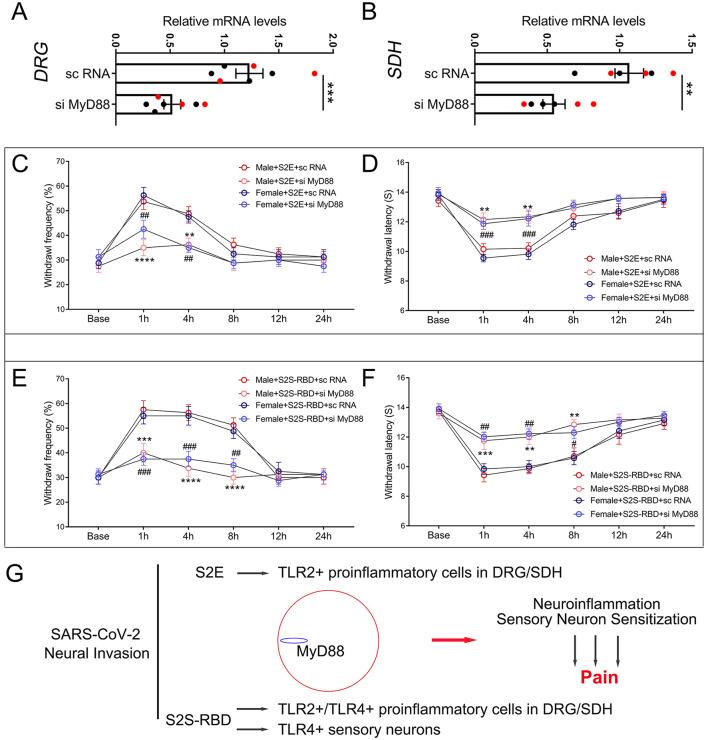
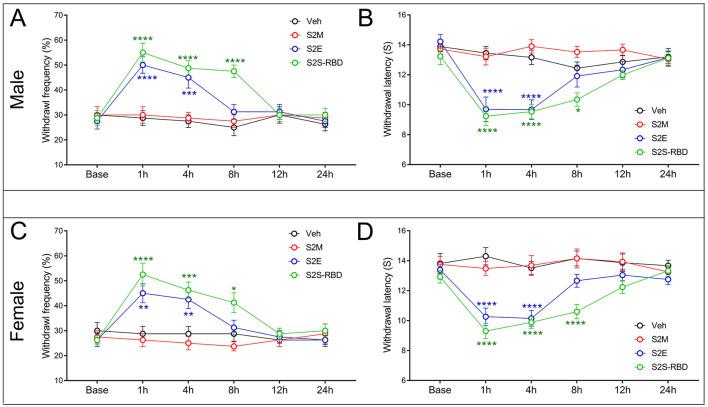
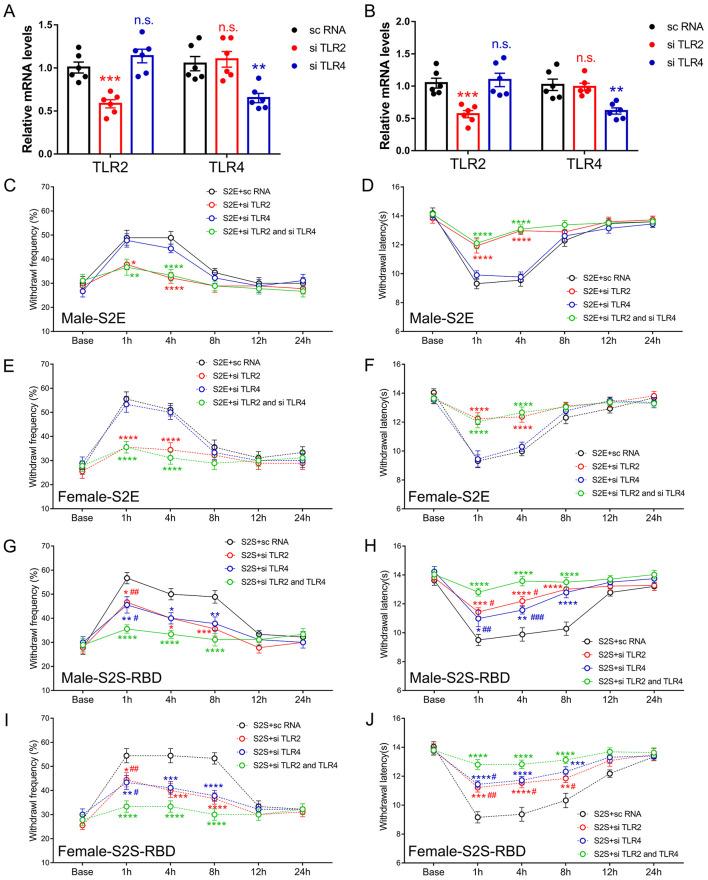
Somatosensory disorders, especially pain, are prominent symptoms of COVID-19. Except for the viral infection process, SARS-CoV-2 viral proteins might be directly sensed by corresponding receptors, thereby triggering nociceptive signals in the dorsal root ganglion (DRG) and spinal dorsal horn (SDH). Behavioral assays were performed to screen out the nociceptive effects of the SARS-CoV-2 envelope protein (S2E) and spike protein receptor binding domain (S2S-RBD). Further investigation revealed that the genetic knockdown of TLR2 in the DRG and SDH significantly alleviated pain induced by both S2E and S2S-RBD. In contrast, the knockdown of TLR4 did not mitigate S2E-related pain but did reduce S2S-RBD-associated pain. Additionally, the knockdown of MyD88 effectively alleviated both mechanical and thermal pain induced by S2E and S2S-RBD. These findings indicate that the TLR2/4-MyD88 axis mediates SARS-CoV-2 protein-induced pain, and the interaction between viral proteins and neuro-immune receptors might serve as a key pathogenic factor in COVID-19 somatosensory disorders, suggesting a promising therapeutic strategy for these symptoms.
躯体感觉障碍,尤其是疼痛,是新冠病毒病(COVID-19)的突出症状。除病毒感染过程外,严重急性呼吸综合征冠状病毒2(SARS-CoV-2)病毒蛋白可能被相应受体直接感知,从而在背根神经节(DRG)和脊髓背角(SDH)触发伤害性信号。进行行为学实验以筛选出SARS-CoV-2包膜蛋白(S2E)和刺突蛋白受体结合域(S2S-RBD)的伤害性作用。进一步研究表明,DRG和SDH中Toll样受体2(TLR2)的基因敲低显著减轻了S2E和S2S-RBD诱导的疼痛。相比之下,TLR4的敲低并未减轻S2E相关疼痛,但确实减轻了S2S-RBD相关疼痛。此外,髓样分化因子88(MyD88)的敲低有效减轻了S2E和S2S-RBD诱导的机械性和热性疼痛。这些发现表明,TLR2/4-MyD88轴介导SARS-CoV-2蛋白诱导的疼痛,病毒蛋白与神经免疫受体之间的相互作用可能是COVID-19躯体感觉障碍的关键致病因素,为这些症状提示了一种有前景的治疗策略。
 Zotero 插件