Wang Shun, Zeng Weidi, An Qing, Duan Lingfei, Zuo Zhiwei
State Key Laboratory of Organometallic Chemistry, Shanghai Institute of Organic Chemistry, University of Chinese Academy of Sciences, Shanghai, China.
Department of Chemistry, University of Science and Technology of China, Hefei, Anhui, China.
Nat Commun. 2025 Jul 4;16(1):6162. doi: 10.1038/s41467-025-61414-9.
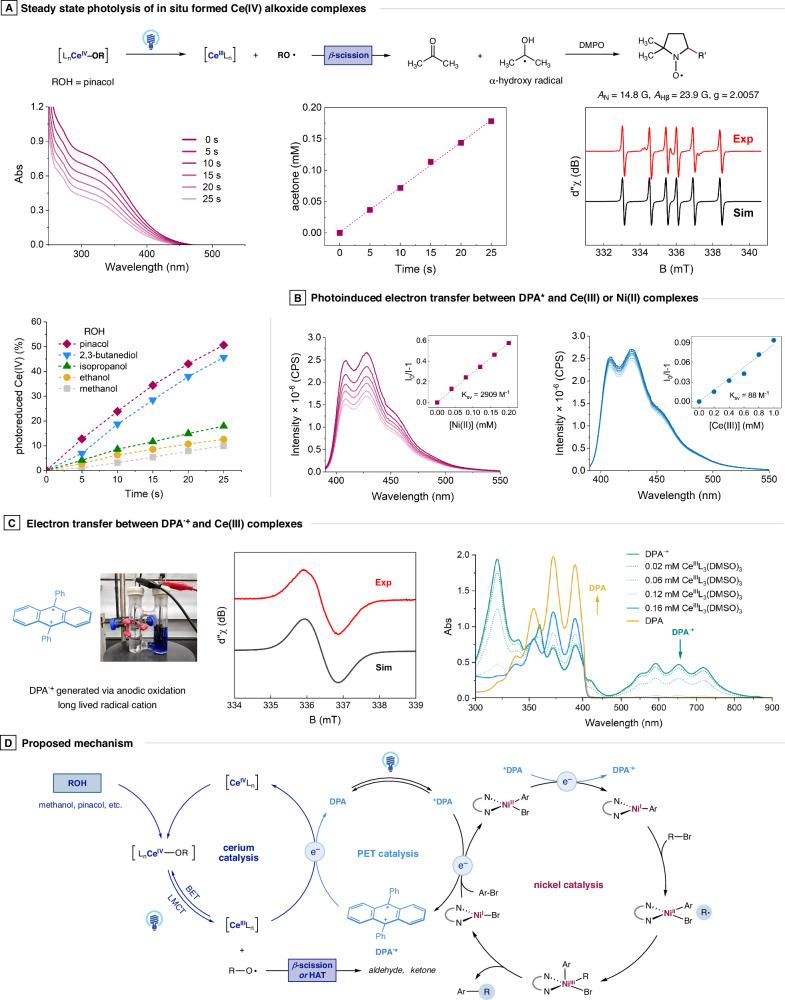
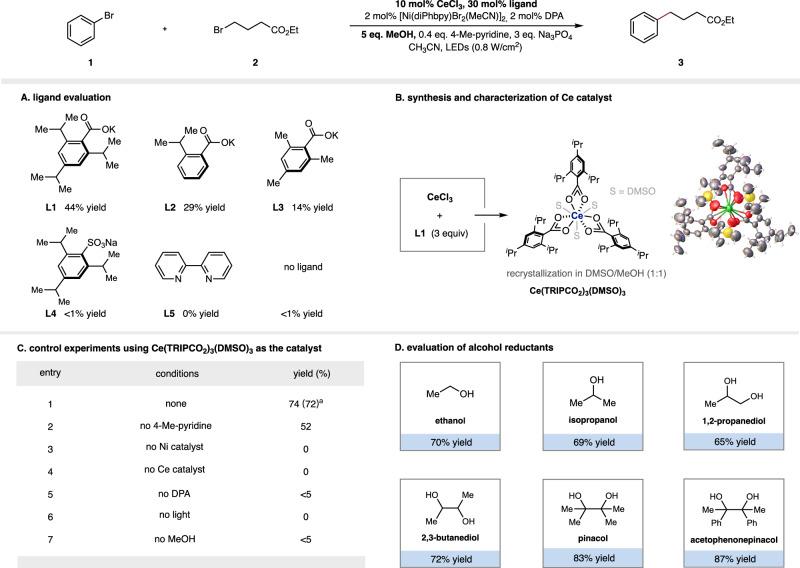
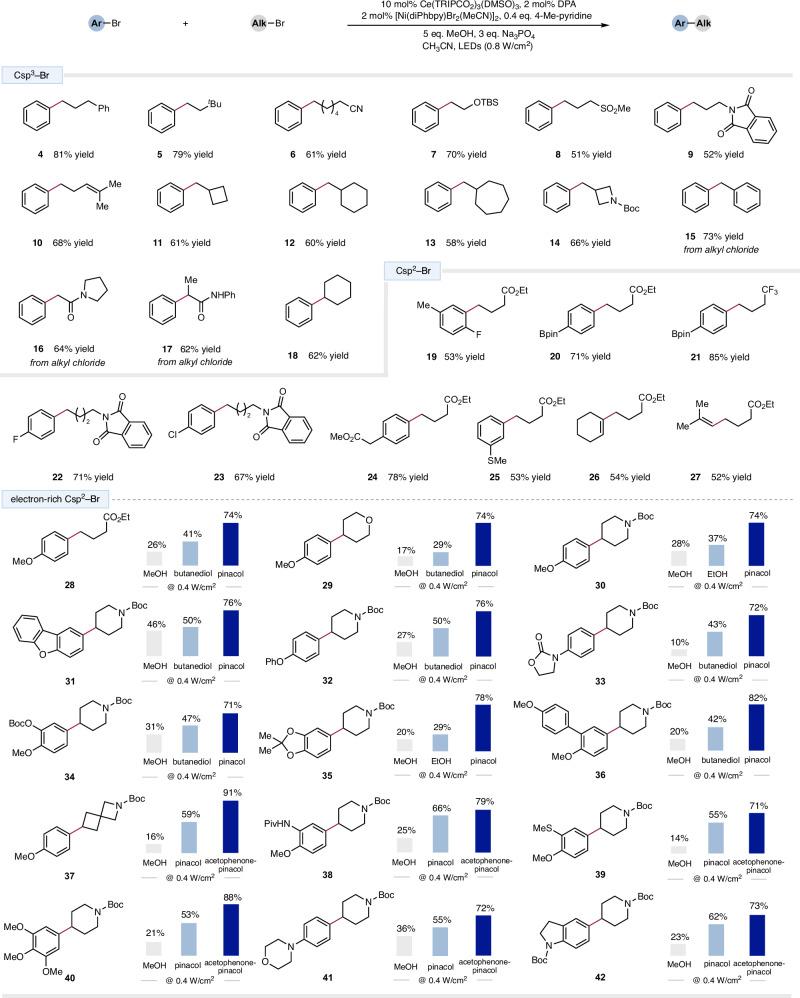
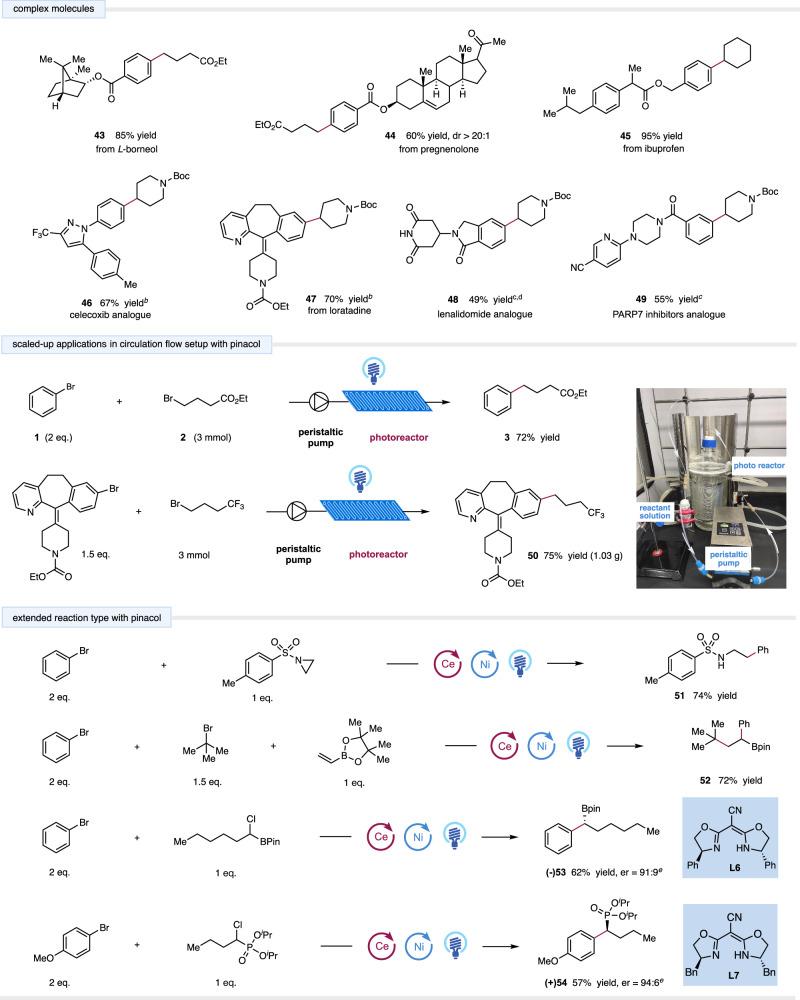
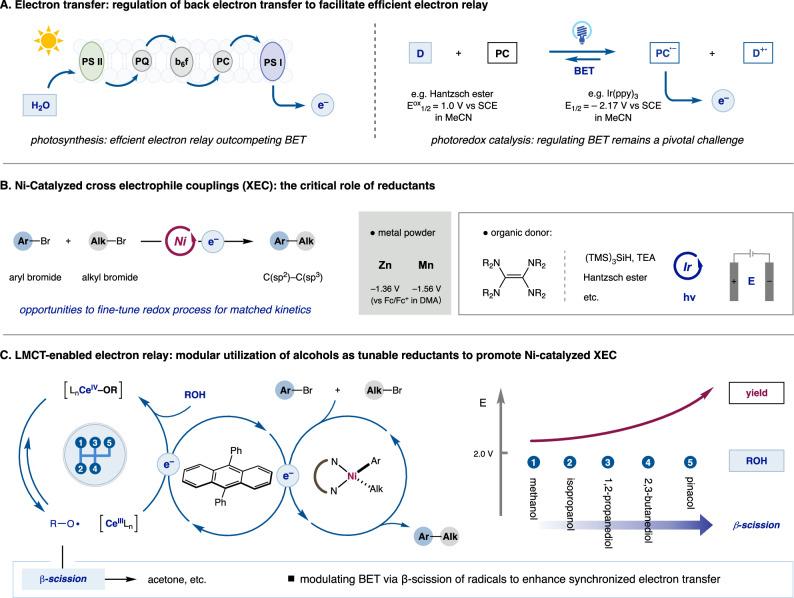
Photoinduced electron transfer is fundamental to both biological and synthetic processes; however, modulating back electron transfer (BET) remains a formidable challenge in achieving more efficient photocatalytic transformations. In this work, we present a strategy to regulate electron transfer dynamics via ligand-to-metal charge transfer (LMCT) catalysis, wherein the rapid β-scission of alkoxy radicals is harnessed to suppress BET, thereby facilitating the efficient transfer of reducing equivalents to drive transition metal-mediated reductive cross-coupling reactions. By strategically utilizing a diverse array of alcohol reductants, such as methanol and pinacol, we employ a cerium benzoate catalyst to enable reductive processes not through modulation of redox potentials, but by promoting synchronized electron transfer. Detailed mechanistic investigations reveal that the photoinduced electron relay process, governed by LMCT-BET, plays a pivotal role in effectively delivering reducing equivalents to catalytic sites, underscoring its significance in optimizing catalytic efficiency.
光致电子转移对于生物和合成过程都至关重要;然而,在实现更高效的光催化转化方面,调节反向电子转移(BET)仍然是一项艰巨的挑战。在这项工作中,我们提出了一种通过配体到金属的电荷转移(LMCT)催化来调节电子转移动力学的策略,其中利用烷氧基自由基的快速β-断裂来抑制BET,从而促进还原当量的有效转移以驱动过渡金属介导的还原交叉偶联反应。通过策略性地使用多种醇类还原剂,如甲醇和频哪醇,我们使用苯甲酸铈催化剂来实现还原过程,不是通过调节氧化还原电位,而是通过促进同步电子转移。详细的机理研究表明,由LMCT-BET控制的光致电子中继过程在有效地将还原当量传递到催化位点方面起着关键作用,突出了其在优化催化效率方面的重要性。

 Zotero 插件