
靶向肿瘤相关巨噬细胞中的HK3可通过增强宫颈癌中的抗原交叉呈递来增强抗肿瘤免疫力。
Targeting HK3 in tumor-associated macrophages enhances antitumor immunity through augmenting antigen cross-presentation in cervical cancer.
作者信息
Yang Yifan, Tian Xun, Chen Jinglan, Liu Jian, Jiang Han, Liu Liting, Qu Shen, Wu Min, Wang Jingyu, Chen Ying, He Shan, Sun Chaoyang, Huang Yafei, Wang Hui
机构信息
Tongji Hospital and School of Basic Medicine, Department of Obstetrics and Gynecology, Huazhong University of Science and Technology Tongji Medical College, Wuhan, Hubei, China.
The Central Hospital of Wuhan, Department of Obstetrics and Gynecology, Academician Expert Workstation, Huazhong University of Science and Technology Tongji Medical College, Wuhan, Hubei, China.
出版信息
J Immunother Cancer. 2025 Jul 15;13(7):e011948. doi: 10.1136/jitc-2025-011948.
BACKGROUND
Tumor-associated macrophages (TAMs) are among the most prevalent cells within the tumor microenvironment (TME) of cervical cancer (CC). Although TAMs frequently exhibit an immunosuppressive phenotype, their plasticity enables them as an intriguing reprogrammable target for immunotherapy of CC.
METHODS
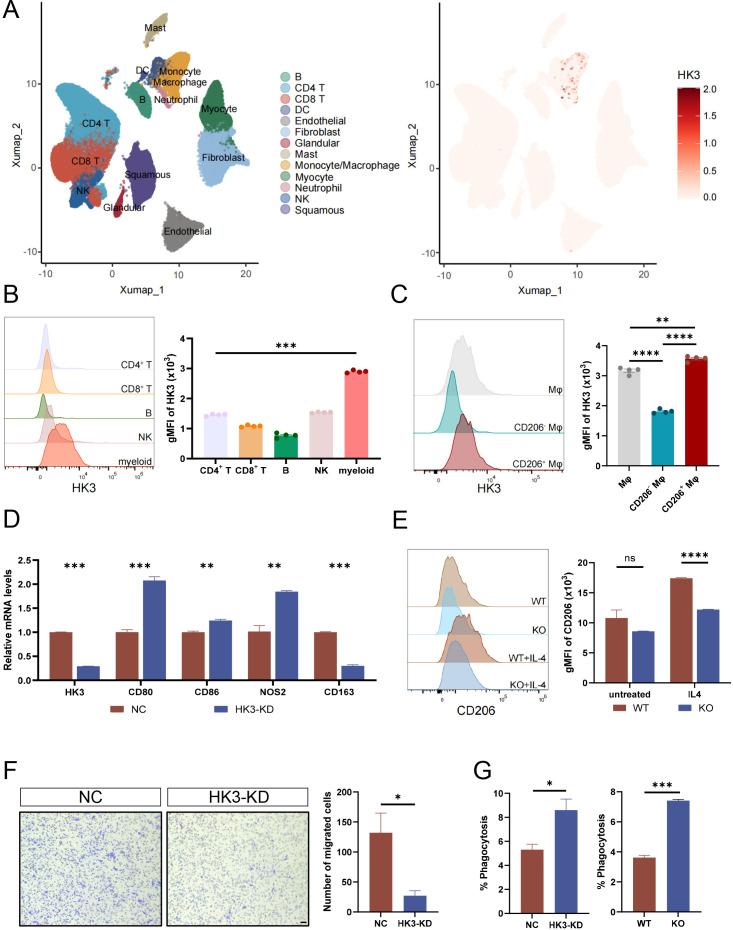
Consensus clustering was employed to delineate immune infiltration patterns in a cohort of 119 patients with CC. Single-cell RNA sequencing, complemented by flow cytometry analysis, was used to characterize hexokinase 3 (HK3)-expressing cell populations. In vivo tumor models were established to assess the functional impact of HK3-expressing cells on the TME, with interventions including knockout and CD8 T-cell depletion. A comprehensive approach involving bulk RNA sequencing, immunoprecipitation assays, confocal microscopy imaging, and in vitro co-culture systems was implemented to elucidate the mechanisms underlying HK3 inhibition-mediated enhancement of antitumor immunity. Furthermore, the therapeutic efficacy of HK3 inhibition, both as a monotherapy and in combination with immunotherapeutic strategies, was systematically evaluated in preclinical tumor models.
RESULTS
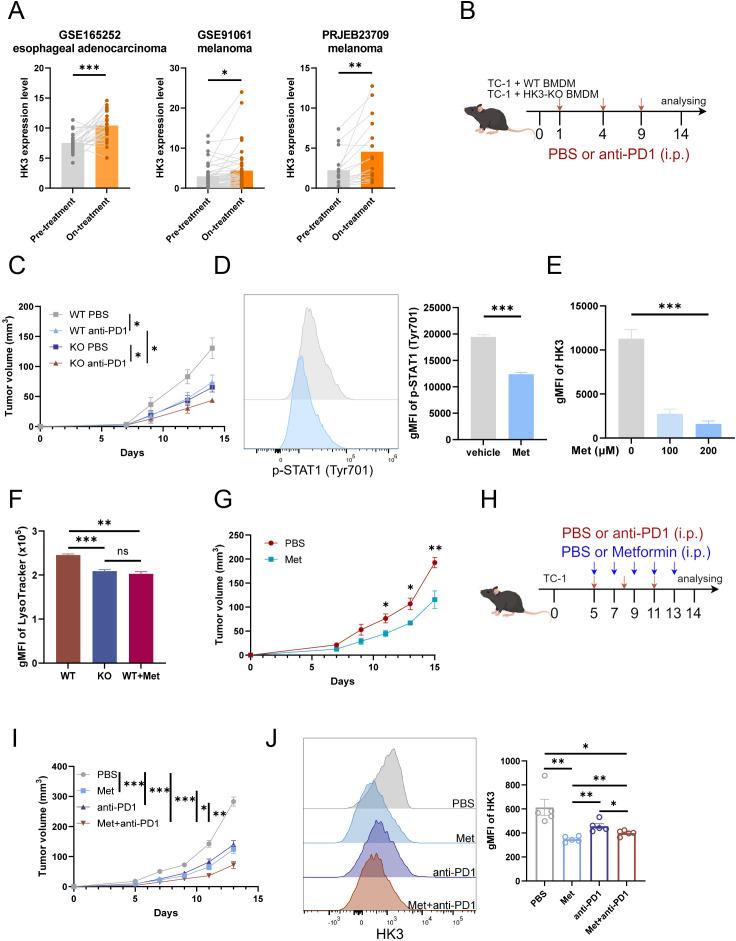
We elucidated a cross-regulation between TAMs and CD8 T cells, with HK3 serving as a central regulatory node. Upon HK3 expression was upregulated by CD8 T cells through the IFN-γ-STAT1 signaling axis, TAMs exhibited impaired cross-presentation capacity, which in turn attenuated CD8 T cell-mediated antitumor immunity. Mechanistically, HK3 physically interacted with mechanistic target of rapamycin (mTOR), promoting nuclear translocation of transcription factor EB (TFEB) and resulting in excessive lysosomal activation and antigen degradation. Moreover, targeting HK3 in combination with immune checkpoint blockade yielded a synergistic effect in enhancing antitumor immunity.
CONCLUSIONS
Targeting HK3 in TAMs represents a promising therapeutic strategy capable of enhancing antitumor immunity and synergizing with immune checkpoint blockade by restoring efficient antigen cross-presentation.
背景
肿瘤相关巨噬细胞(TAM)是宫颈癌(CC)肿瘤微环境(TME)中最常见的细胞之一。尽管TAM通常表现出免疫抑制表型,但其可塑性使其成为CC免疫治疗中一个引人关注的可重编程靶点。
方法
采用共识聚类法描绘119例CC患者队列中的免疫浸润模式。单细胞RNA测序结合流式细胞术分析,用于表征表达己糖激酶3(HK3)的细胞群体。建立体内肿瘤模型,以评估表达HK3的细胞对TME的功能影响,干预措施包括基因敲除和CD8 T细胞耗竭。采用包括批量RNA测序、免疫沉淀分析、共聚焦显微镜成像和体外共培养系统在内的综合方法,阐明HK3抑制介导的抗肿瘤免疫增强的潜在机制。此外,在临床前肿瘤模型中系统评估了HK3抑制作为单一疗法以及与免疫治疗策略联合使用时的治疗效果。
结果
我们阐明了TAM与CD8 T细胞之间的交叉调节,HK3作为一个核心调节节点。当CD8 T细胞通过IFN-γ-STAT1信号轴上调HK3表达时,TAM的交叉呈递能力受损,进而减弱了CD8 T细胞介导的抗肿瘤免疫。机制上,HK3与雷帕霉素机制性靶点(mTOR)发生物理相互作用,促进转录因子EB(TFEB)的核转位,导致溶酶体过度激活和抗原降解。此外,靶向HK3与免疫检查点阻断联合使用在增强抗肿瘤免疫方面产生了协同效应。
结论
靶向TAM中的HK3代表了一种有前景的治疗策略,能够通过恢复有效的抗原交叉呈递来增强抗肿瘤免疫,并与免疫检查点阻断协同作用。



 Zotero 插件