
年龄对转移性非小细胞肺癌患者免疫检查点抑制剂治疗效果的影响
The Impact of Age on the Effectiveness of Immune Checkpoint Inhibitors Therapy in Patients with Metastatic Non-Small-Cell Lung Cancer.
作者信息
Moskalenko Yuliia, Yazykov Oleksandr, Vasylieva Olena, Smiian Kateryna, Ivakhniuk Tetiana, Budko Hanna, Moskalenko Roman
机构信息
Department of Oncology and Radiology, Sumy State University, 40007 Sumy, Ukraine.
Department of Surgery, Sumy State University, 40007 Sumy, Ukraine.
出版信息
Geriatrics (Basel). 2025 Jun 27;10(4):85. doi: 10.3390/geriatrics10040085.
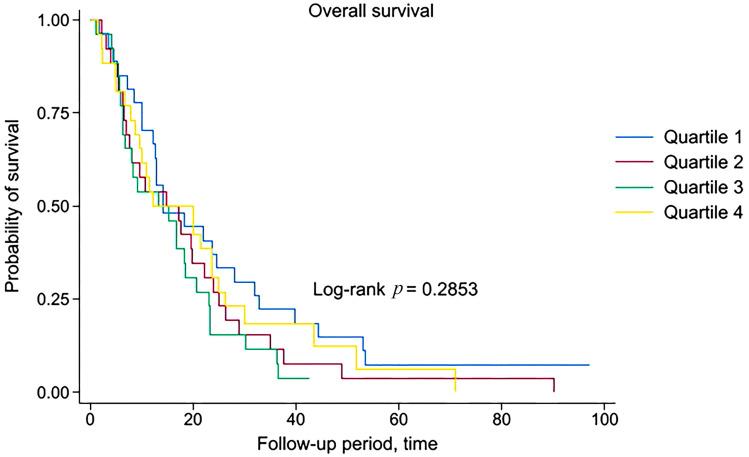
The global aging population has led to a growing incidence of malignancies, including metastatic non-small-cell lung cancer (mNSCLC). Immunosenescence may affect the efficacy of immune checkpoint inhibitors (ICIs). The prognostic role of age in ICI-treated mNSCLC remains uncertain. : This study aims to assess whether age independently influences survival, response, and toxicity in mNSCLC patients treated with ICIs, and to examine potential interactions with clinical factors. : In this retrospective cohort study, 105 patients with mNSCLC treated with ICIs were enrolled. Patients were stratified into four groups based on age quartiles. Clinical, pathological, and treatment data were collected. Survival outcomes were analyzed using Kaplan-Meier curves, ROC curve and multivariable Cox regression models adjusted for confounders. Interaction and restricted cubic spline analyses were performed to explore age-related effects. The < 0.05 was considered as statistically significant. : The median age was 60.8 years. Clinical benefit-defined as objective response rate (51.4%) and disease control rate (86.6%)-did not significantly differ across age quartiles ( = 0.551 and = 0.257, respectively). Median overall survival also did not differ significantly ( = 0.2853). Cox regression and spline modeling demonstrated no independent association between chronological age and all-cause mortality (Model 3: HR = 1.00, 95% CI: 0.95-1.04, = 0.889). However, interaction analyses revealed that poor ECOG performance status ( = 0.001), longer duration of ICI treatment ( < 0.0001), and low PD-L1 expression ( = 0.017) were stronger predictors of mortality in older patients. Age was associated with increased immune-related adverse events and higher Charlson Comorbidity Index scores, suggesting the need for age-specific management strategies. : Age alone does not predict survival in mNSCLC patients receiving ICIs. However, functional status, treatment duration and PD-L1 expression may modify age-related outcomes.
全球人口老龄化导致包括转移性非小细胞肺癌(mNSCLC)在内的恶性肿瘤发病率不断上升。免疫衰老可能会影响免疫检查点抑制剂(ICI)的疗效。年龄在接受ICI治疗的mNSCLC患者中的预后作用仍不确定。本研究旨在评估年龄是否独立影响接受ICI治疗的mNSCLC患者的生存、反应和毒性,并研究其与临床因素的潜在相互作用。在这项回顾性队列研究中,纳入了105例接受ICI治疗的mNSCLC患者。根据年龄四分位数将患者分为四组。收集临床、病理和治疗数据。使用Kaplan-Meier曲线、ROC曲线和针对混杂因素进行调整的多变量Cox回归模型分析生存结果。进行交互作用和限制性立方样条分析以探索与年龄相关的影响。P<0.05被认为具有统计学意义。中位年龄为60.8岁。临床获益(定义为客观缓解率(51.4%)和疾病控制率(86.6%))在各年龄四分位数之间无显著差异(分别为P = 0.551和P = 0.257)。中位总生存期也无显著差异(P = 0.2853)。Cox回归和样条建模显示实际年龄与全因死亡率之间无独立关联(模型3:HR = 1.00,95%CI:0.95 - 1.04,P = 0.889)。然而,交互作用分析显示,东部肿瘤协作组(ECOG)体能状态差(P = 0.001)、ICI治疗时间长(P<0.0001)和程序性死亡受体配体1(PD-L1)低表达(P = 0.017)是老年患者死亡率更强的预测因素。年龄与免疫相关不良事件增加和更高的查尔森合并症指数评分相关,提示需要针对年龄制定管理策略。年龄本身并不能预测接受ICI治疗的mNSCLC患者的生存情况。然而,功能状态、治疗持续时间和PD-L1表达可能会改变与年龄相关的结果。



 Zotero 插件