
一种用于即时护理和无创丙酮检测的基于微球的传感器。
A Microsphere-Based Sensor for Point-of-Care and Non-Invasive Acetone Detection.
作者信息
Osorio Perez Oscar, Nguyen Ngan Anh, Denham Landon, Hendricks Asher, Dominguez Rodrigo E, Jeong Eun Ju, Carvalho Marcio S, Lima Mateus, Eshima Jarrett, Yu Nanxi, Smith Barbara, Wang Shaopeng, Kulick Doina, Forzani Erica
机构信息
School of Engineering for Matter, Transport and Energy, Arizona State University, Tempe, AZ 85287, USA.
Center for Bioelectronics and Biosensors, Biodesign Institute, Arizona State University, 1001 S McAllister Ave., Tempe, AZ 85281, USA.
出版信息
Biosensors (Basel). 2025 Jul 3;15(7):429. doi: 10.3390/bios15070429.
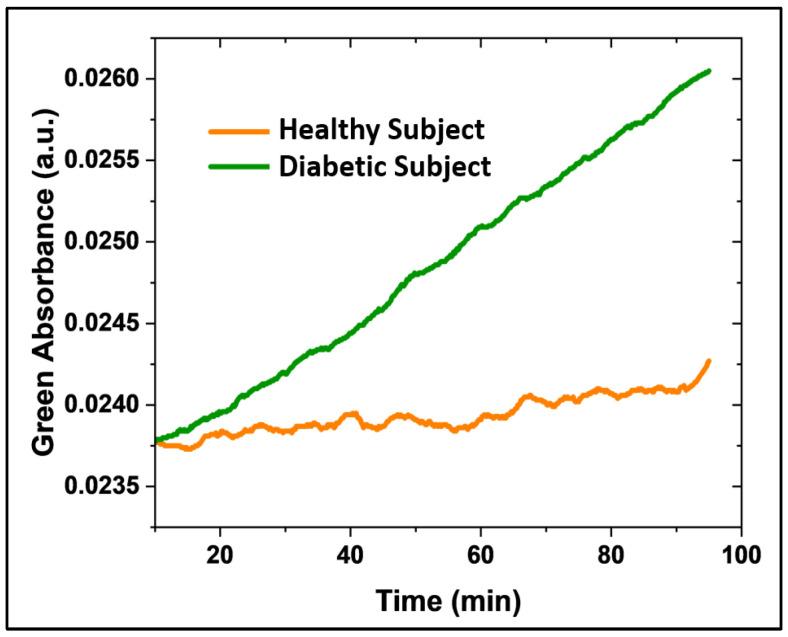
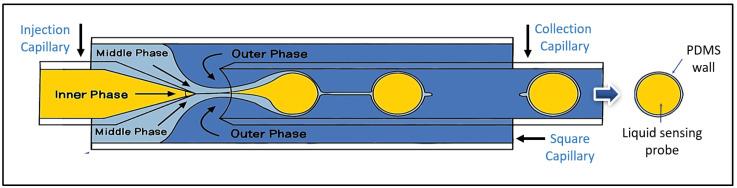
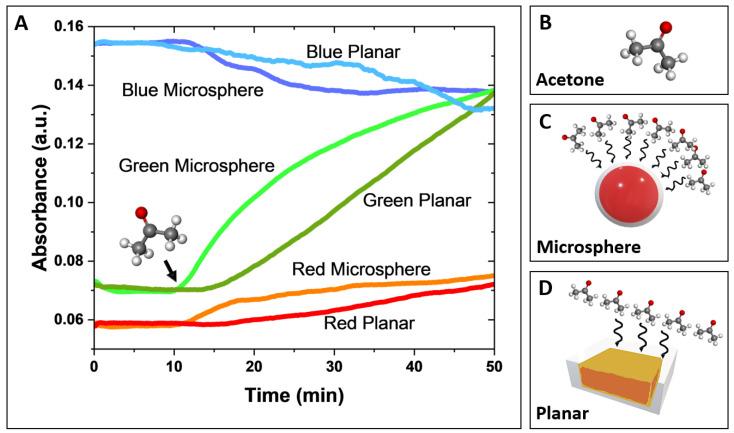
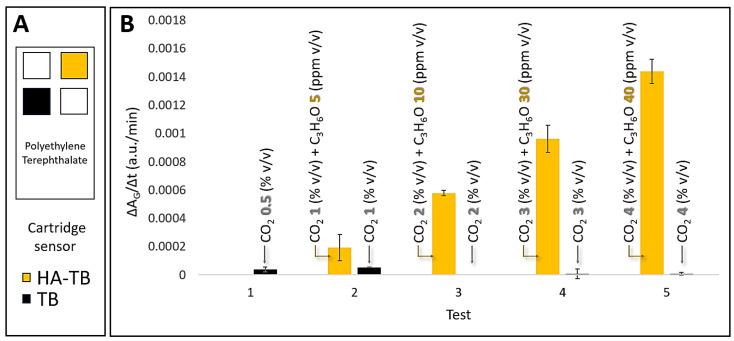
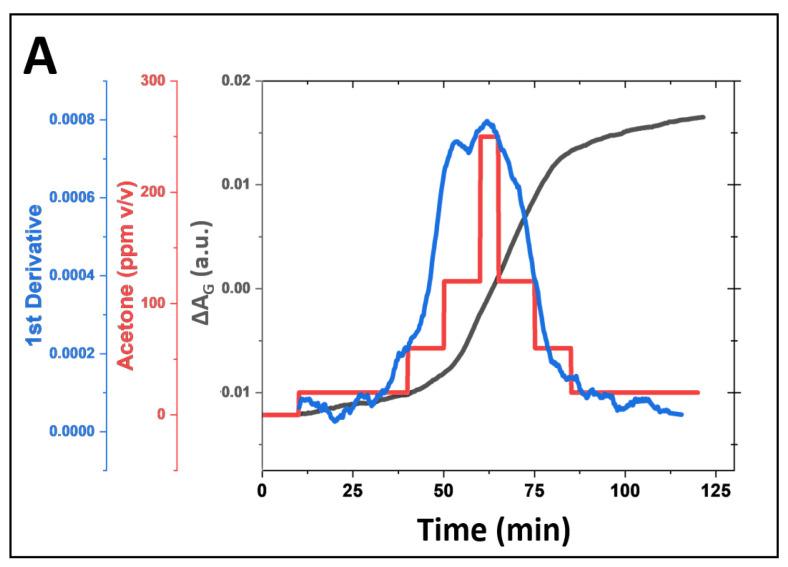
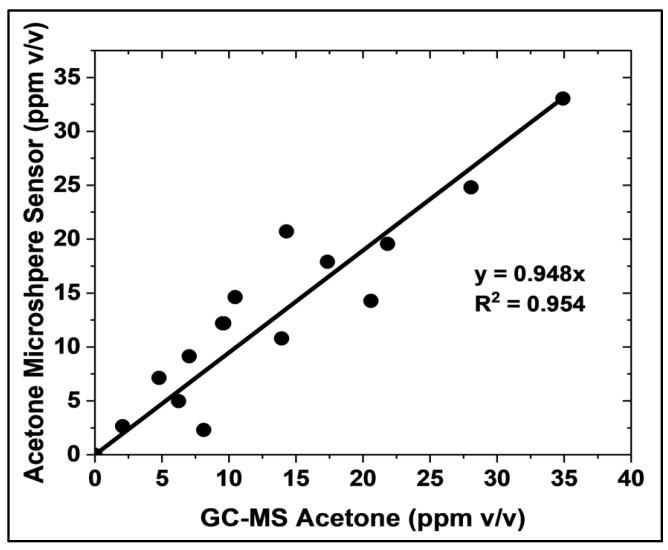
Ketones, which are key biomarkers of fat oxidation, are relevant for metabolic health maintenance and disease development, making continuous monitoring essential. In this study, we introduce a novel colorimetric sensor designed for potential continuous acetone detection in biological fluids. The sensor features a polydimethylsiloxane (PDMS) shell that encapsulates a sensitive and specific liquid-core acetone-sensing probe. The microsphere sensors were characterized by evaluating their size, PDMS shell thickness, colorimetric response, and sensitivity under realistic conditions, including 100% relative humidity (RH) and CO interference. The microsphere size and sensor sensitivity can be controlled by modifying the fabrication parameters. Critically, the sensor showed high selectivity for acetone detection, with negligible interference from CO concentrations up to 4%. In addition, the sensor displayed good reproducibility (CV < 5%) and stability under realistic storage conditions (over two weeks at 4 °C). Finally, the accuracy of the microsphere sensor was validated against a gold standard gas chromatography-mass spectrometry (GC-MS) method using simulated and real breath samples from healthy individuals and type 1 diabetes patients. The correlation between the microsphere sensor and GC-MS produced a linear fit with a slope of 0.948 and an adjusted R-squared value of 0.954. Therefore, the liquid-core microsphere-based sensor is a promising platform for acetone body fluid analysis.
酮类作为脂肪氧化的关键生物标志物,与代谢健康维持和疾病发展相关,因此持续监测至关重要。在本研究中,我们介绍了一种新型比色传感器,旨在对生物流体中的丙酮进行潜在的连续检测。该传感器具有聚二甲基硅氧烷(PDMS)外壳,包裹着一种灵敏且特异的液芯丙酮传感探针。通过在包括100%相对湿度(RH)和CO干扰在内的实际条件下评估其尺寸、PDMS外壳厚度、比色响应和灵敏度,对微球传感器进行了表征。微球尺寸和传感器灵敏度可通过修改制造参数来控制。关键的是,该传感器对丙酮检测具有高选择性,在CO浓度高达4%时干扰可忽略不计。此外,该传感器在实际储存条件下(4℃下超过两周)表现出良好的重现性(CV<5%)和稳定性。最后,使用来自健康个体和1型糖尿病患者的模拟和真实呼气样本,通过金标准气相色谱-质谱(GC-MS)方法验证了微球传感器的准确性。微球传感器与GC-MS之间的相关性产生了线性拟合,斜率为0.948,调整后的R平方值为0.954。因此,基于液芯微球的传感器是用于丙酮体液分析的一个有前景的平台。


 Zotero 插件