
阐明“某物质”线粒体超氧化物歧化酶的作用。 (注:原文中“'s”指代不明,翻译时根据大概意思进行了补充说明)
Elucidating the Role of 's Mitochondrial Superoxide Dismutase.
作者信息
Tirtorahardjo James Alexander, Ma Christopher I-H, Shaikh Areej, Andrade Rosa M
机构信息
Department of Cell and Developmental Biology, University of California San Diego, La Jolla, CA 92093, USA.
Department of Medicine, Division of Infectious Diseases, University of California Irvine, Irvine, CA 92697, USA.
出版信息
Biomolecules. 2025 Jul 7;15(7):972. doi: 10.3390/biom15070972.
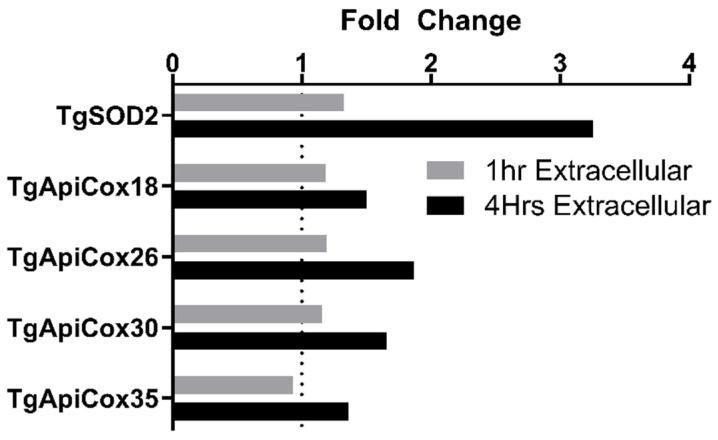
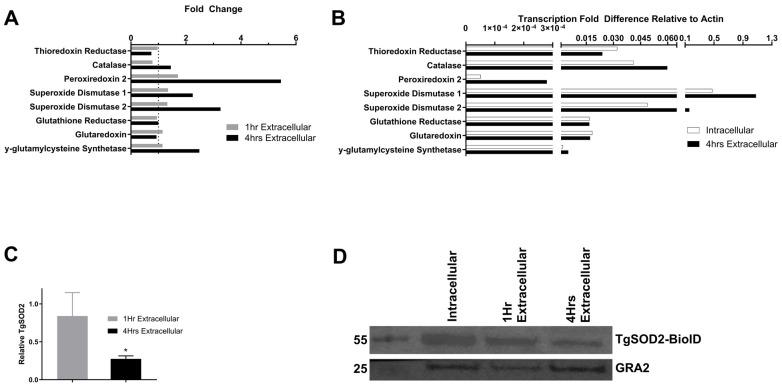
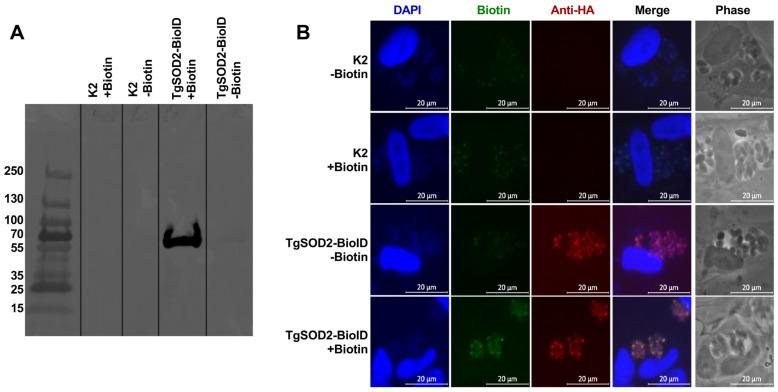
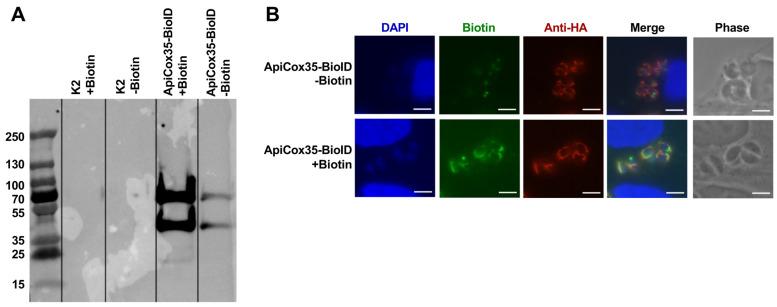
is an Apicomplexan parasite that possesses a well-developed system of scavengers of reactive oxygen species (ROS). Among its components, mitochondrial superoxide dismutase (TgSOD2) is essential, as predicted by the CRISPR phenotype index and evidenced by the non-viability of its constitutive knockouts. As an obligate intracellular parasite, TgSOD2 is upregulated during extracellular stages. Herein, we generated a viable TgSOD2 knockdown mutant using an inducible auxin-degron system to explore the biological role of TgSOD2 in . Depletion of TgSOD2 led to impaired parasite growth and replication, reduced mitochondrial membrane potential (MMP), abnormalities in the distribution of ATP synthase within its mitochondrial electron transport chain (mETC), and increased susceptibility to mETC inhibitors. Through a proximal biotinylation approach, we identified the interactions of TgSOD2 with complexes IV and V of its mETC, suggesting that these sites are sensitive to ROS. Our study provides the first insights into the role of TgSOD2 in maintaining its mitochondrial redox homeostasis and subsequent parasite replication fitness. infects nearly a third of the world population and can cause fetal miscarriages or life-threatening complications in vulnerable patients. Current therapies do not eradicate the parasite from the human hosts, rendering them at risk of recurrence during their lifetimes. has a single mitochondrion, which is well-known for its susceptibility to oxidative damage that leads to 's death. Therefore, targeting mitochondrion remains an attractive therapeutic strategy for drug development. 's mitochondrial superoxide dismutase is an antioxidant protein in the parasite mitochondrion and is essential for its survival. Understanding its biological role could reveal mitochondrial vulnerabilities in and provide new leads for the development of effective treatments for infections.
是一种顶复门寄生虫,拥有完善的活性氧物种(ROS)清除系统。在其组成成分中,线粒体超氧化物歧化酶(TgSOD2)至关重要,这是通过CRISPR表型指数预测的,并由其组成型敲除的不可行性所证明。作为一种专性细胞内寄生虫,TgSOD2在细胞外阶段会上调。在此,我们使用可诱导的生长素降解系统生成了一个可行的TgSOD2敲低突变体,以探索TgSOD2在……中的生物学作用。TgSOD2的缺失导致寄生虫生长和复制受损、线粒体膜电位(MMP)降低、其线粒体电子传递链(mETC)中ATP合酶分布异常以及对mETC抑制剂的敏感性增加。通过近端生物素化方法,我们确定了TgSOD2与其mETC的复合物IV和V的相互作用,表明这些位点对ROS敏感。我们的研究首次深入了解了TgSOD2在维持其线粒体氧化还原稳态及随后的寄生虫复制适应性中的作用。……感染了近三分之一的世界人口,并可导致脆弱患者的胎儿流产或危及生命的并发症。目前的治疗方法无法从人类宿主中根除寄生虫,使他们在一生中面临复发的风险。……有一个单一的线粒体,其以易受氧化损伤导致……死亡而闻名。因此,靶向……线粒体仍然是药物开发中一种有吸引力的治疗策略。……的线粒体超氧化物歧化酶是寄生虫线粒体中的一种抗氧化蛋白,对其生存至关重要。了解其生物学作用可以揭示……线粒体的脆弱性,并为开发针对……感染的有效治疗方法提供新的线索。


 Zotero 插件