
基于淋巴细胞亚群的非侵入性生物标志物可预测表皮生长因子受体酪氨酸激酶抑制剂预处理的表皮生长因子受体突变型非小细胞肺癌患者的免疫化疗疗效。
Lymphocyte subset-based non-invasive biomarker predicts immunochemotherapy efficacy in EGFR-TKI-pretreated EGFR-mutated NSCLC.
作者信息
Song Lianxi, Zeng Liang, Xu Qinqin, Li Yizhi, Guo Wenhuan, Lin Shaoding, Jiang Wenjuan, Wang Zhan, Deng Li, Huang Zhe, Qin Haoyue, Yan Huan, Zhang Xing, Tong Fan, Zhang Ruiguang, Liu Zhaoyi, Zhang Lin, Yu Juan, Yang Xue, Xia Yang, Dong Xiaorong, Zhang Gao, Yang Nong, Zhang Yongchang
机构信息
Department of Medical Oncology, Lung Cancer and Gastrointestinal Unit, Hunan Cancer Hospital/The Affiliated Cancer Hospital of Xiangya School of Medicine, Central South University, Changsha 410013, China.
Graduate Collaborative Training Base of Hunan Cancer Hospital, Hengyang Medical School, University of South China, Hengyang, Hunan 421001, China.
出版信息
iScience. 2025 Jul 25;28(9):113211. doi: 10.1016/j.isci.2025.113211. eCollection 2025 Sep 19.
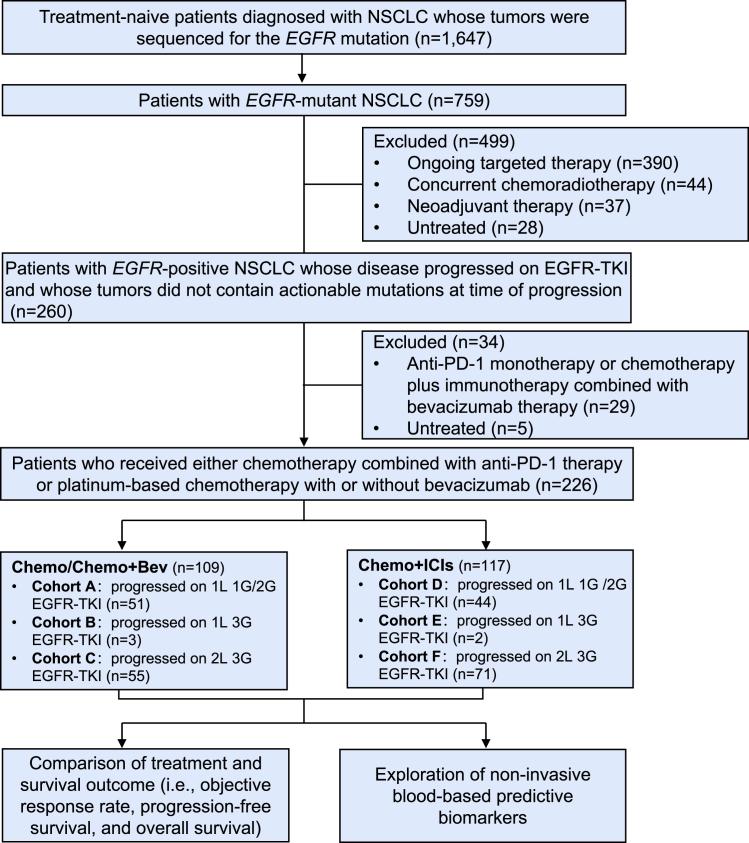
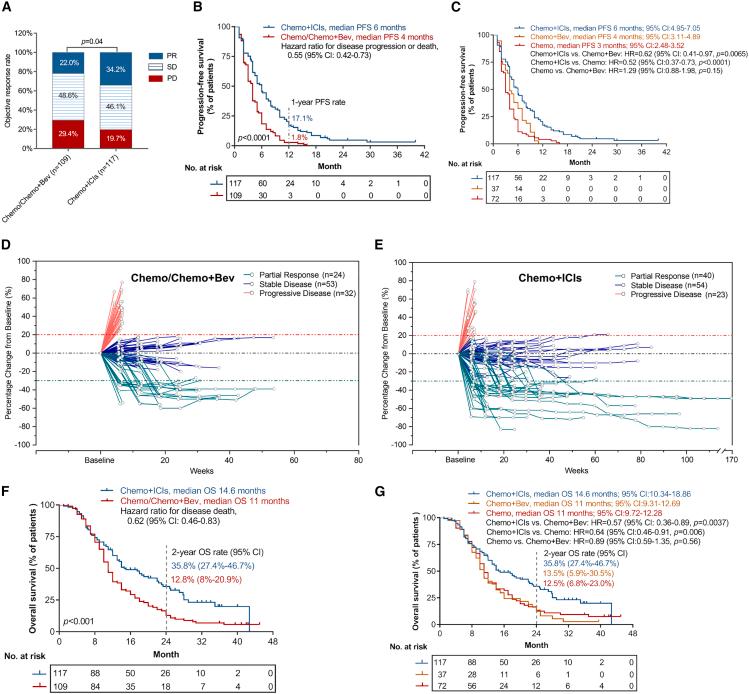
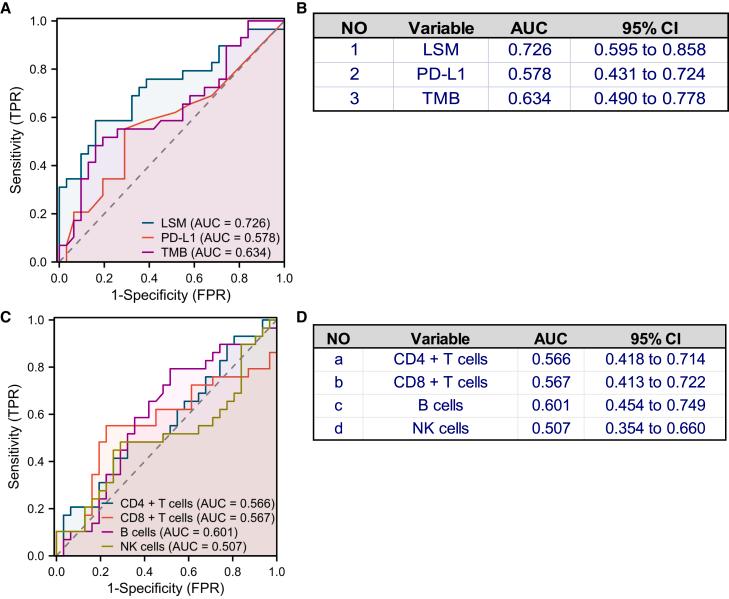
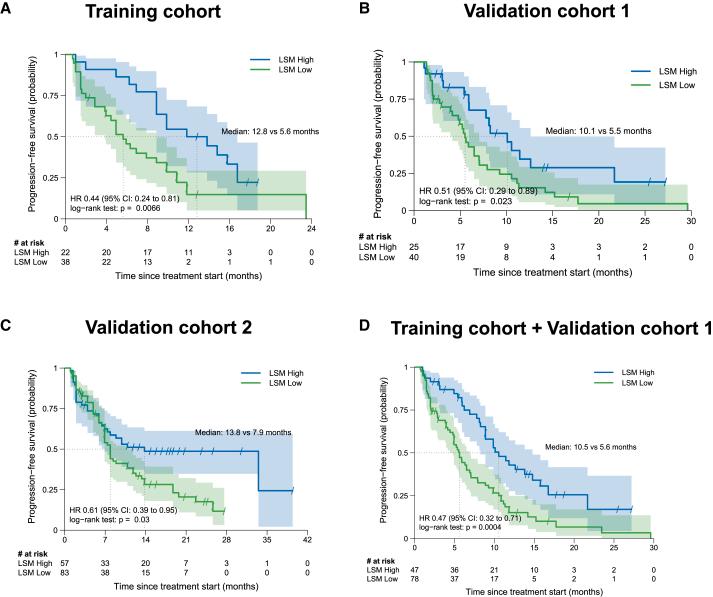
Immune checkpoint inhibitors (ICIs) combined with chemotherapy (Chemo+ICI) have shown variable benefit in patients with epidermal growth factor receptor ()-mutant non-small cell lung cancer (NSCLC) whose disease progressed following tyrosine kinase inhibitors (TKIs) therapy. This retrospective study evaluated treatment outcomes between Chemo+ICI and chemotherapy alone, and developed a lymphocyte subset model (LSM) using pre-treatment blood samples to predict survival outcome. Patients receiving Chemo+ICI showed significantly improved overall response rates (34.2% vs. 22.0%, = 0.04), progression-free survival (6.0 vs. 4.0 months, < 0.0001), and overall survival (14.6 vs. 11.0 months, < 0.001). LSM yielded an area under the curve of 0.726, with 58.6% sensitivity and 83.8% specificity. Across training and validation cohorts, patients classified as LSM-high had significantly longer progression-free survival than those in the LSM-low group. These findings provide real-world clinical evidence supporting the benefit of Chemo+ICI in EGFR-TKI-resistant -mutant NSCLC, and suggest that LSM may help identify patients most likely to benefit from Chemo+ICI.
免疫检查点抑制剂(ICIs)联合化疗(化疗+ICI)在表皮生长因子受体()突变的非小细胞肺癌(NSCLC)患者中显示出不同程度的获益,这些患者在接受酪氨酸激酶抑制剂(TKIs)治疗后疾病进展。这项回顾性研究评估了化疗+ICI与单纯化疗的治疗结果,并利用治疗前血样建立了淋巴细胞亚群模型(LSM)以预测生存结果。接受化疗+ICI的患者总体缓解率显著提高(34.2%对22.0%, = 0.04),无进展生存期(6.0个月对4.0个月, < 0.0001)和总生存期(14.6个月对11.0个月, < 0.001)。LSM的曲线下面积为0.726,敏感性为58.6%,特异性为83.8%。在训练和验证队列中,分类为LSM高的患者无进展生存期显著长于LSM低的患者。这些发现提供了真实世界的临床证据,支持化疗+ICI在EGFR-TKI耐药的 -突变NSCLC中的获益,并表明LSM可能有助于识别最有可能从化疗+ICI中获益的患者。




 Zotero 插件