
大麻二酚与胰腺癌患者生存率提高以及胆汁酸和肠道微生物群的调节有关。
Cannabidiol Is Associated with Improved Survival in Pancreatic Cancer and Modulation of Bile Acids and Gut Microbiota.
作者信息
Malhotra Pratibha, Palanisamy Ranjith, Panda Arunima, Casari Ilaria, Tirnitz-Parker Janina E E, O'Gara Fergal, Trengove Robert, Ragunath Krish, Caparros-Martin Jose A, Falasca Marco
机构信息
Curtin Medical School, Curtin Medical Research Institute, Curtin University, Perth, WA 6845, Australia.
UWA Medical School, The University of Western Australia, Perth, WA 6009, Australia.
出版信息
Int J Mol Sci. 2025 Aug 10;26(16):7733. doi: 10.3390/ijms26167733.
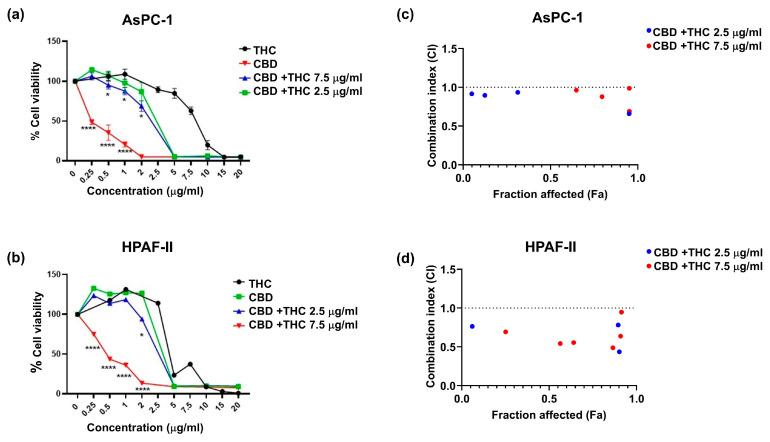
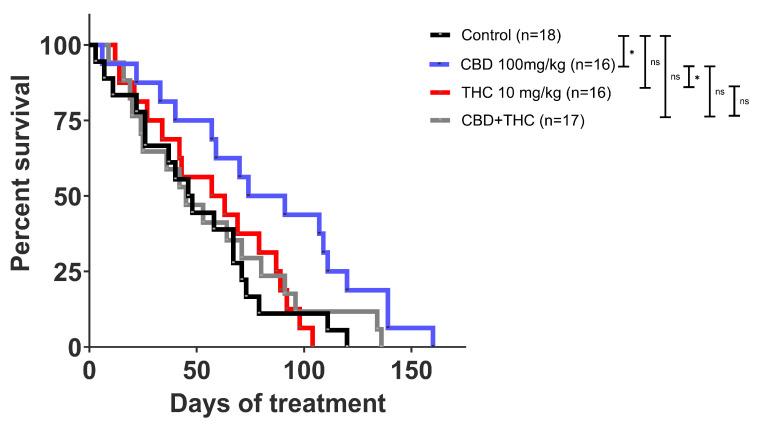
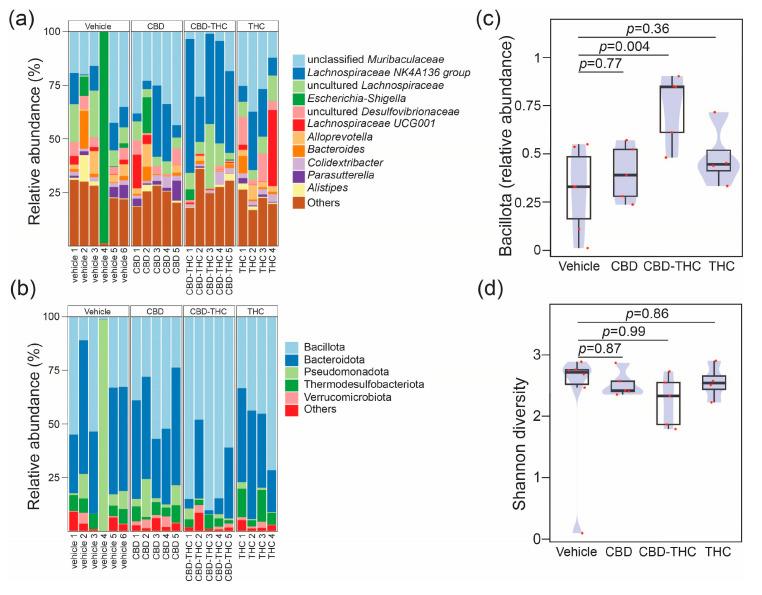
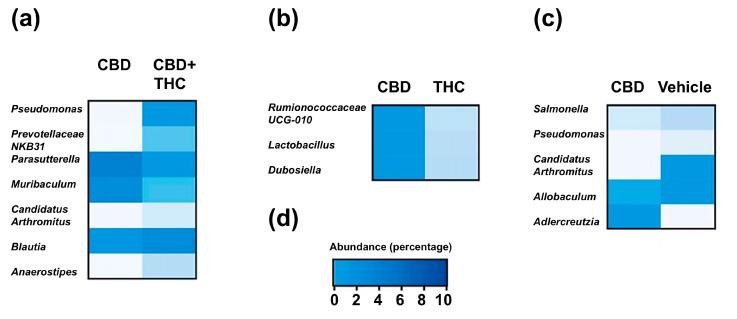
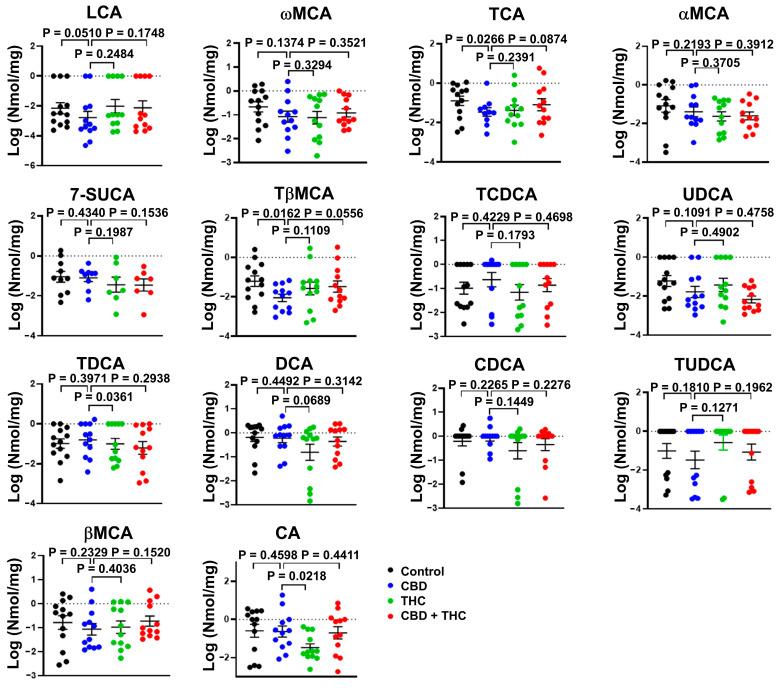
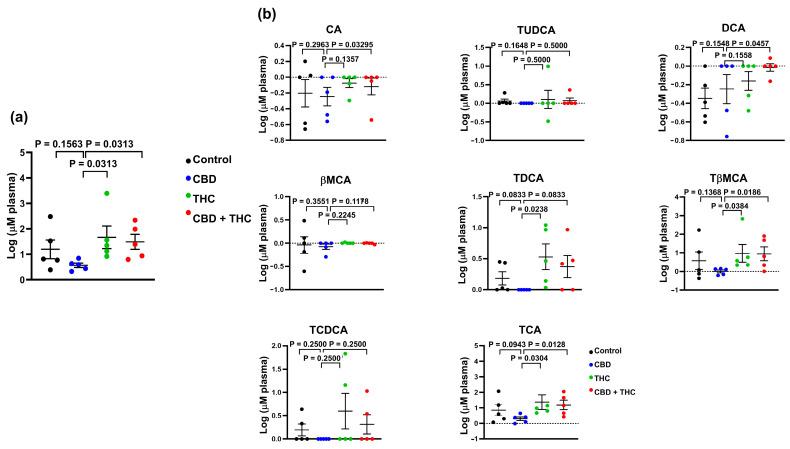
Pancreatic ductal adenocarcinoma (PDAC) is among the most aggressive malignancies, with dismal survival rates. Cannabinoids have shown anticancer properties in various cancers, including PDAC. This study aimed to evaluate the anticancer effects of cannabinoids, individually and in combination, and to elucidate their mechanisms of action in a murine PDAC model (KPC mice, KRASWT/G12D/TP53WT/R172H/Pdx1-Cre+/+) that mimics human disease. Additionally, the study explored the potential link between cannabinoid action, gut microbiota modulation, and bile acid (BA) metabolism. PDAC cell lines and KPC mice were treated with delta-9-tetrahydrocannabinol (THC) and cannabidiol (CBD), either as monotherapy or in combination. Faecal pellets, caecal contents, plasma, and tissues were collected at the survival endpoint for analysis. BA profiling was performed using mass spectrometry, and the faecal microbiota was characterised by sequencing the V3-V4 region of the 16S rRNA gene. While CBD and THC synergistically reduced cell viability in PDAC cell lines, only CBD monotherapy improved survival in KPC mice. Extended survival with CBD was accompanied by changes in gut microbiota composition and BA metabolism, suggesting a possible association. Notably, the effects of CBD were different from those observed with THC alone or in combination with CBD. The study highlights a distinct role for CBD in altering BA profiles, suggesting these changes may predict responses to cannabidiol in PDAC models. Furthermore, the findings propose that targeting BA metabolism could offer a novel therapeutic strategy for PDAC.
胰腺导管腺癌(PDAC)是最具侵袭性的恶性肿瘤之一,生存率极低。大麻素在包括PDAC在内的多种癌症中已显示出抗癌特性。本研究旨在评估大麻素单独及联合使用时的抗癌效果,并阐明其在模拟人类疾病的小鼠PDAC模型(KPC小鼠,KRASWT/G12D/TP53WT/R172H/Pdx1-Cre+/+)中的作用机制。此外,该研究还探讨了大麻素作用、肠道微生物群调节和胆汁酸(BA)代谢之间的潜在联系。用δ-9-四氢大麻酚(THC)和大麻二酚(CBD)对PDAC细胞系和KPC小鼠进行单药治疗或联合治疗。在生存终点收集粪便颗粒、盲肠内容物、血浆和组织进行分析。使用质谱法进行BA分析,并通过对16S rRNA基因的V3-V4区域进行测序来表征粪便微生物群。虽然CBD和THC协同降低了PDAC细胞系中的细胞活力,但只有CBD单药治疗提高了KPC小鼠的生存率。CBD延长生存期伴随着肠道微生物群组成和BA代谢的变化,提示可能存在关联。值得注意的是,CBD的作用与单独使用THC或与CBD联合使用时观察到的作用不同。该研究突出了CBD在改变BA谱方面的独特作用,表明这些变化可能预测PDAC模型中对大麻二酚的反应。此外,研究结果表明,靶向BA代谢可能为PDAC提供一种新的治疗策略。

 Zotero 插件