
糖基磷脂酰肌醇生物合成通过对LY6E的调控,作为一种针对冠状病毒的保守宿主防御途径发挥作用。
Glycosylphosphatidylinositol biosynthesis functions as a conserved host defense pathway against coronaviruses via regulation of LY6E.
作者信息
Ma Yanlong, Feng Fei, Feng Hui, Ma Xue, Wang Ziqiao, Han Yutong, Zhu Yunkai, Wang Yuyan, Gao Zhichao, Zhang Yuyuan, Ding Qiang, Zhao Jincun, Zhang Rong
机构信息
Key Laboratory of Medical Molecular Virology (MOE/NHC/CAMS), Shanghai Institute of Infectious Disease and Biosecurity, Shanghai Frontiers Science Center of Pathogenic Microorganisms and Infection, School of Basic Medical Sciences, Shanghai Medical College, Fudan University, Shanghai, China.
Center for Infectious Disease Research, School of Medicine, Tsinghua University, Beijing, China.
出版信息
PLoS Pathog. 2025 Sep 3;21(9):e1013441. doi: 10.1371/journal.ppat.1013441. eCollection 2025 Sep.
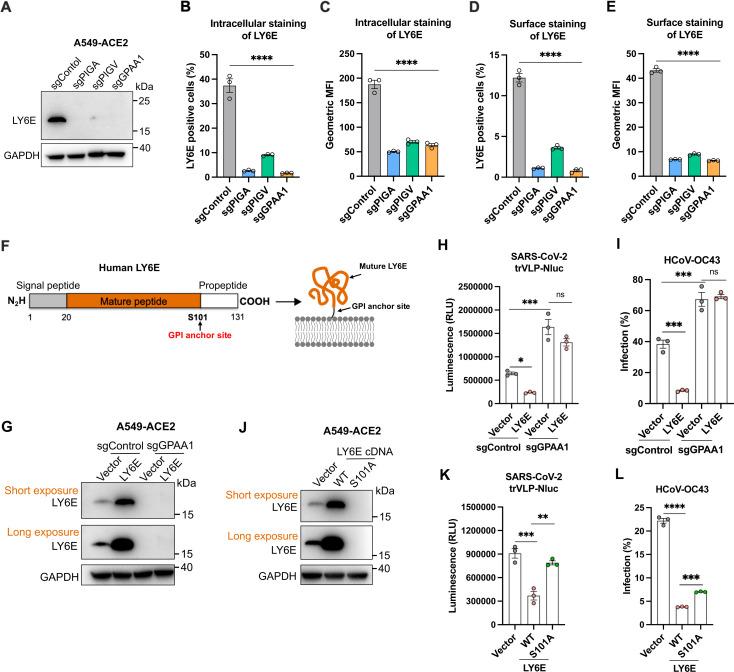
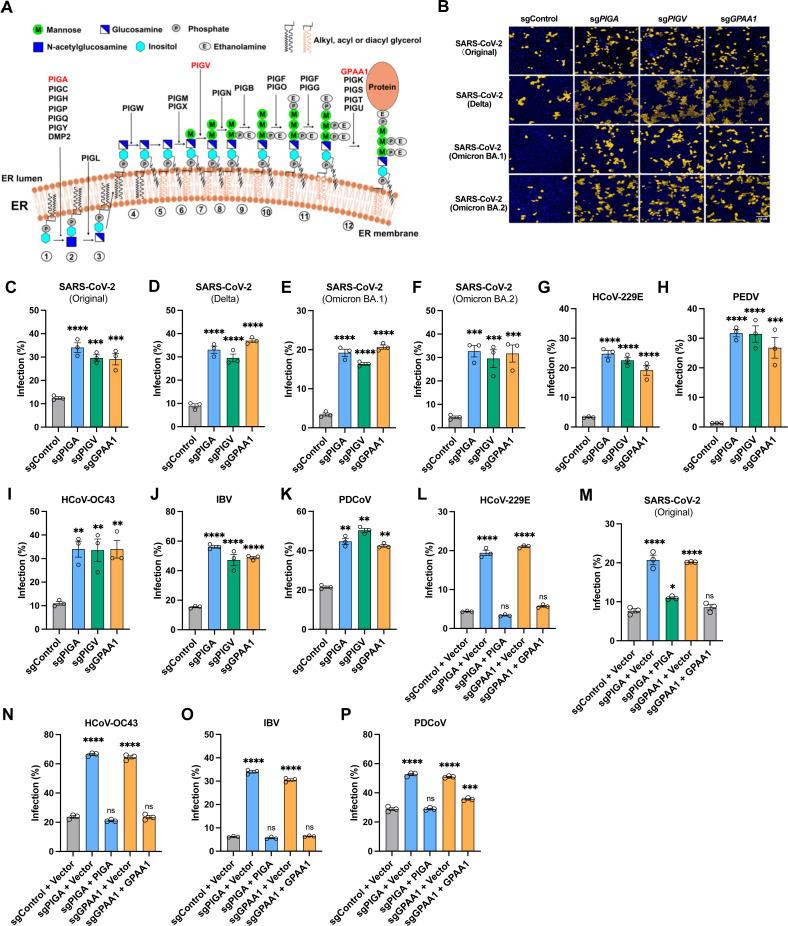
Coronaviruses, including SARS-CoV-2, rely on host factors for their replication and pathogenesis, while hosts deploy defense mechanisms to counteract viral infections. Although numerous host proviral factors have been identified, the landscape of host restriction factors and their underlying mechanisms remain less explored. Here, we conducted genome-wide CRISPR knockout screens using three distinct coronaviruses-SARS-CoV-2, HCoV-OC43 (a common cold human virus from the genus Betacoronavirus) and porcine epidemic diarrhea virus (Alphacoronavirus) to identify conserved host restriction factors. We identified glycosylphosphatidylinositol (GPI) biosynthesis as the pan-coronavirus host factor that restrict viral entry by disrupting spike protein-mediated membrane fusion at both endosomal and plasma membranes. GPI biosynthesis generates GPI moieties that covalently anchor proteins (GPI-anchored proteins [GPI-APs]) to the cell membrane, playing essential roles in various cellular processes. Through focused CRISPR knockout screens targeting 193 GPI-APs, we identified LY6E, a known pan-coronavirus restriction factor for viral entry, as the key downstream effector mediating the antiviral activity of the GPI biosynthesis pathway. These findings reveal the role for GPI biosynthesis as a conserved host defense mechanism against coronaviruses via regulation of downstream effectors.
包括新型冠状病毒(SARS-CoV-2)在内的冠状病毒依赖宿主因子进行复制和致病,而宿主则部署防御机制来对抗病毒感染。尽管已经鉴定出许多宿主的病毒促进因子,但宿主限制因子的情况及其潜在机制仍有待深入研究。在这里,我们使用三种不同的冠状病毒——新型冠状病毒(SARS-CoV-2)、人冠状病毒OC43(一种属于β冠状病毒属的引起普通感冒的人类病毒)和猪流行性腹泻病毒(α冠状病毒)进行全基因组CRISPR敲除筛选,以确定保守的宿主限制因子。我们确定糖基磷脂酰肌醇(GPI)生物合成是一种泛冠状病毒宿主因子,它通过破坏内体膜和质膜上的刺突蛋白介导的膜融合来限制病毒进入。GPI生物合成产生GPI部分,将蛋白质(GPI锚定蛋白[GPI-APs])共价锚定到细胞膜上,在各种细胞过程中发挥重要作用。通过针对193种GPI-APs的聚焦CRISPR敲除筛选,我们确定LY6E是一种已知的病毒进入的泛冠状病毒限制因子,是介导GPI生物合成途径抗病毒活性的关键下游效应物。这些发现揭示了GPI生物合成通过调节下游效应物作为一种保守的宿主防御机制对抗冠状病毒的作用。



 Zotero 插件