
PPARalpha 和 DEHP 诱导的癌症。
PPARalpha- and DEHP-Induced Cancers.
机构信息
Department of Occupational and Environmental Health, Nagoya University Graduate School of Medicine, 65 Tsurumai-cho, Showa-ku, Nagoya 466-8550, Japan.
出版信息
PPAR Res. 2008;2008:759716. doi: 10.1155/2008/759716.
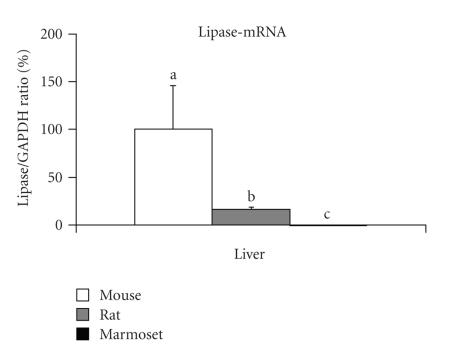
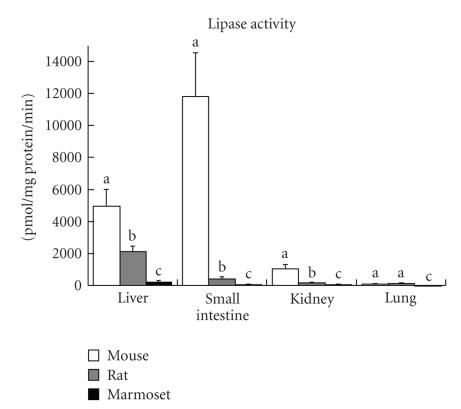
Di(2-ethylhexyl)phthalate (DEHP) is a widely used plasticizer and a potentially nongenotoxic carcinogen. Its mechanism had been earlier proposed based on peroxisome proliferator-activated receptor alpha (PPARalpha) because metabolites of DEHP are agonists. However, recent evidence also suggests the involvement of non-PPARalpha multiple pathway in DEHP-induced carcinogenesis. Since there are differences in the function and constitutive expression of PPARalpha among rodents and humans, species differences are also thought to exist in the carcinogenesis. However, species differences were also seen in the lipase activity involved in the first step of the DEHP metabolism, which should be considered in DEHP-induced carcinogenesis. Taken together, it is very difficult to extrapolate the results from rodents to humans in the case of DEHP carcinogenicity. However, PPARalpha-null mice or mice with human PPARalpha gene have been developed, which may lend support to make such a difficult extrapolation. Overall, further mechanical study on DEHP-induced carcinogenicity is warranted using these mice.
邻苯二甲酸二(2-乙基己基)酯(DEHP)是一种广泛使用的增塑剂,也是一种潜在的非遗传毒性致癌物质。其作用机制早期是基于过氧化物酶体增殖物激活受体α(PPARα)提出的,因为 DEHP 的代谢物是激动剂。然而,最近的证据也表明,非 PPARα 的多种途径参与了 DEHP 诱导的致癌作用。由于啮齿动物和人类的 PPARα 在功能和组成表达上存在差异,因此在致癌作用中也存在物种差异。然而,在 DEHP 代谢的第一步涉及的脂肪酶活性中也观察到了物种差异,这在 DEHP 诱导的致癌作用中应予以考虑。综上所述,在 DEHP 致癌性方面,很难将啮齿动物的结果外推到人类。然而,已经开发出了缺乏 PPARα 的小鼠或具有人类 PPARα 基因的小鼠,这可能有助于进行这种困难的外推。总的来说,使用这些小鼠对 DEHP 诱导的致癌性进行进一步的机械研究是必要的。
 Zotero 插件