
UDP-葡萄糖:糖蛋白葡萄糖基转移酶(UGGT1)可提高内质网中底物的溶解度。
UDP-glucose:glycoprotein glucosyltransferase (UGGT1) promotes substrate solubility in the endoplasmic reticulum.
机构信息
Department of Biological Chemistry and Medical Scientist Training Program, University of Michigan Medical School, Ann Arbor, MI 48109-1621, USA.
出版信息
Mol Biol Cell. 2013 Sep;24(17):2597-608. doi: 10.1091/mbc.E13-02-0101. Epub 2013 Jul 17.
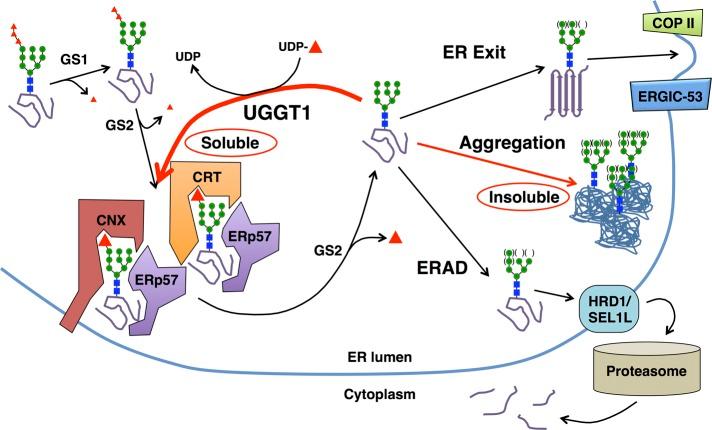
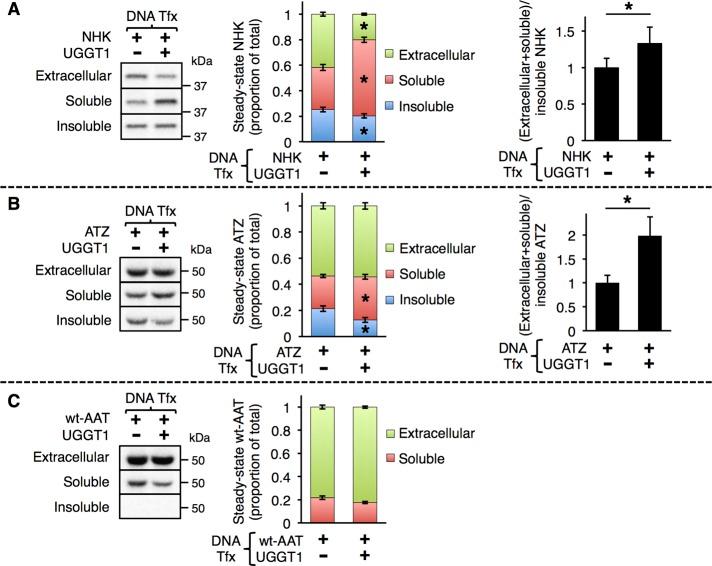
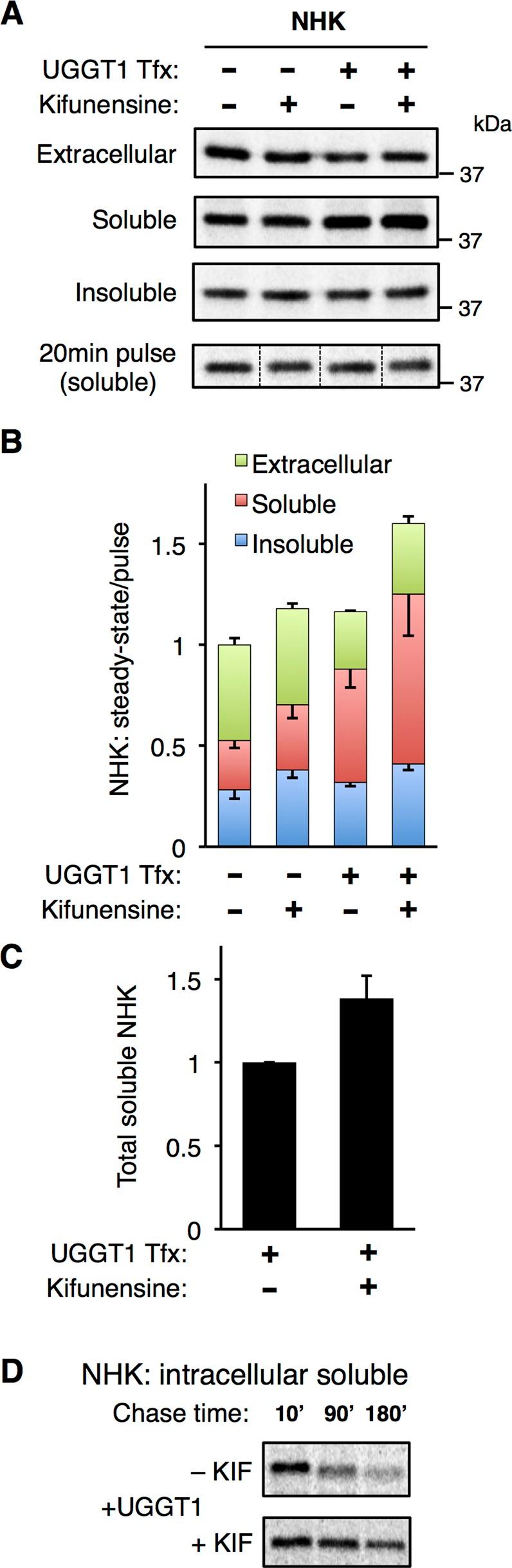
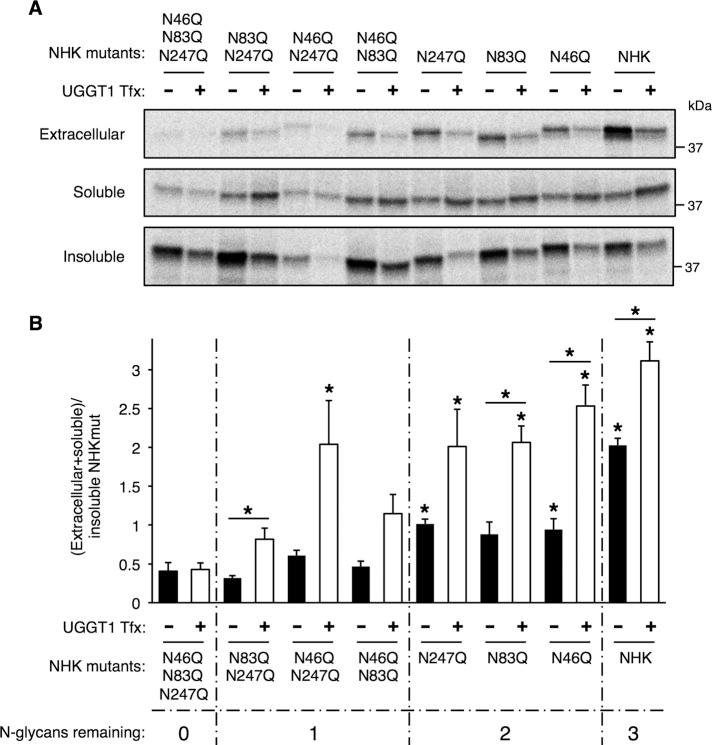
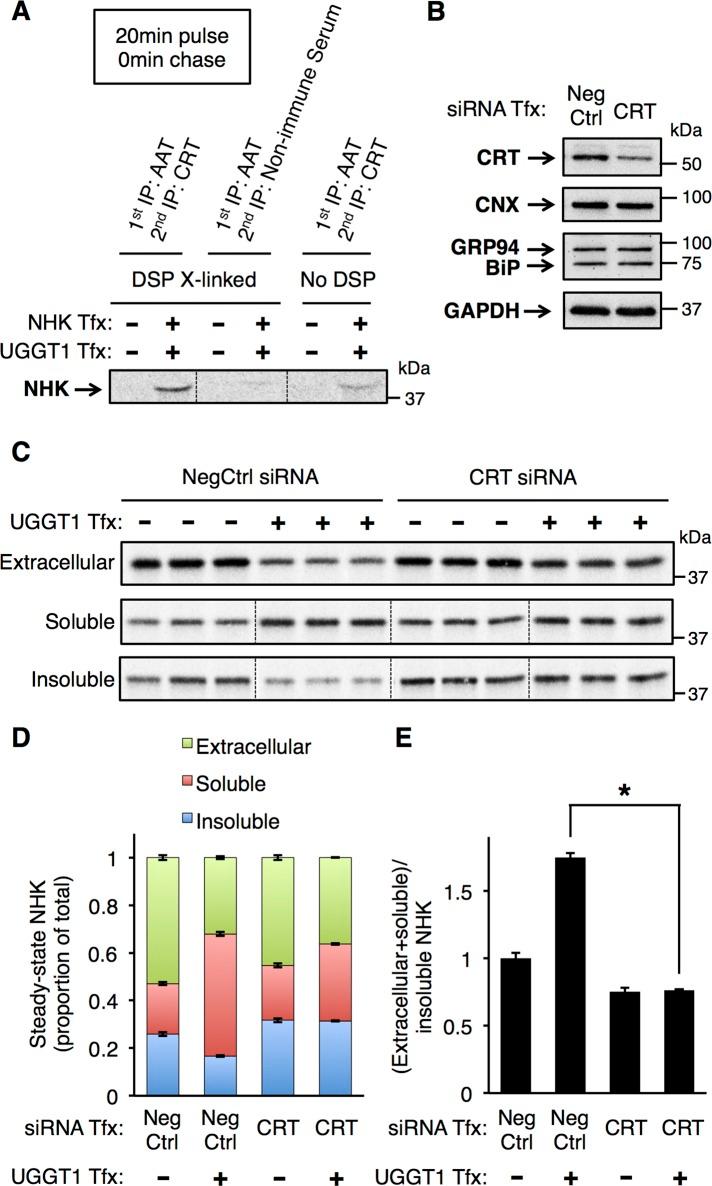
Protein folding in the endoplasmic reticulum (ER) is error prone, and ER quality control (ERQC) processes ensure that only correctly folded proteins are exported from the ER. Glycoproteins can be retained in the ER by ERQC, and this retention contributes to multiple human diseases, termed ER storage diseases. UDP-glucose:glycoprotein glucosyltransferase (UGGT1) acts as a central component of glycoprotein ERQC, monoglucosylating deglucosylated N-glycans of incompletely folded glycoproteins and promoting subsequent reassociation with the lectin-like chaperones calreticulin and calnexin. The extent to which UGGT1 influences glycoprotein folding, however, has only been investigated for a few selected substrates. Using mouse embryonic fibroblasts lacking UGGT1 or those with UGGT1 complementation, we investigated the effect of monoglucosylation on the soluble/insoluble distribution of two misfolded α1-antitrypsin (AAT) variants responsible for AAT deficiency disease: null Hong Kong (NHK) and Z allele. Whereas substrate solubility increases directly with the number of N-linked glycosylation sites, our results indicate that additional solubility is conferred by UGGT1 enzymatic activity. Monoglucosylation-dependent solubility decreases both BiP association with NHK and unfolded protein response activation, and the solubility increase is blocked in cells deficient for calreticulin. These results suggest that UGGT1-dependent monoglucosylation of N-linked glycoproteins promotes substrate solubility in the ER.
内质网(ER)中的蛋白质折叠容易出错,而 ER 质量控制(ERQC)过程可确保只有正确折叠的蛋白质从 ER 中输出。ERQC 可使糖蛋白在内质网中保留,这种保留会导致多种人类疾病,称为 ER 储存疾病。UDP-葡萄糖:糖蛋白葡萄糖基转移酶(UGGT1)作为糖蛋白 ERQC 的核心组成部分,可对不完全折叠的糖蛋白的去糖基化 N-聚糖进行单糖基化,并促进随后与凝集素样伴侣钙网蛋白和钙联蛋白重新结合。然而,UGGT1 对糖蛋白折叠的影响仅在少数几种选定的底物上进行了研究。使用缺乏 UGGT1 的或具有 UGGT1 互补的小鼠胚胎成纤维细胞,我们研究了单糖基化对两种导致 AAT 缺乏症的错误折叠的α1-抗胰蛋白酶(AAT)变体的可溶性/不可溶性分布的影响:无效香港(NHK)和 Z 等位基因。尽管底物的可溶性直接随 N-连接糖基化位点的数量增加,但我们的结果表明,UGGT1 酶活性赋予了额外的可溶性。单糖基化依赖性的可溶性降低了 BiP 与 NHK 的结合和未折叠蛋白反应的激活,并且在缺乏钙网蛋白的细胞中,可溶性增加被阻断。这些结果表明,N-连接糖蛋白的 UGGT1 依赖性单糖基化促进了 ER 中底物的可溶性。



 Zotero 插件