
脂质插入使肿瘤穿透双特异性重组蛋白靶向功能化紫杉醇负载红细胞膜纳米系统。
Lipid insertion enables targeted functionalization of paclitaxel-loaded erythrocyte membrane nanosystem by tumor-penetrating bispecific recombinant protein.
机构信息
The Comprehensive Cancer Centre, Nanjing Drum Tower Hospital Clinical College of Nanjing Medical University, Nanjing, People's Republic of China,
The Comprehensive Cancer Centre of Drum Tower Hospital, Medical School of Nanjing University & Clinical Cancer Institute of Nanjing University, Nanjing, People's Republic of China,
出版信息
Int J Nanomedicine. 2018 Sep 11;13:5347-5359. doi: 10.2147/IJN.S165109. eCollection 2018.
BACKGROUND
There is currently much interest in cancer cell targeting and tumor penetrating for research and therapeutic purposes.
PURPOSE
To improve targeting delivery of antitumor drugs to gastric cancer, in this study, a tumor-targeting biocompatible drug delivery system derived from erythrocyte membrane for delivering paclitaxel (PTX) was constructed.
METHODS
Erythrocyte membrane of human red blood cells (RBCs) were used for preparing of erythrocyte membrane-derived vesicles. 1,2-distearoyl--glycero-3-phosphoethanolamine--(maleimide[polyethylene glycol]-3400) (DSPE-PEG-MAL), a phospholipid derivative, was used to insert tumor-targeting molecular into erythrocyte membrane-derived vesicles. A lipid insertion method was used to functionalize these vesicles without the need for direct chemical conjugation. Furthermore, a tumor-penetrating bispecific recombinant protein named anti-EGFR-iRGD was used for the first time in this work to enable nanosystem to target and penetrate efficiently into the tumor site.
RESULTS
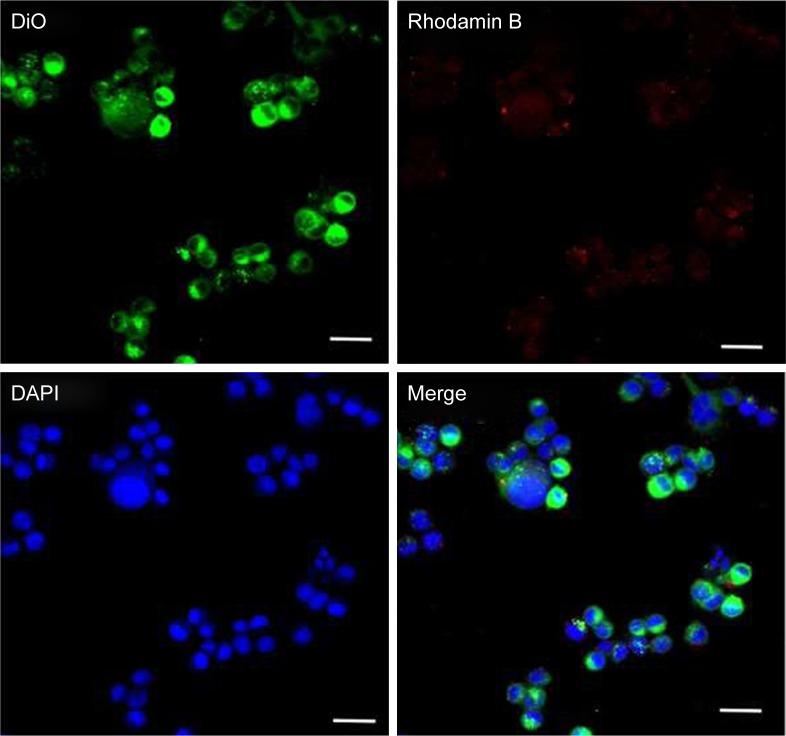
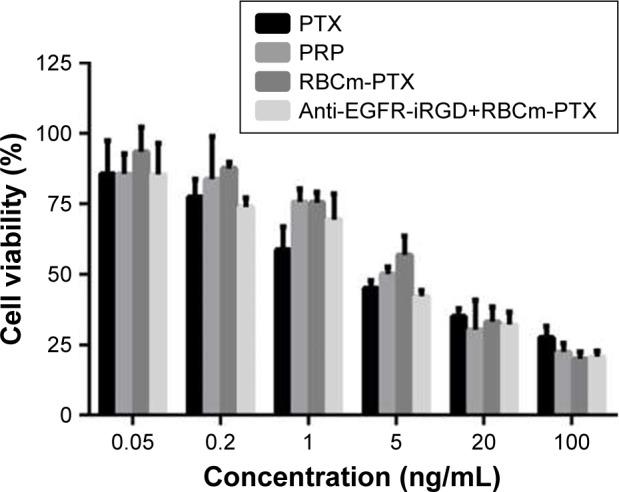
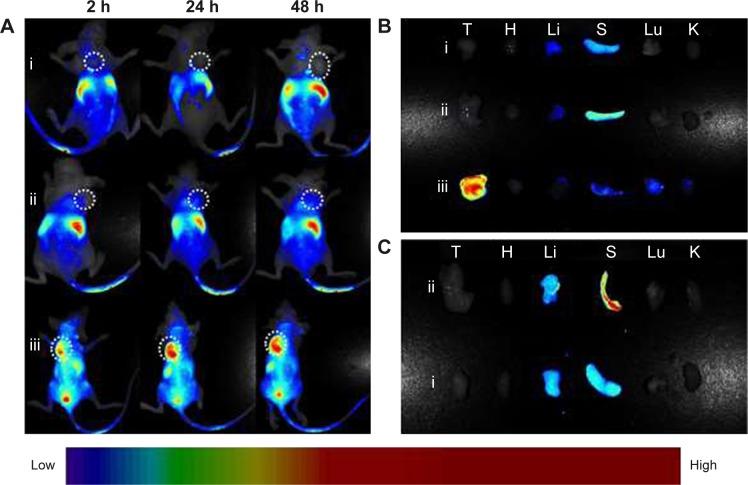
Paclitaxel (PTX)-loaded anti-EGFR-iRGD-modified erythrocyte membrane nano-system (anti-EGFR-iRGD-RBCm-PTX, abbreviated to PRP) were manufactured. PRP was spheroid, uniformly size, about 171.7±4.7 nm in average, could be stable in vitro for 8 days, and released PTX in a biphasic pattern. PRP showed comparable cytotoxicity toward human gastric cancer cells in vitro. In vivo studies showed that, PRP accumulated in tumor site within 2 h of administration, lasted longer than 48 h, and the tumor volume was reduced 61% by PRP treatment in Balb/c nude mice, without causing severe side effects.
CONCLUSION
PRP has potential applications in cancer treatment and as an adjunct for other anticancer strategies.
背景
目前,人们对癌症细胞靶向和肿瘤穿透的研究和治疗方法非常感兴趣。
目的
为了提高抗肿瘤药物对胃癌的靶向递送,本研究构建了一种源自红细胞膜的肿瘤靶向生物相容性药物递送系统,用于递送紫杉醇(PTX)。
方法
用人红细胞的红细胞膜制备红细胞膜衍生囊泡。1,2-二硬脂酰基-sn-甘油-3-磷酸乙醇胺-(马来酰亚胺[聚乙二醇]-3400)(DSPE-PEG-MAL),一种磷脂衍生物,用于将肿瘤靶向分子插入红细胞膜衍生囊泡中。使用脂质插入法对这些囊泡进行功能化,而无需直接化学偶联。此外,首次在这项工作中使用一种名为抗 EGFR-iRGD 的肿瘤穿透双特异性重组蛋白,使纳米系统能够有效地靶向和穿透肿瘤部位。
结果
制备了载紫杉醇(PTX)的抗 EGFR-iRGD 修饰的红细胞膜纳米系统(抗 EGFR-iRGD-RBCm-PTX,简称 PRP)。PRP 呈球形,粒径均匀,平均约 171.7±4.7nm,在体外稳定 8 天,呈两相释放 PTX。PRP 在体外对人胃癌细胞表现出相当的细胞毒性。体内研究表明,PRP 在给药后 2 h 内即可在肿瘤部位积聚,持续时间超过 48 h,PRP 处理可使 Balb/c 裸鼠肿瘤体积减少 61%,且无严重副作用。
结论
PRP 在癌症治疗和作为其他抗癌策略的辅助手段方面具有潜在的应用价值。


 Zotero 插件