
循环自然杀伤细胞表面 NKp30、NKp46、NKG2D 和 DNAM-1 表达的改变与人类胃癌的肿瘤进展相关。
Altered NKp30, NKp46, NKG2D, and DNAM-1 Expression on Circulating NK Cells Is Associated with Tumor Progression in Human Gastric Cancer.
机构信息
Department of Pharmacy, Affiliated Hospital of North Sichuan Medical College, Nanchong, Sichuan Province 637000, China.
National Engineering Research Center of Immunological Products, Department of Microbiology and Biochemical Pharmacy, College of Pharmacy, Third Military Medical University, Chongqing 400038, China.
出版信息
J Immunol Res. 2018 Sep 3;2018:6248590. doi: 10.1155/2018/6248590. eCollection 2018.
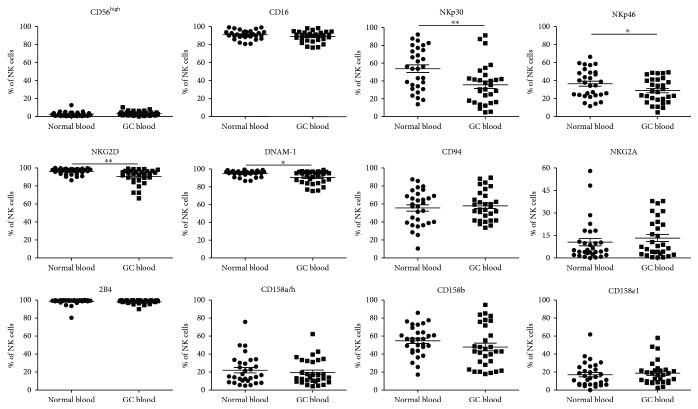
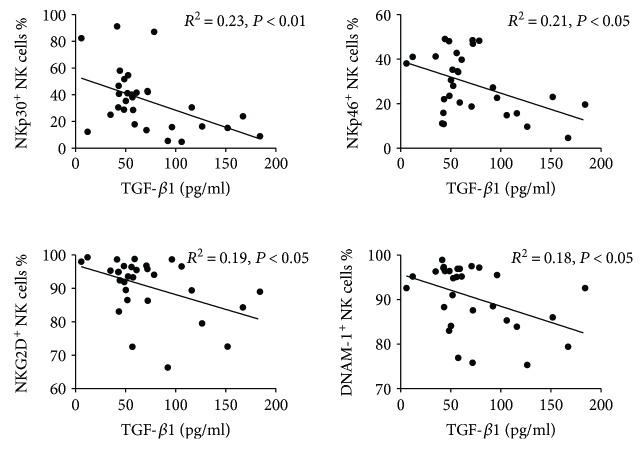
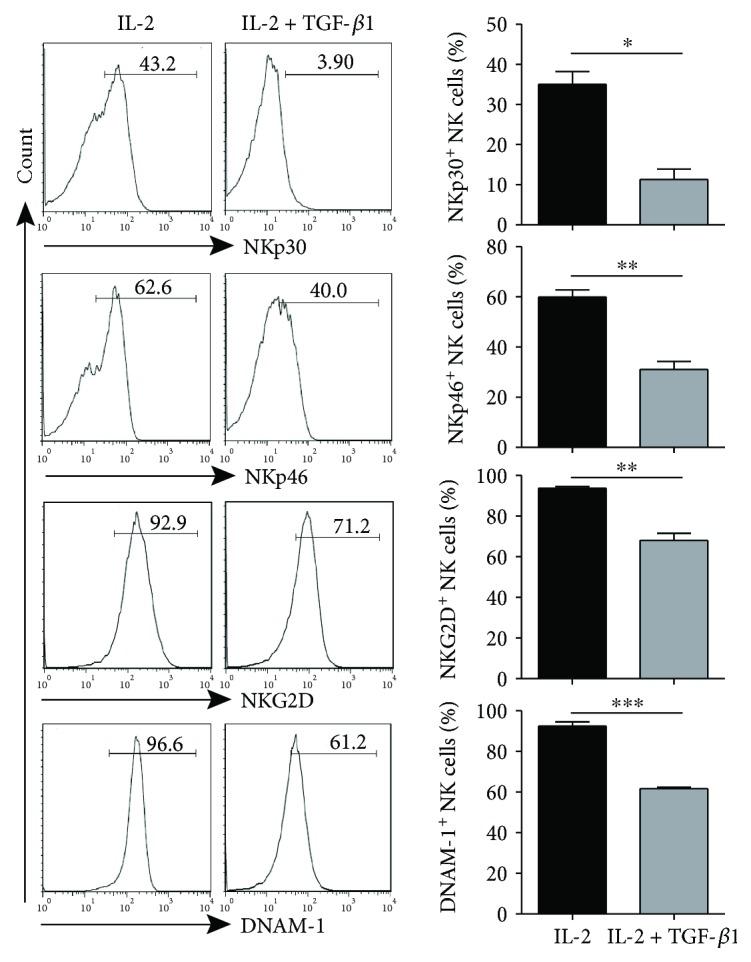
Natural killer (NK) cell activity is influenced by a complex integration of signaling pathways activated downstream of both activating and inhibitory surface receptors. The tumor microenvironment can suppress NK cell activity, and there is a great clinical interest in understanding whether modulating tumor-mediated NK cell suppression and/or boosting preexisting NK cell numbers in cancer patients is therapeutically viable. To this light, we characterized the surface receptor phenotypes of peripheral blood NK cells and examined their clinical relevance to human gastric cancer (GC). We found that the proportion of peripheral blood NK cells which expressed the activating receptors NKp30, NKp46, NKG2D, and DNAM-1 was significantly decreased in GC patients compared to healthy donors, and that this decrease was positively associated with tumor progression. At the same time, plasma TGF-1 concentrations were significantly increased in GC patients and negatively correlated with the proportion of NKp30, NKp46, NKG2D, and DNAM-1 expressing NK cells. Furthermore, TGF-1 significantly downregulated the expression of NKp30, NKp46, NKG2D, and DNAM-1 on NK cells , and the addition of galunisertib, an inhibitor of the TGF- receptor subunit I, reversed this downregulation. Altogether, our data suggest that the decreased expression of activating receptors NKp30, NKp46, NKG2D, and DNAM-1 on peripheral blood NK cells is positively associated with GC progression, and that TGF-1-mediated NK cell suppression may be a therapeutically targetable characteristic of GC.
自然杀伤 (NK) 细胞的活性受到下游激活和抑制表面受体激活的信号通路的复杂整合的影响。肿瘤微环境可以抑制 NK 细胞的活性,人们非常关注了解调节肿瘤介导的 NK 细胞抑制和/或增强癌症患者中预先存在的 NK 细胞数量是否具有治疗可行性。为此,我们表征了外周血 NK 细胞的表面受体表型,并研究了它们与人类胃癌 (GC) 的临床相关性。我们发现,与健康供体相比,GC 患者外周血 NK 细胞表达激活受体 NKp30、NKp46、NKG2D 和 DNAM-1 的比例明显降低,并且这种降低与肿瘤进展呈正相关。同时,GC 患者的血浆 TGF-1 浓度显着升高,与表达 NKp30、NKp46、NKG2D 和 DNAM-1 的 NK 细胞比例呈负相关。此外,TGF-1 显着下调 NK 细胞上 NKp30、NKp46、NKG2D 和 DNAM-1 的表达,并且添加 TGF-受体亚基 I 的抑制剂 galunisertib 可逆转这种下调。总的来说,我们的数据表明,外周血 NK 细胞上激活受体 NKp30、NKp46、NKG2D 和 DNAM-1 的表达降低与 GC 进展呈正相关,并且 TGF-1 介导的 NK 细胞抑制可能是 GC 的一个可治疗的特征。


 Zotero 插件