
一石二鸟:双重打击肿瘤生长和淋巴管生成通过靶向血管内皮生长因子受体 3。
Two Birds, One Stone: Double Hits on Tumor Growth and Lymphangiogenesis by Targeting Vascular Endothelial Growth Factor Receptor 3.
机构信息
National Institute of Cancer Research, National Health Research Institutes, Tainan 704, Taiwan.
Institute of Clinical Medicine, College of Medicine, Kaohsiung Medical University, Kaohsiung 807, Taiwan.
出版信息
Cells. 2019 Mar 21;8(3):270. doi: 10.3390/cells8030270.
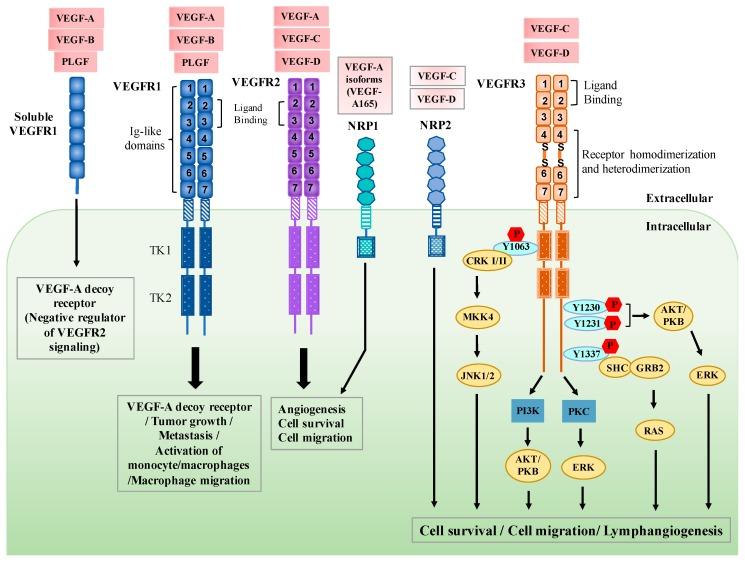
Vascular endothelial growth factor receptor 3 (VEGFR3) has been known for its involvement in tumor-associated lymphangiogenesis and lymphatic metastasis. The VEGFR3 signaling is stimulated by its main cognate ligand, vascular endothelial growth factor C (VEGF-C), which in turn promotes tumor progression. Activation of VEGF-C/VEGFR3 signaling in lymphatic endothelial cells (LECs) was shown to enhance the proliferation of LECs and the formation of lymphatic vessels, leading to increased lymphatic metastasis of tumor cells. In the past decade, the expression and pathological roles of VEGFR3 in tumor cells have been described. Moreover, the VEGF-C/VEGFR3 axis has been implicated in regulating immune tolerance and suppression. Therefore, the inhibition of the VEGF-C/VEGFR3 axis has emerged as an important therapeutic strategy for the treatment of cancer. In this review, we discuss the current findings related to VEGF-C/VEGFR3 signaling in cancer progression and recent advances in the development of therapeutic drugs targeting VEGF-C/VEGFR3.
血管内皮生长因子受体 3(VEGFR3)已被证实参与肿瘤相关淋巴管生成和淋巴转移。VEGFR3 信号受其主要配体血管内皮生长因子 C(VEGF-C)的刺激,而 VEGF-C 则反过来促进肿瘤的进展。VEGF-C/VEGFR3 信号在淋巴管内皮细胞(LEC)中的激活被证明可以增强 LEC 的增殖和淋巴管的形成,从而导致肿瘤细胞的淋巴转移增加。在过去的十年中,已经描述了 VEGFR3 在肿瘤细胞中的表达和病理作用。此外,VEGF-C/VEGFR3 轴被认为在调节免疫耐受和抑制方面发挥作用。因此,抑制 VEGF-C/VEGFR3 轴已成为治疗癌症的重要治疗策略。在这篇综述中,我们讨论了与癌症进展中 VEGF-C/VEGFR3 信号相关的最新发现,以及针对 VEGF-C/VEGFR3 的治疗药物开发的最新进展。


 Zotero 插件