
游泳运动可延长神经肌肉和肠道健康寿命,增强学习能力,并预防神经退行性病变。
Swim exercise in extends neuromuscular and gut healthspan, enhances learning ability, and protects against neurodegeneration.
机构信息
Department of Molecular Biology and Biochemistry, Rutgers, The State University of New Jersey, Piscataway, NJ 08854.
Department of Chemical Engineering, Texas Tech University, Lubbock, TX 79409.
出版信息
Proc Natl Acad Sci U S A. 2019 Nov 19;116(47):23829-23839. doi: 10.1073/pnas.1909210116. Epub 2019 Nov 4.
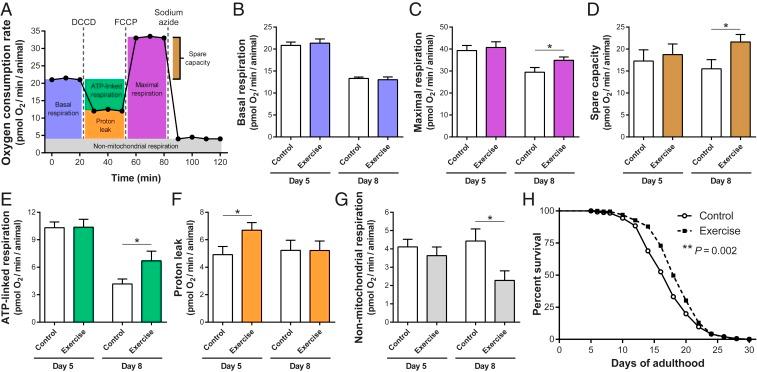
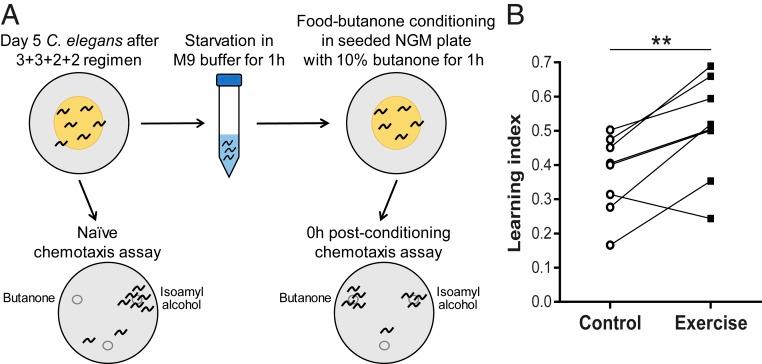
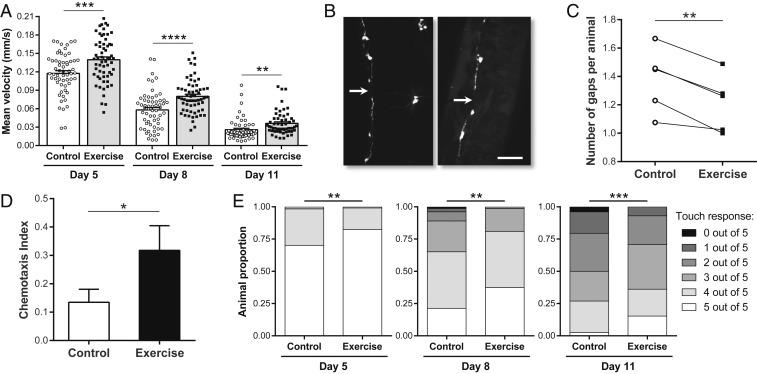
Regular physical exercise is the most efficient and accessible intervention known to promote healthy aging in humans. The molecular and cellular mechanisms that mediate system-wide exercise benefits, however, remain poorly understood, especially as applies to tissues that do not participate directly in training activity. The establishment of exercise protocols for short-lived genetic models will be critical for deciphering fundamental mechanisms of transtissue exercise benefits to healthy aging. Here we document optimization of a long-term swim exercise protocol for and we demonstrate its benefits to diverse aging tissues, even if exercise occurs only during a restricted phase of adulthood. We found that multiple daily swim sessions are essential for exercise adaptation, leading to body wall muscle improvements in structural gene expression, locomotory performance, and mitochondrial morphology. Swim exercise training enhances whole-animal health parameters, such as mitochondrial respiration and midlife survival, increases functional healthspan of the pharynx and intestine, and enhances nervous system health by increasing learning ability and protecting against neurodegeneration in models of tauopathy, Alzheimer's disease, and Huntington's disease. Remarkably, swim training only during early adulthood induces long-lasting systemic benefits that in several cases are still detectable well into midlife. Our data reveal the broad impact of swim exercise in promoting extended healthspan of multiple tissues, underscore the potency of early exercise experience to influence long-term health, and establish the foundation for exploiting the powerful advantages of this genetic model for the dissection of the exercise-dependent molecular circuitry that confers system-wide health benefits to aging adults.
定期进行体育锻炼是促进人类健康衰老最有效和最容易获得的干预措施。然而,介导全身性运动益处的分子和细胞机制仍知之甚少,特别是对于那些不直接参与训练活动的组织。为短期寿命的遗传模型建立运动方案对于揭示跨组织运动对健康衰老的基本机制将是至关重要的。在这里,我们记录了优化 长期游泳运动方案的过程,并证明了即使运动仅发生在成年早期的一个有限阶段,它对多种衰老组织也有益处。我们发现,多次每日游泳是运动适应所必需的,这导致体壁肌肉在结构基因表达、运动表现和线粒体形态方面得到改善。游泳运动训练可增强动物整体健康参数,如线粒体呼吸和中年存活率,增加咽和肠的功能性健康寿命,并通过提高学习能力和预防tau 病、阿尔茨海默病和亨廷顿病模型中的神经退行性变来保护神经系统健康。值得注意的是,仅在成年早期进行游泳训练即可诱导持久的全身性益处,在某些情况下,这些益处甚至在中年后仍可检测到。我们的数据揭示了游泳运动在促进多种 组织延长健康寿命方面的广泛影响,强调了早期运动经验对长期健康的影响,并为利用这种遗传模型的强大优势来剖析赋予衰老成年人全身健康益处的运动依赖分子电路奠定了基础。



 Zotero 插件