
微小RNA-149通过靶向细胞分裂周期蛋白42(CDC42)和B细胞淋巴瘤-2(BCL2)抑制神经母细胞瘤细胞增殖并增强化疗敏感性。
miR-149 inhibits cell proliferation and enhances chemosensitivity by targeting CDC42 and BCL2 in neuroblastoma.
作者信息
Mao Fengxia, Zhang Ju, Cheng Xinru, Xu Qianya
机构信息
Department of Newborn Pediatrics, The First Affiliated Hospital of Zhengzhou University, No.1, East Jianshe Rd, Zhengzhou, 450052 China.
出版信息
Cancer Cell Int. 2019 Dec 27;19:357. doi: 10.1186/s12935-019-1082-9. eCollection 2019.
BACKGROUND
Neuroblastoma (NB) is one of most common childhood tumors with high mortality among children worldwide. microRNAs (miRNAs) have been reported to play essential roles in the pathogenesis and therapeutics of NB. However, the role of miR-149 and its mechanism remain poorly understood.
MAIN METHODS
The expression levels of miR-149, cell division cycle 42 (CDC42) and B-cell lymphoma 2 (BCL2) were measured in NB tissues or cells by quantitative real-time polymerase chain reaction or western blot. Cell proliferation was measured by 3-(4,5-dimethyl-2-thiazolyl)-2,5-diphenyl-2--tetrazolium bromide (MTT) and colony formation assays. Cell apoptosis was detected by flow cytometry. Chemosensitivity of NB cells to doxorubicin (Dox) was analyzed by MTT assay. The interaction between miR-149 and CDC42 or BCL2 was explored by luciferase activity and RNA immunoprecipitation analyses.
RESULTS
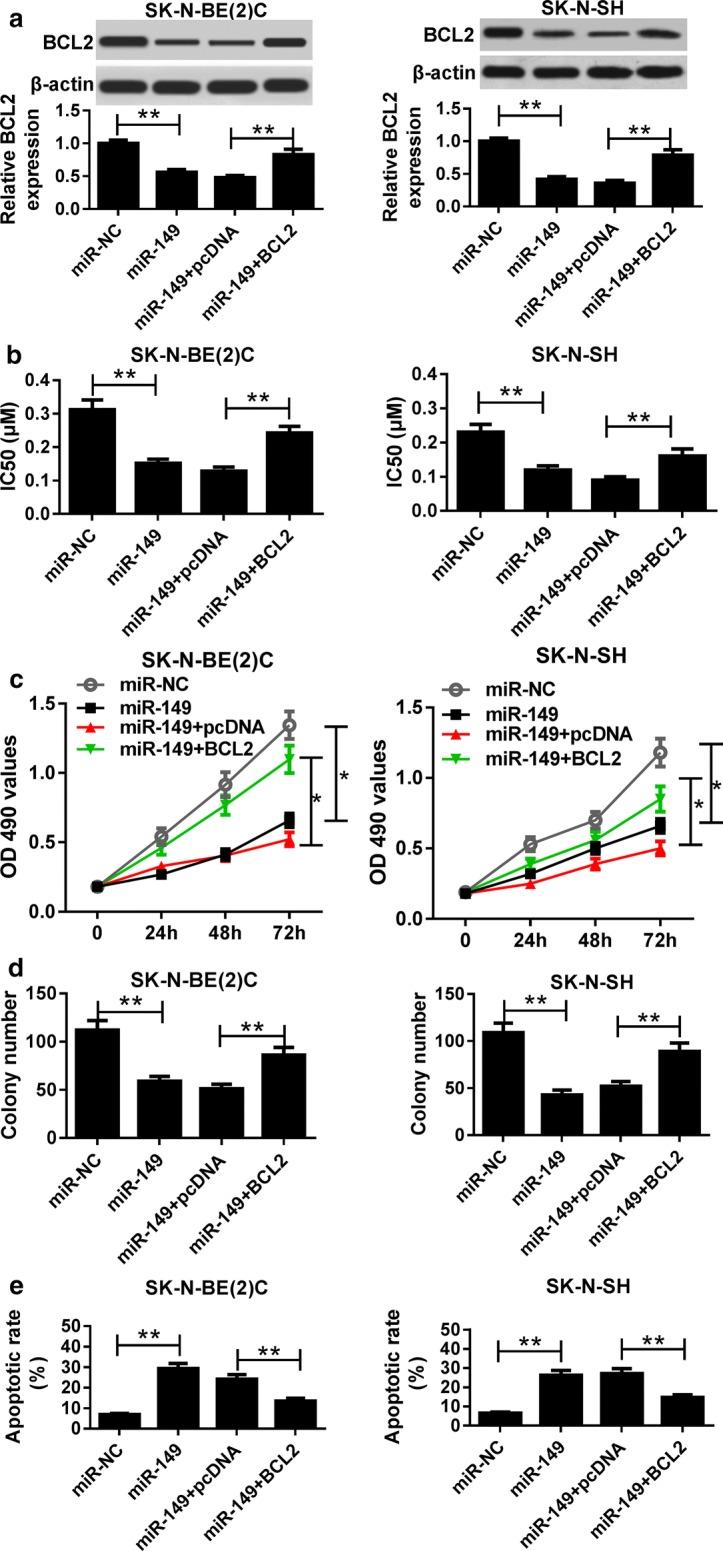
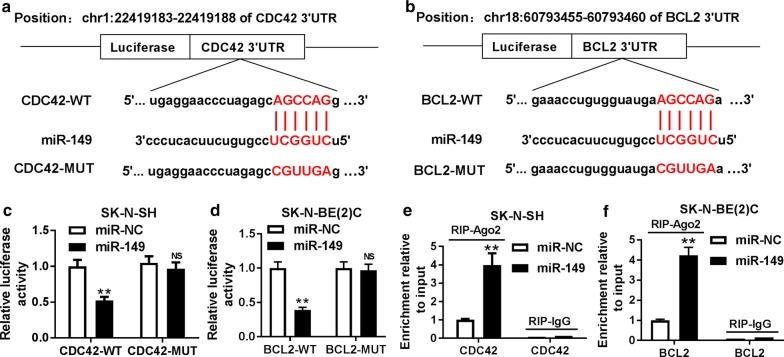
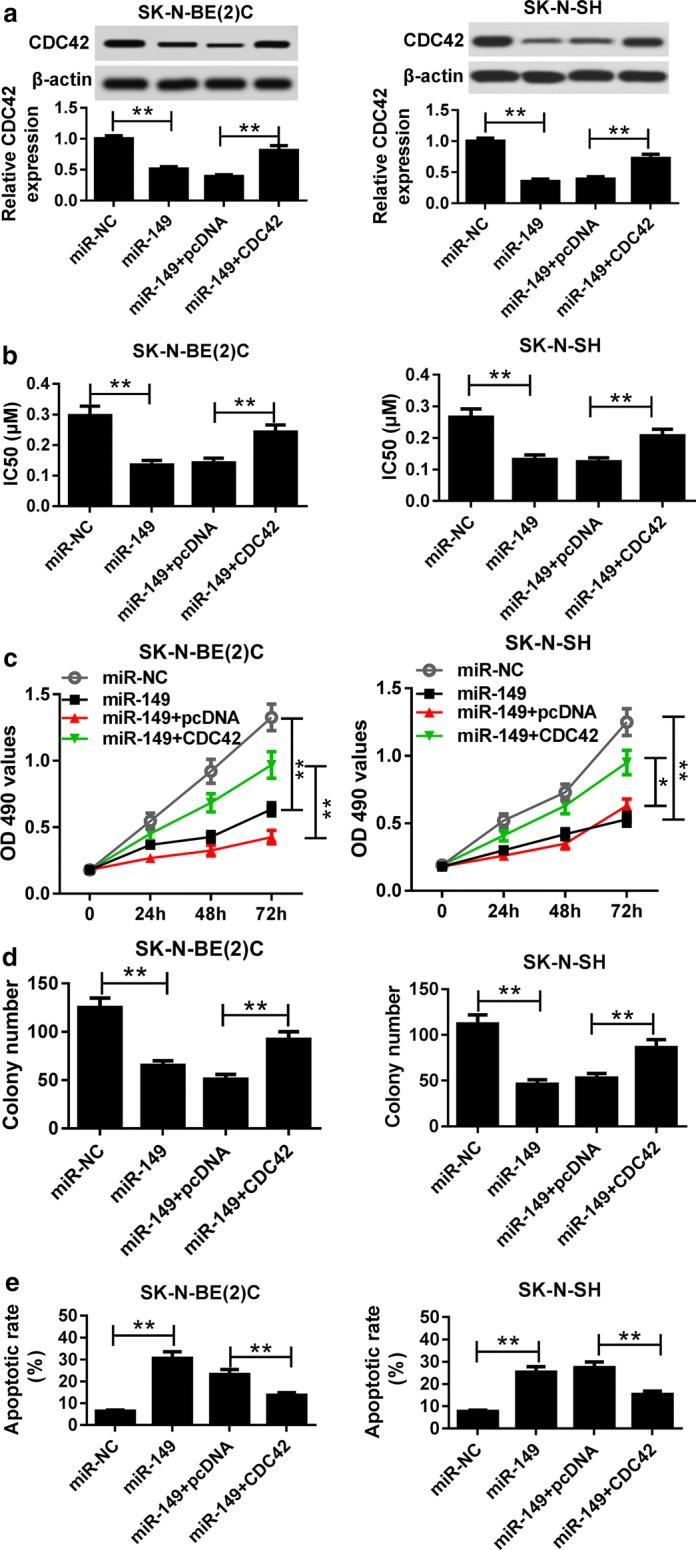
Our data indicated that low expression of miR-149 was displayed in NB tissues and cells and associated with poor survival rate. Overexpression of miR-149 inhibited cell proliferation and colony formation but promoted cell apoptosis and chemosensitivity to Dox in NB cells. Moreover, CDC42 and BCL2 were targeted by miR-149. Additionally, CDC42 and BCL2 mRNA levels were elevated in NB tissues and cells and restoration of CDC42 or BCL2 reversed the regulatory effect of miR-149 on NB progression.
CONCLUSION
Our data suggested that miR-149 suppressed cell proliferation and improved Dox chemosensitivity by regulating CDC42 and BCL2 in NB, providing a novel avenue for treatment of NB.
背景
神经母细胞瘤(NB)是全球儿童中最常见且死亡率高的儿童肿瘤之一。据报道,微小RNA(miRNA)在NB的发病机制和治疗中发挥着重要作用。然而,miR - 149的作用及其机制仍知之甚少。
主要方法
通过定量实时聚合酶链反应或蛋白质免疫印迹法检测NB组织或细胞中miR - 149、细胞分裂周期蛋白42(CDC42)和B细胞淋巴瘤2(BCL2)的表达水平。通过3 -(4,5 - 二甲基 - 2 - 噻唑基)- 2,5 - 二苯基 - 2 - 溴化四氮唑蓝(MTT)和集落形成试验检测细胞增殖。通过流式细胞术检测细胞凋亡。通过MTT试验分析NB细胞对阿霉素(Dox)的化学敏感性。通过荧光素酶活性和RNA免疫沉淀分析探索miR - 149与CDC42或BCL2之间的相互作用。
结果
我们的数据表明,miR - 149在NB组织和细胞中表达较低,且与低生存率相关。miR - 149的过表达抑制了NB细胞的增殖和集落形成,但促进了细胞凋亡以及对Dox的化学敏感性。此外,CDC42和BCL2是miR - 149的靶标。另外,NB组织和细胞中CDC42和BCL2的mRNA水平升高,恢复CDC42或BCL2可逆转miR - 149对NB进展的调节作用。
结论
我们的数据表明,miR - 149通过调节NB中的CDC42和BCL2抑制细胞增殖并提高Dox化学敏感性,为NB的治疗提供了一条新途径。



 Zotero 插件