
过度关注新冠疫情相关媒体信息与状态焦虑增加有关:俄罗斯一项大型在线调查的结果
Excessive Media Consumption About COVID-19 is Associated With Increased State Anxiety: Outcomes of a Large Online Survey in Russia.
作者信息
Nekliudov Nikita A, Blyuss Oleg, Cheung Ka Yan, Petrou Loukia, Genuneit Jon, Sushentsev Nikita, Levadnaya Anna, Comberiati Pasquale, Warner John O, Tudor-Williams Gareth, Teufel Martin, Greenhawt Matthew, DunnGalvin Audrey, Munblit Daniel
机构信息
Department of Paediatrics and Paediatric Infectious Diseases, Institute of Child's Health, Sechenov First Moscow State Medical University (Sechenov University), Moscow, Russian Federation.
School of Physics, Astronomy and Mathematics, University of Hertfordshire, Hatfield, United Kingdom.
出版信息
J Med Internet Res. 2020 Sep 11;22(9):e20955. doi: 10.2196/20955.
BACKGROUND
The COVID-19 pandemic has potentially had a negative impact on the mental health and well-being of individuals and families. Anxiety levels and risk factors within particular populations are poorly described.
OBJECTIVE
This study aims to evaluate confidence, understanding, trust, concerns, and levels of anxiety during the COVID-19 pandemic in the general population and assess risk factors for increased anxiety.
METHODS
We launched a cross-sectional online survey of a large Russian population between April 6 and 15, 2020, using multiple social media platforms. A set of questions targeted confidence, understanding, trust, and concerns in respondents. The State-Trait Anxiety Inventory was used to measure anxiety. Multiple linear regressions were used to model predictors of COVID-19-related anxiety.
RESULTS
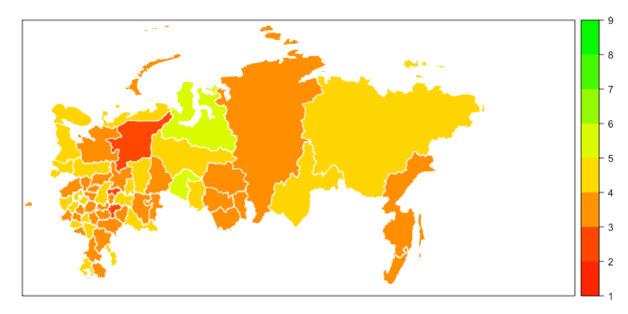
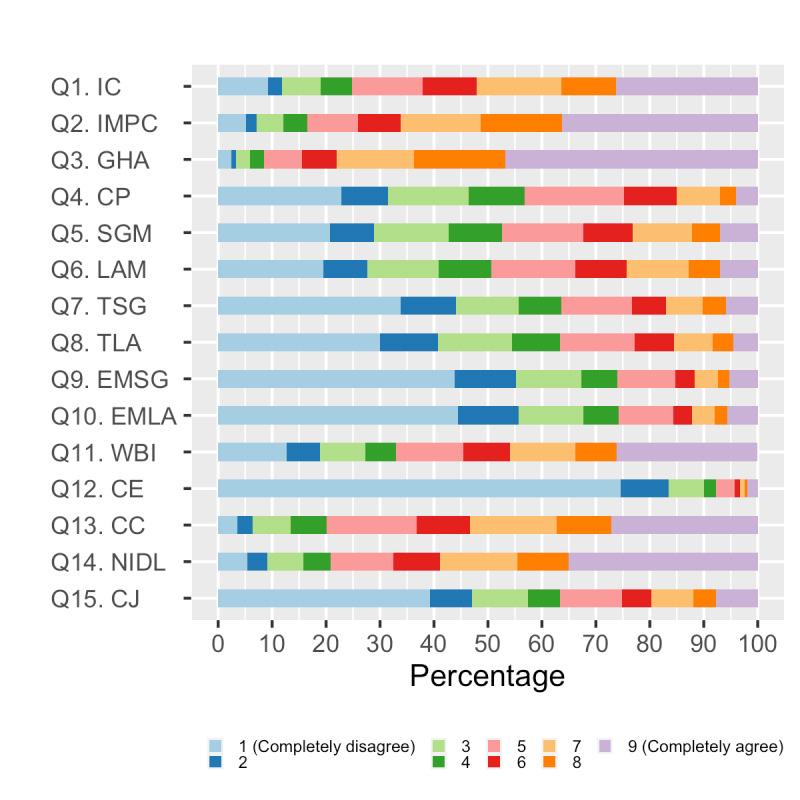
The survey was completed by 23,756 out of 53,966 (44.0% response rate) unique visitors; of which, 21,364 were residing in 62 areas of Russia. State Anxiety Scale (S-Anxiety) scores were higher than Trait Anxiety Scale scores across all regions of Russia (median S-Anxiety score 52, IQR 44-60), exceeding published norms. Time spent following news on COVID-19 was strongly associated with an increased S-Anxiety adjusted for baseline anxiety level. One to two hours spent reading COVID-19 news was associated with a 5.46 (95% CI 5.03-5.90) point difference, 2-3 hours with a 7.06 (95% CI 6.37-7.74) point difference, and more than three hours with an 8.65 (95% CI 7.82-9.47) point difference, all compared to less than 30 minutes per day. Job loss during the pandemic was another important factor associated with higher S-Anxiety scores (3.95, 95% CI 3.31-4.58). Despite survey respondents reporting high confidence in information regarding COVID-19 as well as an understanding of health care guidance, they reported low overall trust in state and local authorities, and perception of country readiness.
CONCLUSIONS
Among Russian respondents from multiple social media platforms, there was evidence of higher levels of state anxiety associated with recent job loss and increased news consumption, as well as lower than expected trust in government agencies. These findings can help inform the development of key public health messages to help reduce anxiety and raise perceived trust in governmental response to this current national emergency. Using a similar methodology, comparative surveys are ongoing in other national populations.
背景
新冠疫情可能对个人和家庭的心理健康及幸福产生了负面影响。特定人群中的焦虑水平和风险因素描述不足。
目的
本研究旨在评估新冠疫情期间普通人群的信心、理解、信任、担忧及焦虑水平,并评估焦虑增加的风险因素。
方法
2020年4月6日至15日,我们通过多个社交媒体平台对大量俄罗斯人群开展了一项横断面在线调查。一组问题针对受访者的信心、理解、信任和担忧。使用状态-特质焦虑量表来测量焦虑。采用多元线性回归对新冠相关焦虑的预测因素进行建模。
结果
53966名独立访客中有23756人完成了调查(回复率44.0%);其中,21364人居住在俄罗斯的62个地区。俄罗斯所有地区的状态焦虑量表(S-焦虑)得分均高于特质焦虑量表得分(S-焦虑得分中位数为52,四分位距为44 - 60),超过了已公布的标准。在根据基线焦虑水平进行调整后,关注新冠疫情新闻的时长与S-焦虑增加密切相关。阅读新冠疫情新闻1至2小时与5.46(95%置信区间5.03 - 5.90)分的差异相关,2至3小时与7.06(95%置信区间6.37 - 7.74)分的差异相关,超过3小时与8.65(95%置信区间7.82 - 9.47)分的差异相关,所有这些均与每天少于30分钟的情况相比。疫情期间失业是另一个与较高S-焦虑得分相关的重要因素(3.95,95%置信区间3.31 - 4.58)。尽管调查受访者表示对新冠相关信息以及对医疗保健指南的理解有很高的信心,但他们表示对国家和地方当局的总体信任较低,且对国家准备情况的认知也较低。
结论
在来自多个社交媒体平台的俄罗斯受访者中,有证据表明与近期失业和新闻消费增加相关的状态焦虑水平较高,以及对政府机构的信任低于预期。这些发现有助于为制定关键的公共卫生信息提供参考,以帮助减轻焦虑并提高对政府应对当前国家紧急情况的感知信任。采用类似方法,正在对其他国家人群进行比较调查。



 Zotero 插件