
优化一氧化氮供体以研究铜绿假单胞菌临床分离株生物膜分散反应。
Optimization of nitric oxide donors for investigating biofilm dispersal response in Pseudomonas aeruginosa clinical isolates.
机构信息
Institute for Life Sciences, University of Southampton, Southampton, SO17 1BJ, UK.
出版信息
Appl Microbiol Biotechnol. 2020 Oct;104(20):8859-8869. doi: 10.1007/s00253-020-10859-7. Epub 2020 Aug 31.
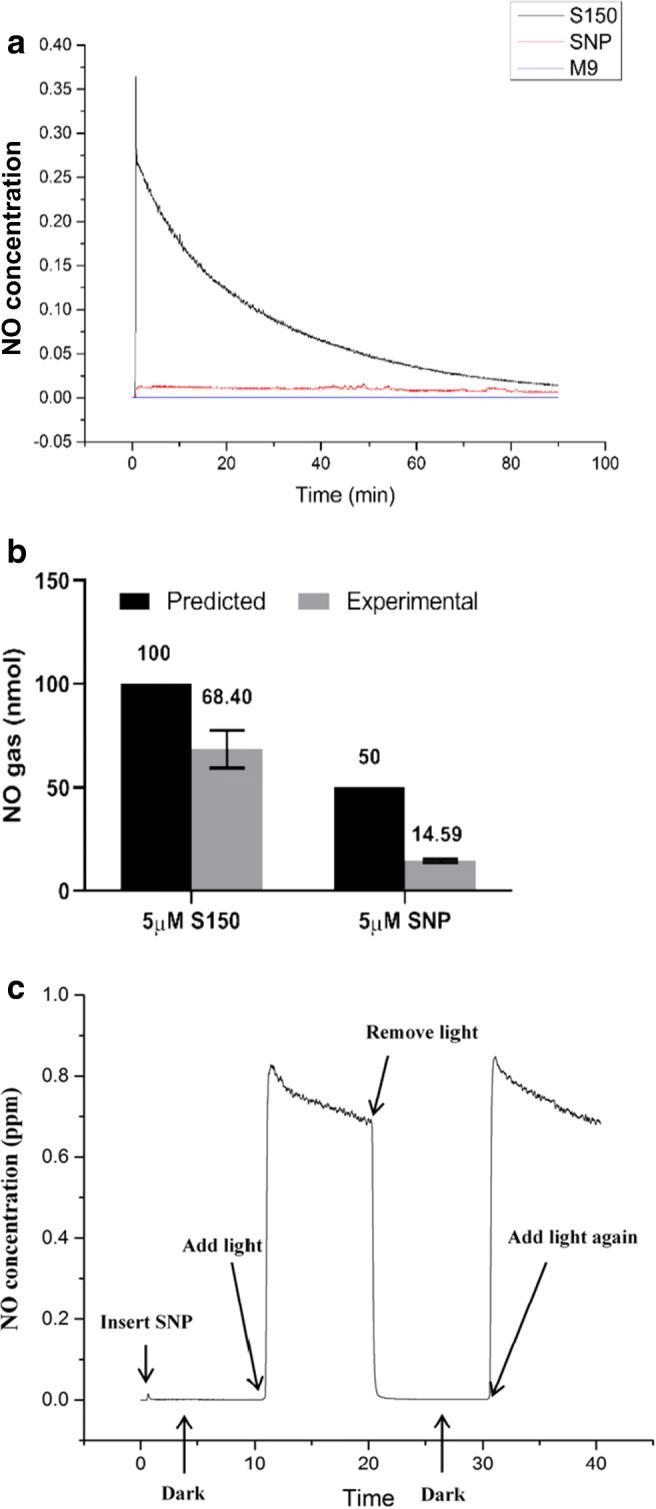
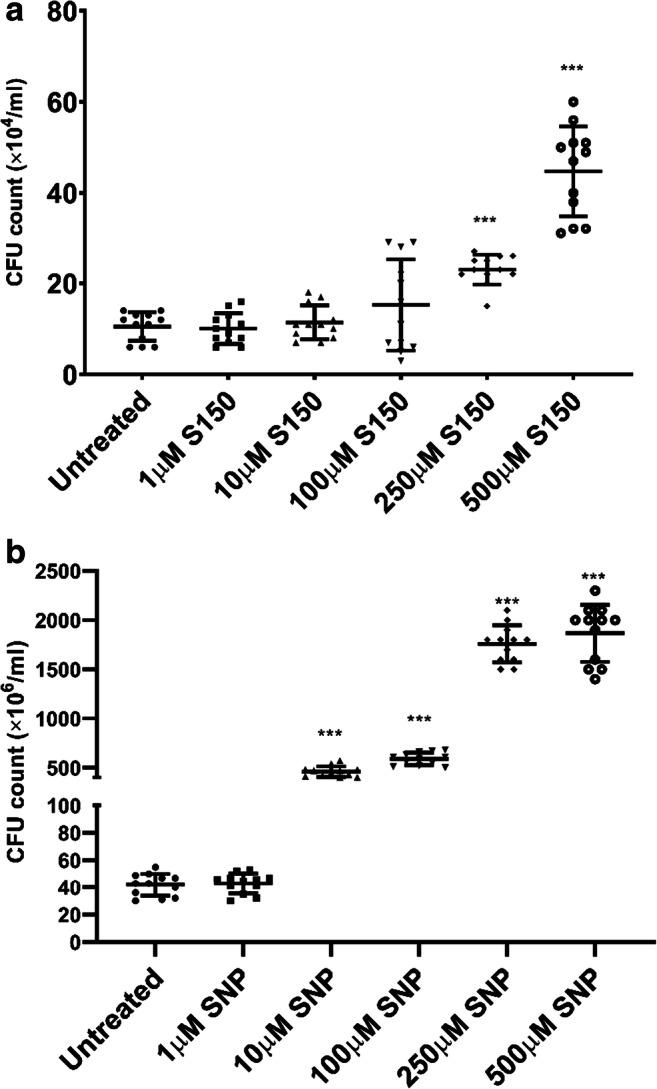
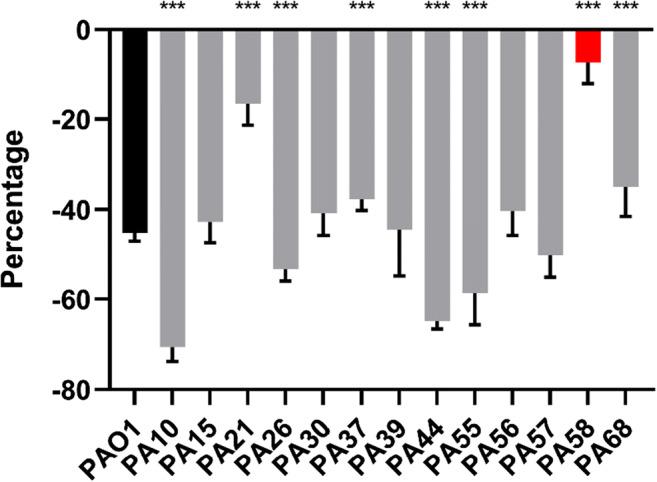
Pseudomonas aeruginosa biofilms contribute heavily to chronic lung infection in cystic fibrosis patients, leading to morbidity and mortality. Nitric oxide (NO) has been shown to disperse P. aeruginosa biofilms in vitro, ex vivo and in clinical trials as a promising anti-biofilm agent. Traditional NO donors such as sodium nitroprusside (SNP) have been extensively employed in different studies. However, the dosage of SNP in different studies was not consistent, ranging from 500 nM to 500 μM. SNP is light sensitive and produces cyanide, which may lead to data misinterpretation and inaccurate predictions of dispersal responses in clinical settings. New NO donors and NO delivery methods have therefore been explored. Here we assessed 7 NO donors using P. aeruginosa PAO1 and determined that SNP and Spermine NONOate (S150) successfully reduced > 60% biomass within 24 and 2 h, respectively. While neither dosage posed toxicity towards bacterial cells, chemiluminescence assays showed that SNP only released NO upon light exposure in M9 media and S150 delivered much higher performance spontaneously. S150 was then tested on 13 different cystic fibrosis P. aeruginosa (CF-PA) isolates; most CF-PA biofilms were significantly dispersed by 250 μM S150. Our work therefore discovered a commercially available NO donor S150, which disperses CF-PA biofilms efficiently within a short period of time and without releasing cyanide, as an alternative of SNP in clinical trials in the future. KEY POINTS: • S150 performs the best in dispersing P. aeruginosa biofilms among 7 NO donors. • SNP only releases NO in the presence of light, while S150 releases NO spontaneously. • S150 successfully disperses biofilms formed by P. aeruginosa cystic fibrosis clinical isolates.
铜绿假单胞菌生物膜是囊性纤维化患者慢性肺部感染的主要原因,导致发病率和死亡率上升。一氧化氮(NO)已被证明可在体外、离体和临床试验中分散铜绿假单胞菌生物膜,是一种有前途的抗生物膜剂。传统的 NO 供体,如硝普钠(SNP),已被广泛应用于不同的研究中。然而,不同研究中的 SNP 剂量并不一致,范围从 500nM 到 500μM。SNP 对光敏感,会产生氰化物,这可能导致数据解读错误,并对临床环境中的分散反应做出不准确的预测。因此,人们探索了新的 NO 供体和 NO 输送方法。在这里,我们使用铜绿假单胞菌 PAO1 评估了 7 种 NO 供体,结果表明 SNP 和 spermine NONOate(S150)分别在 24 小时和 2 小时内成功减少了超过 60%的生物量。虽然两种剂量对细菌细胞都没有毒性,但化学发光测定表明,只有在 M9 培养基中暴露于光下,SNP 才会释放 NO,而 S150 则自发释放更高的性能。然后,S150 在 13 种不同的囊性纤维化铜绿假单胞菌(CF-PA)分离株上进行了测试;大多数 CF-PA 生物膜用 250μM S150 显著分散。因此,我们的工作发现了一种商业上可用的 NO 供体 S150,它可以在短时间内有效地分散 CF-PA 生物膜,并且不会释放氰化物,作为未来临床试验中 SNP 的替代品。关键点: • 在 7 种 NO 供体中,S150 对铜绿假单胞菌生物膜的分散效果最好。 • SNP 只有在存在光的情况下才会释放 NO,而 S150 则自发释放 NO。 • S150 成功分散了由铜绿假单胞菌囊性纤维化临床分离株形成的生物膜。



 Zotero 插件