
重组和正选择差异塑造了亚属的多样性。
Recombination and Positive Selection Differentially Shaped the Diversity of Subgenera.
机构信息
Scientific Institute IRCCS E. MEDEA, Bioinformatics, 23842 Bosisio Parini, Italy.
出版信息
Viruses. 2020 Nov 16;12(11):1313. doi: 10.3390/v12111313.
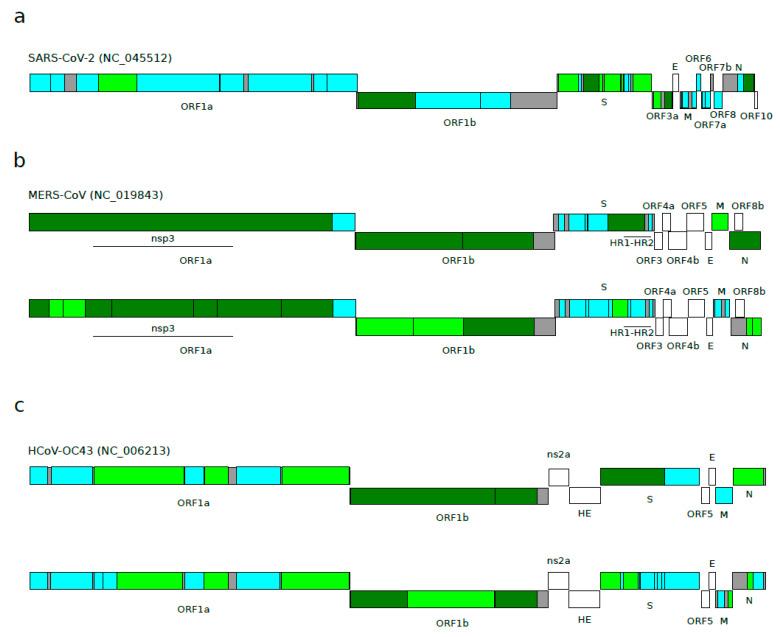
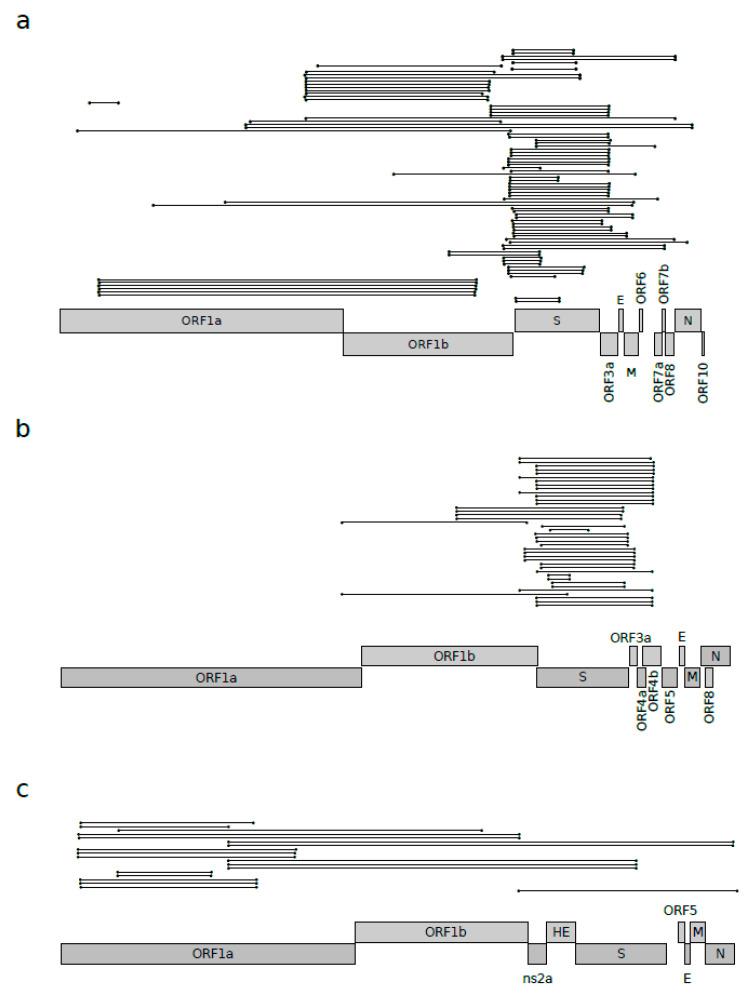
The genus of mammal-infecting viruses includes three subgenera (, and , in which most known human coronaviruses, including SARS-CoV-2, cluster. Coronaviruses are prone to host shifts, with recombination and positive selection possibly contributing to their high zoonotic potential. We analyzed the role of these two forces in the evolution of viruses belonging to the genus. The results showed that recombination has been pervasive during sarbecovirus evolution, and it is more widespread in this subgenus compared to the other two. In both sarbecoviruses and merbecoviruses, recombination hotspots are clearly observed. Conversely, positive selection was a less prominent force in sarbecoviruses compared to embecoviruses and merbecoviruses and targeted distinct genomic regions in the three subgenera, with S being the major target in sarbecoviruses alone. Overall, the results herein indicate that subgenera evolved along different trajectories, which might recapitulate their host preferences or reflect the origins of the presently available coronavirus sequences.
感染哺乳动物的病毒属包括三个亚属( 、 和 ,其中大多数已知的人类冠状病毒,包括 SARS-CoV-2,都聚集在这三个亚属中。冠状病毒容易发生宿主转移,重组和正选择可能有助于它们具有很高的人畜共患病潜力。我们分析了这两种力量在属于 属的病毒进化中的作用。结果表明,重组在sarbecovirus 进化过程中普遍存在,而且在这个亚属中比在其他两个亚属中更为广泛。在 sarbecoviruses 和 merbecoviruses 中,都明显观察到重组热点。相反,与 embecoviruses 和 merbecoviruses 相比,正选择在 sarbecoviruses 中是一种不太突出的力量,并且针对三个亚属中的不同基因组区域,其中 S 是 sarbecoviruses 中的主要目标。总的来说,本文的结果表明, 亚属沿着不同的轨迹进化,这可能反映了它们对宿主的偏好或目前可用冠状病毒序列的起源。
 Zotero 插件