
通过芯片分析筛选和识别阻塞性睡眠呼吸暂停的潜在生物标志物。
Screening and identification of potential biomarkers for obstructive sleep apnea via microarray analysis.
机构信息
Xinjiang Medical University.
Hypertension Center of People's Hospital of Xinjiang Uygur Autonomous Region, Xinjiang Hypertension Institute, National Health Committee Key Laboratory of Hypertension Clinical Research, Urumqi, Xinjiang, China.
出版信息
Medicine (Baltimore). 2021 Jan 29;100(4):e24435. doi: 10.1097/MD.0000000000024435.
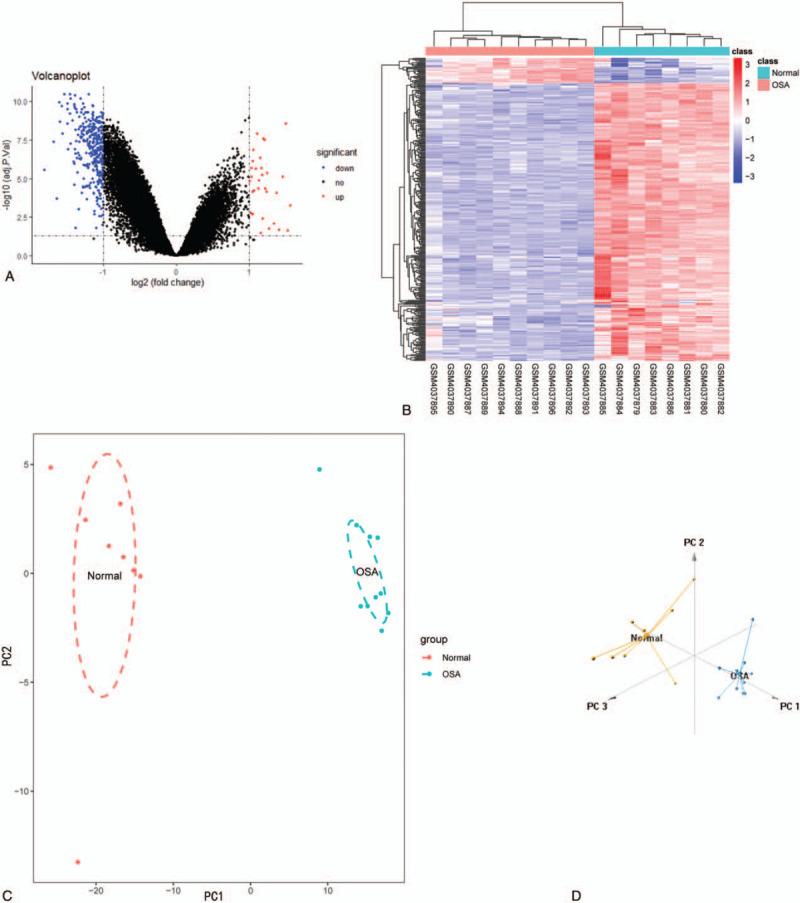
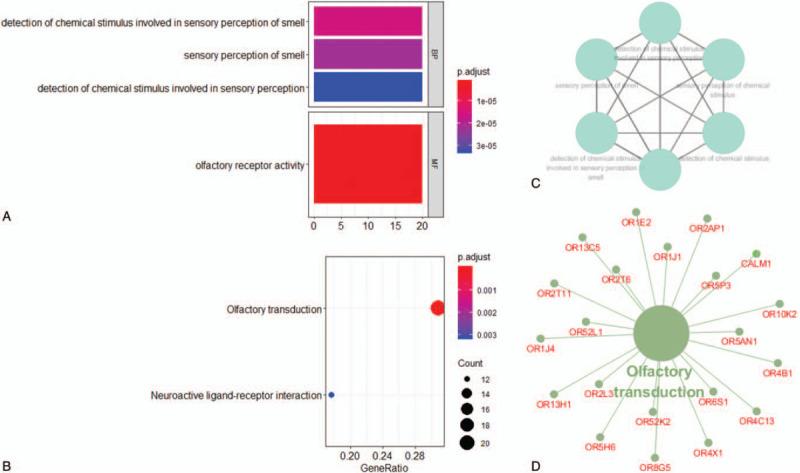
Obstructive sleep apnea (OSA) is a common chronic disease and increases the risk of cardiovascular disease, metabolic and neuropsychiatric disorders, resulting in a considerable socioeconomic burden. This study aimed to identify potential key genes influence the mechanisms and consequences of OSA.Gene expression profiles related to OSA were obtained from Gene Expression Omnibus (GEO) database. Differentially expressed genes (DEGs) in subcutaneous adipose tissues from OSA compared with normal tissues were screened using R software, followed by gene ontology (GO) and pathway enrichment analyses. Subsequently, a protein-protein interaction (PPI) network for these DEGs was constructed by STRING, and key hub genes were extracted from the network with plugins in Cytoscape. The hub genes were further validated in another GEO dataset and assessed by receiver operating characteristic (ROC) analysis and Pearson correlation analysis.There were 373 DEGs in OSA samples in relative to normal controls, which were mainly associated with olfactory receptor activity and olfactory transduction. Upon analyses of the PPI network, GDNF, SLC2A2, PRL, and SST were identified as key hub genes. Decreased expression of the hub genes was association with OSA occurrence, and exhibited good performance in distinguishing OSA from normal samples based on ROC analysis. Besides, the Pearson method revealed a strong correlation between hub genes, which indicates that they may act in synergy, contributing to OSA and related disorders.This bioinformatics research identified 4 hub genes, including GDNF, SLC2A2, PRL, and SST which may be new potential biomarkers for OSA and related disorders.
阻塞性睡眠呼吸暂停(OSA)是一种常见的慢性疾病,会增加心血管疾病、代谢和神经精神障碍的风险,导致相当大的社会经济负担。本研究旨在确定潜在的关键基因,以影响 OSA 的机制和后果。从基因表达综合数据库(GEO)中获取与 OSA 相关的基因表达谱。使用 R 软件筛选 OSA 与正常组织相比的皮下脂肪组织中的差异表达基因(DEGs),然后进行基因本体(GO)和通路富集分析。随后,通过 STRING 构建这些 DEGs 的蛋白质-蛋白质相互作用(PPI)网络,并使用 Cytoscape 中的插件从网络中提取关键枢纽基因。进一步在另一个 GEO 数据集验证枢纽基因,并通过接收者操作特征(ROC)分析和 Pearson 相关分析进行评估。与正常对照相比,OSA 样本中有 373 个 DEGs,主要与嗅觉受体活性和嗅觉转导有关。在 PPI 网络分析中,鉴定出 GDNF、SLC2A2、PRL 和 SST 为关键枢纽基因。枢纽基因的表达下调与 OSA 的发生有关,基于 ROC 分析,在区分 OSA 与正常样本方面表现出良好的性能。此外,Pearson 方法揭示了枢纽基因之间存在很强的相关性,表明它们可能协同作用,导致 OSA 及相关疾病的发生。本生物信息学研究鉴定了 4 个枢纽基因,包括 GDNF、SLC2A2、PRL 和 SST,它们可能是 OSA 及相关疾病的新的潜在生物标志物。




 Zotero 插件