
估计中国四川针对 COVID-19 的非药物干预措施对腮腺炎发病率的影响。
Estimating the impact of non-pharmaceutical interventions against COVID-19 on mumps incidence in Sichuan, China.
机构信息
Department of Epidemiology and Health Statistics, West China School of Public Health and West China Fourth Hospital, Sichuan University, Chengdu, 610041, Sichuan, China.
出版信息
BMC Infect Dis. 2021 Aug 30;21(1):886. doi: 10.1186/s12879-021-06584-9.
BACKGROUND
A series of social and public health measures have been implemented to contain coronavirus disease 2019 (COVID-19) in China. We examined the impact of non-pharmaceutical interventions against COVID-19 on mumps incidence as an agent to determine the potential reduction in other respiratory virus incidence.
METHODS
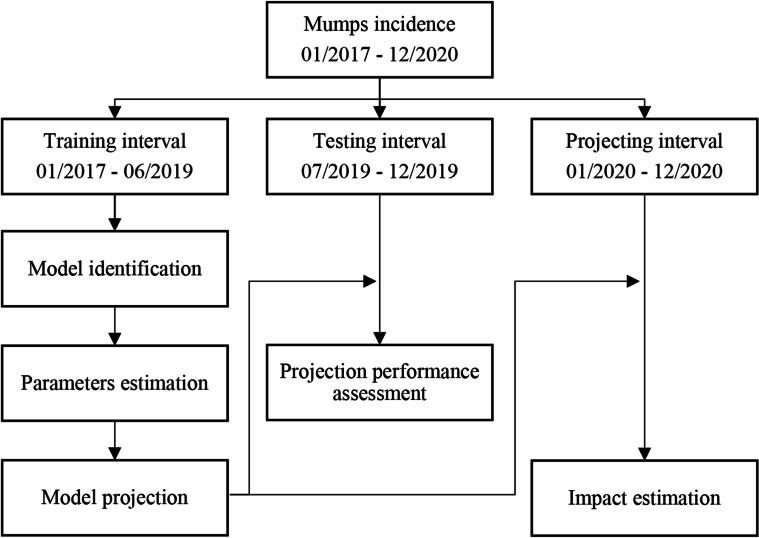
We modelled mumps incidence per month in Sichuan using a seasonal autoregressive integrated moving average (ARIMA) model, based on the reported number of mumps cases per month from 2017 to 2020.
RESULTS
The epidemic peak of mumps in 2020 is lower than in the preceding years. Whenever compared with the projected cases or the average from corresponding periods in the preceding years (2017-2019), the reported cases in 2020 markedly declined (P < 0.001). From January to December, the number of mumps cases was estimated to decrease by 36.3% (33.9-38.8%), 34.3% (31.1-37.8%), 68.9% (66.1-71.6%), 76.0% (73.9-77.9%), 67.0% (65.0-69.0%), 59.6% (57.6-61.6%), 61.1% (58.8-63.3%), 49.2% (46.4-52.1%), 24.4% (22.1-26.8%), 30.0% (27.5-32.6%), 42.1% (39.6-44.7%), 63.5% (61.2-65.8%), respectively. The total number of mumps cases in 2020 was estimated to decrease by 53.6% (52.9-54.3%).
CONCLUSION
Our study shows that non-pharmaceutical interventions against COVID-19 have had an effective impact on mumps incidence in Sichuan, China.
背景
中国采取了一系列社会和公共卫生措施来控制 2019 年冠状病毒病(COVID-19)。我们研究了针对 COVID-19 的非药物干预措施对流行性腮腺炎发病率的影响,以确定其对其他呼吸道病毒发病率的潜在降低作用。
方法
我们基于 2017 年至 2020 年每月报告的流行性腮腺炎病例数,使用季节性自回归综合移动平均(ARIMA)模型来预测四川省每月的流行性腮腺炎发病率。
结果
2020 年流行性腮腺炎的流行高峰低于前几年。与预测病例或前几年同期(2017-2019 年)的平均值相比,2020 年报告的病例明显减少(P<0.001)。2020 年 1 月至 12 月,流行性腮腺炎病例数估计减少 36.3%(33.9-38.8%)、34.3%(31.1-37.8%)、68.9%(66.1-71.6%)、76.0%(73.9-77.9%)、67.0%(65.0-69.0%)、59.6%(57.6-61.6%)、61.1%(58.8-63.3%)、49.2%(46.4-52.1%)、24.4%(22.1-26.8%)、30.0%(27.5-32.6%)、42.1%(39.6-44.7%)、63.5%(61.2-65.8%),流行性腮腺炎病例总数估计减少 53.6%(52.9-54.3%)。
结论
本研究表明,针对 COVID-19 的非药物干预措施对中国四川省流行性腮腺炎发病率产生了有效影响。


 Zotero 插件