
二甲双胍诱导巨噬细胞凋亡和 G0/G1 开关 2 基因的诱导。
Metformin Triggers Apoptosis and Induction of the G0/G1 Switch 2 Gene in Macrophages.
机构信息
Institute of Epigenetics and Epigenomics, College of Animal Science and Technology, Yangzhou University, Yangzhou 225009, China.
Department of Animal Science, McGill University, Montréal, QC H3A 0G4, Canada.
出版信息
Genes (Basel). 2021 Sep 17;12(9):1437. doi: 10.3390/genes12091437.
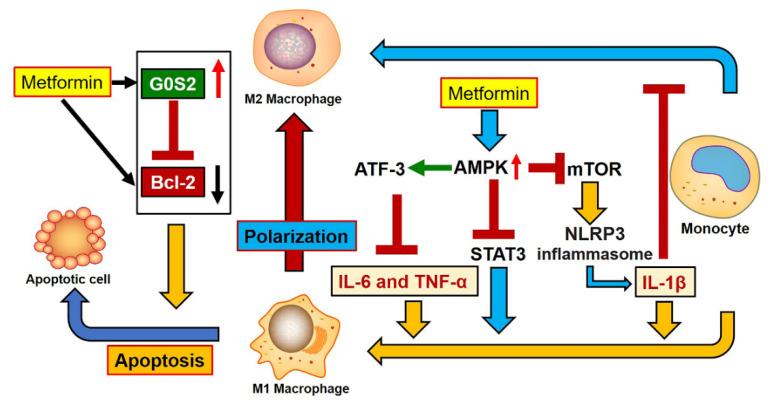
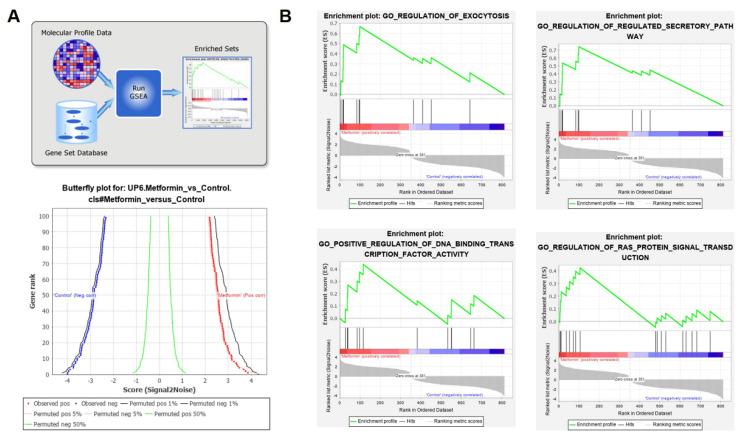
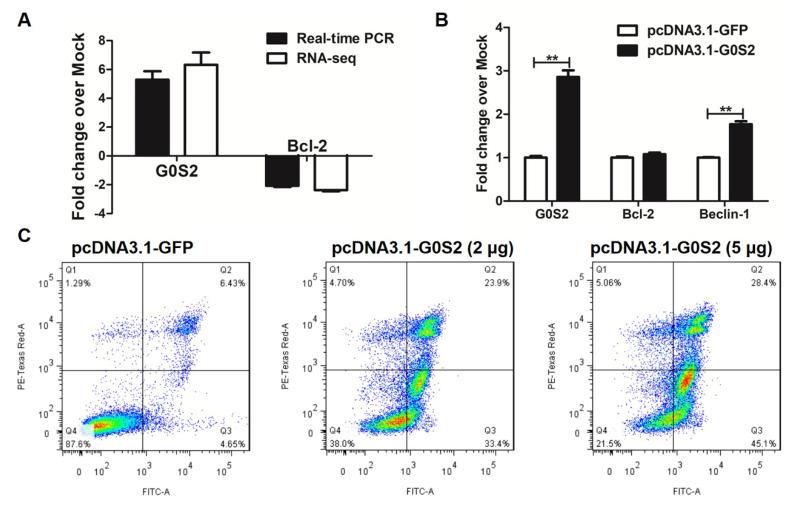
Metformin is a widely used antidiabetic drug for the treatment of type 2 diabetes and has been recently demonstrated to possess anti-inflammatory properties via AMPK-mediated modulation of M2 macrophage activation. However, the anti-inflammatory mechanisms of metformin on inflammatory macrophages are still not fully elucidated. In this study, we found that metformin induced apoptosis in macrophages. In particular, metformin induced apoptosis of M1 macrophages, based on M1 marker genes in apoptotic macrophages. Next, we comprehensively screened metformin-responsive genes in macrophages by RNA-seq and focused on the extrinsic apoptotic signaling pathway. The G0/G1 switch 2 gene (G0S2) was robustly up-regulated by metformin in macrophages. Overexpression of G0S2 significantly induced apoptosis of macrophages in a dose-dependent manner and blunted the function of the crucial anti-apoptotic gene Bcl-2, which was significantly reduced by metformin. These findings show that metformin promoted apoptosis of macrophages, especially M1 macrophages, via G0S2 induction and provides a novel anti-inflammatory mechanism of metformin through induction of macrophage apoptosis.
二甲双胍是一种广泛用于治疗 2 型糖尿病的抗糖尿病药物,最近已被证明通过 AMPK 介导的 M2 巨噬细胞激活的调节具有抗炎作用。然而,二甲双胍对炎症性巨噬细胞的抗炎机制仍未完全阐明。在这项研究中,我们发现二甲双胍可诱导巨噬细胞凋亡。具体而言,基于凋亡巨噬细胞中的 M1 标志物基因,二甲双胍诱导 M1 巨噬细胞凋亡。接下来,我们通过 RNA-seq 全面筛选了巨噬细胞中对二甲双胍有反应的基因,并重点关注了外在凋亡信号通路。G0/G1 开关 2 基因(G0S2)在巨噬细胞中被二甲双胍强烈上调。G0S2 的过表达以剂量依赖性方式显著诱导巨噬细胞凋亡,并削弱了关键抗凋亡基因 Bcl-2 的功能,而 Bcl-2 被二甲双胍显著降低。这些发现表明,二甲双胍通过诱导 G0S2 的表达促进巨噬细胞,特别是 M1 巨噬细胞的凋亡,并通过诱导巨噬细胞凋亡提供了二甲双胍的一种新的抗炎机制。



 Zotero 插件