
关于严重急性呼吸综合征冠状病毒2(SARS-CoV-2)的起源及持续进化
On the origin and continuing evolution of SARS-CoV-2.
作者信息
Tang Xiaolu, Wu Changcheng, Li Xiang, Song Yuhe, Yao Xinmin, Wu Xinkai, Duan Yuange, Zhang Hong, Wang Yirong, Qian Zhaohui, Cui Jie, Lu Jian
机构信息
State Key Laboratory of Protein and Plant Gene Research, Center for Bioinformatics, School of Life Sciences, Peking University, Beijing 100871, China.
CAS Key Laboratory of Molecular Virology & Immunology, Institut Pasteur of Shanghai, Chinese Academy of Sciences, Shanghai 200031, China.
出版信息
Natl Sci Rev. 2020 Jun;7(6):1012-1023. doi: 10.1093/nsr/nwaa036. Epub 2020 Mar 3.
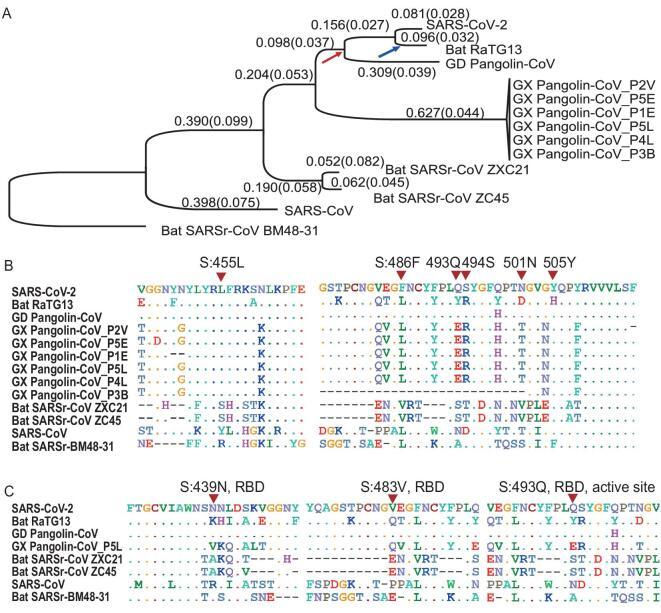
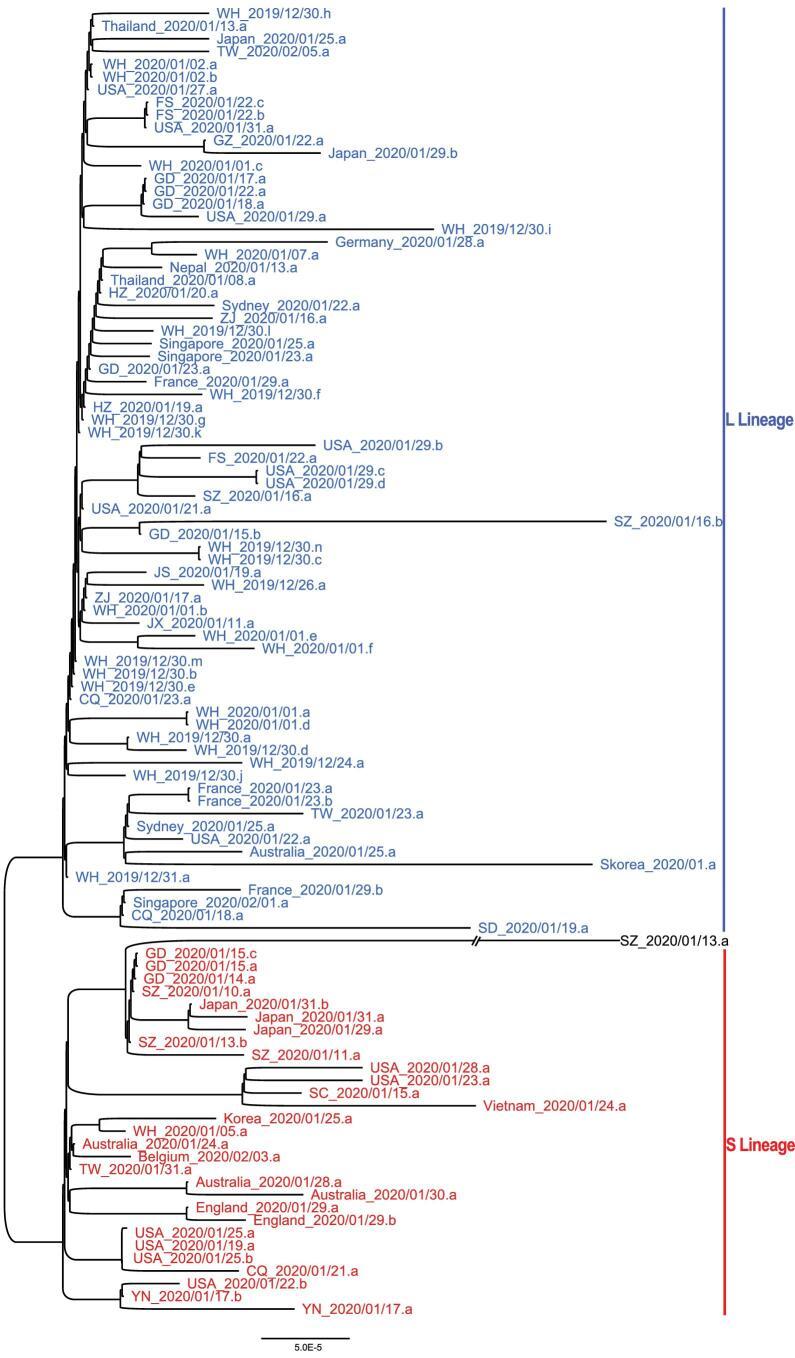
The SARS-CoV-2 epidemic started in late December 2019 in Wuhan, China, and has since impacted a large portion of China and raised major global concern. Herein, we investigated the extent of molecular divergence between SARS-CoV-2 and other related coronaviruses. Although we found only 4% variability in genomic nucleotides between SARS-CoV-2 and a bat SARS-related coronavirus (SARSr-CoV; RaTG13), the difference at neutral sites was 17%, suggesting the divergence between the two viruses is much larger than previously estimated. Our results suggest that the development of new variations in functional sites in the receptor-binding domain (RBD) of the spike seen in SARS-CoV-2 and viruses from pangolin SARSr-CoVs are likely caused by natural selection besides recombination. Population genetic analyses of 103 SARS-CoV-2 genomes indicated that these viruses had two major lineages (designated L and S), that are well defined by two different SNPs that show nearly complete linkage across the viral strains sequenced to date. We found that L lineage was more prevalent than the S lineage within the limited patient samples we examined. The implication of these evolutionary changes on disease etiology remains unclear. These findings strongly underscores the urgent need for further comprehensive studies that combine viral genomic data, with epidemiological studies of coronavirus disease 2019 (COVID-19).
严重急性呼吸综合征冠状病毒2(SARS-CoV-2)疫情于2019年12月下旬在中国武汉爆发,此后影响了中国的大部分地区,并引起了全球的广泛关注。在此,我们研究了SARS-CoV-2与其他相关冠状病毒之间的分子差异程度。尽管我们发现SARS-CoV-2与一种蝙蝠SARS相关冠状病毒(SARSr-CoV;RaTG13)之间的基因组核苷酸变异仅为4%,但中性位点的差异为17%,这表明两种病毒之间的差异比之前估计的要大得多。我们的研究结果表明,SARS-CoV-2和穿山甲SARSr-CoV病毒刺突蛋白受体结合域(RBD)功能位点新变异的出现,除了重组外,可能是自然选择的结果。对103个SARS-CoV-2基因组的群体遗传学分析表明,这些病毒有两个主要谱系(分别命名为L和S),由两个不同的单核苷酸多态性(SNP)明确界定,这两个SNP在迄今为止测序的病毒株中显示出几乎完全的连锁。我们发现在我们检测的有限患者样本中,L谱系比S谱系更普遍。这些进化变化对疾病病因的影响尚不清楚。这些发现强烈强调了迫切需要进一步开展综合研究,将病毒基因组数据与2019冠状病毒病(COVID-19)的流行病学研究结合起来。



 Zotero 插件