
病毒和宿主之间的进化军备竞赛驱动了蝙蝠严重急性呼吸综合征相关冠状病毒刺突基因的遗传多样性。
Evolutionary Arms Race between Virus and Host Drives Genetic Diversity in Bat Severe Acute Respiratory Syndrome-Related Coronavirus Spike Genes.
机构信息
CAS Key Laboratory of Special Pathogens and Biosafety, Wuhan Institute of Virology, Chinese Academy of Sciences, Wuhan, China.
University of Chinese Academy of Sciences, Beijing, China.
出版信息
J Virol. 2020 Sep 29;94(20). doi: 10.1128/JVI.00902-20.
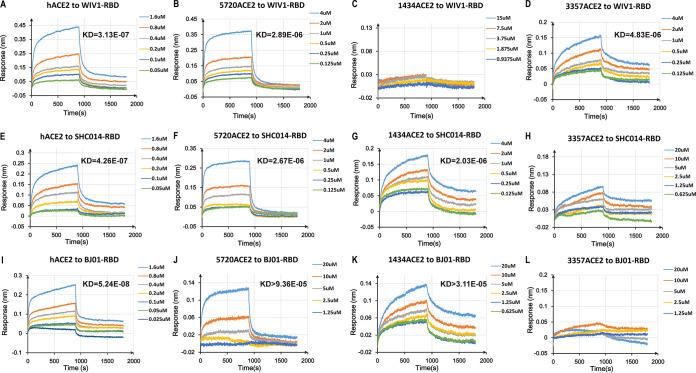
The Chinese horseshoe bat (), reservoir host of severe acute respiratory syndrome coronavirus (SARS-CoV), carries many bat SARS-related CoVs (SARSr-CoVs) with high genetic diversity, particularly in the spike gene. Despite these variations, some bat SARSr-CoVs can utilize the orthologs of the human SARS-CoV receptor, angiotensin-converting enzyme 2 (ACE2), for entry. It is speculated that the interaction between bat ACE2 and SARSr-CoV spike proteins drives diversity. Here, we identified a series of ACE2 variants with some polymorphic sites involved in the interaction with the SARS-CoV spike protein. Pseudoviruses or SARSr-CoVs carrying different spike proteins showed different infection efficiencies in cells transiently expressing bat ACE2 variants. Consistent results were observed by binding affinity assays between SARS-CoV and SARSr-CoV spike proteins and receptor molecules from bats and humans. All tested bat SARSr-CoV spike proteins had a higher binding affinity to human ACE2 than to bat ACE2, although they showed a 10-fold lower binding affinity to human ACE2 compared with that of their SARS-CoV counterpart. Structure modeling revealed that the difference in binding affinity between spike and ACE2 might be caused by the alteration of some key residues in the interface of these two molecules. Molecular evolution analysis indicates that some key residues were under positive selection. These results suggest that the SARSr-CoV spike protein and ACE2 may have coevolved over time and experienced selection pressure from each other, triggering the evolutionary arms race dynamics. Evolutionary arms race dynamics shape the diversity of viruses and their receptors. Identification of key residues which are involved in interspecies transmission is important to predict potential pathogen spillover from wildlife to humans. Previously, we have identified genetically diverse SARSr-CoVs in Chinese horseshoe bats. Here, we show the highly polymorphic ACE2 in Chinese horseshoe bat populations. These ACE2 variants support SARS-CoV and SARSr-CoV infection but with different binding affinities to different spike proteins. The higher binding affinity of SARSr-CoV spike to human ACE2 suggests that these viruses have the capacity for spillover to humans. The positive selection of residues at the interface between ACE2 and SARSr-CoV spike protein suggests long-term and ongoing coevolutionary dynamics between them. Continued surveillance of this group of viruses in bats is necessary for the prevention of the next SARS-like disease.
中华菊头蝠()是严重急性呼吸系统综合征冠状病毒(SARS-CoV)的天然宿主,其体内携带多种具有高度遗传多样性的蝙蝠 SARS 相关冠状病毒(SARSr-CoV),尤其在刺突基因上。尽管存在这些变异,但一些蝙蝠 SARSr-CoV 可以利用人类 SARS-CoV 受体血管紧张素转化酶 2(ACE2)的同源物进入细胞。据推测,蝙蝠 ACE2 与 SARSr-CoV 刺突蛋白之间的相互作用驱动了多样性的产生。在这里,我们鉴定了一系列 ACE2 变体,其中一些多态性位点涉及与 SARS-CoV 刺突蛋白的相互作用。携带不同刺突蛋白的假病毒或 SARSr-CoV 在瞬时表达蝙蝠 ACE2 变体的细胞中显示出不同的感染效率。通过 SARS-CoV 和 SARSr-CoV 刺突蛋白与蝙蝠和人类受体分子之间的结合亲和力测定,观察到了一致的结果。所有测试的蝙蝠 SARSr-CoV 刺突蛋白对人 ACE2 的结合亲和力均高于对蝙蝠 ACE2 的结合亲和力,尽管它们对人 ACE2 的结合亲和力比 SARS-CoV 相应蛋白低 10 倍。结构建模表明,刺突蛋白和 ACE2 之间结合亲和力的差异可能是由于这两种分子界面中一些关键残基的改变所致。分子进化分析表明,一些关键残基受到正选择的影响。这些结果表明,SARSr-CoV 刺突蛋白和 ACE2 可能随着时间的推移而共同进化,并受到彼此的选择压力,从而引发进化军备竞赛动态。进化军备竞赛动态塑造了病毒及其受体的多样性。鉴定参与种间传播的关键残基对于预测野生动物向人类潜在病原体溢出非常重要。此前,我们已经在中华菊头蝠中鉴定出了具有遗传多样性的 SARSr-CoV。在这里,我们展示了中华菊头蝠种群中高度多态性的 ACE2。这些 ACE2 变体支持 SARS-CoV 和 SARSr-CoV 的感染,但对不同的刺突蛋白具有不同的结合亲和力。SARSr-CoV 刺突对人 ACE2 的高结合亲和力表明这些病毒有能力溢出到人类。ACE2 与 SARSr-CoV 刺突蛋白之间界面处残基的正选择表明它们之间存在长期的和正在进行的共同进化动态。对蝙蝠中这组病毒的持续监测对于预防下一次类似 SARS 的疾病是必要的。


 Zotero 插件